Trump's Diesel Deal With Russia Funded Strikes on Ukraine
Hours after Trump announced a diesel purchase deal with Moscow, Russian glide bombs killed 20 in Zaporizhzhia. Zelenskyy called it retribution — and the episode exposes how transactional peacemaking rewires battlefield dynamics.
The Timing Nobody Can Ignore
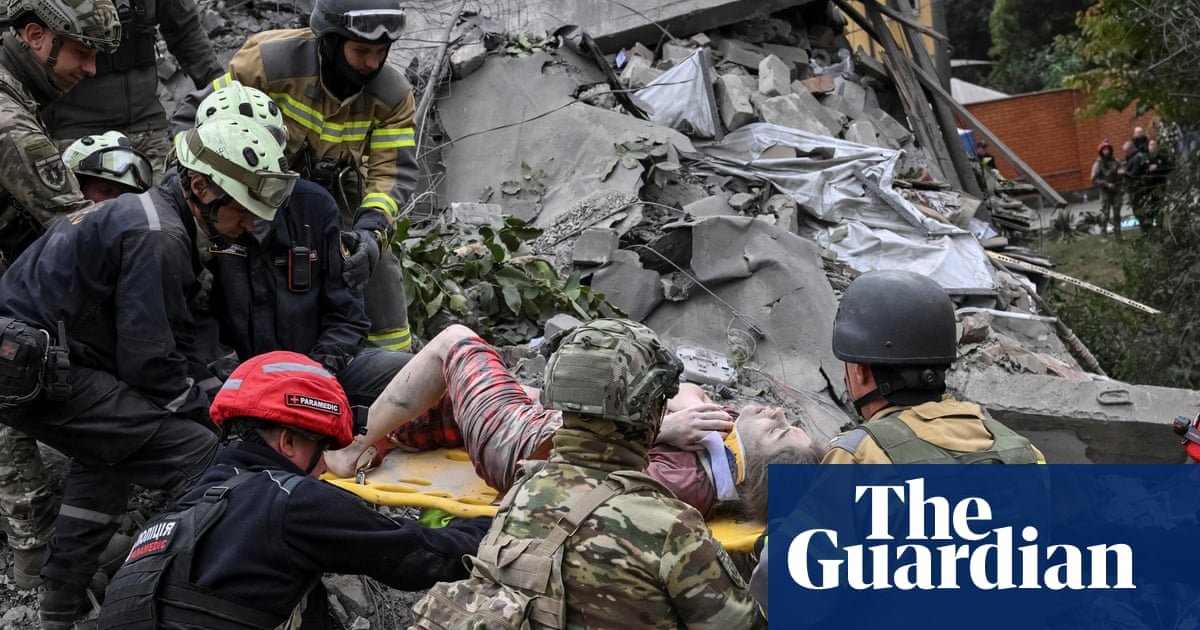
Twenty people dead. Three of them children. The strikes landed on residential buildings in Zaporizhzhia on Saturday morning — hours after Donald Trump announced a deal with Vladimir Putin to purchase large quantities of Russian diesel.
Volodymyr Zelenskyy did not mince words. On social media, he called it Russia’s explicit thanks for the lifting of sanctions pressure. “Today, Russia expressed its thanks for the lifting of sanctions on diesel exports by dropping five glide bombs on residential buildings in Zaporizhzhia,” he wrote. The causal chain he drew — Washington easing constraints on Moscow, Moscow spending the proceeds on bombs dropped on Ukrainian cities — is the most uncomfortable frame of the war so far.
The sequence itself is what makes this moment different from the usual cycle of sanctions and retaliatory strikes. In previous years, Western officials could point to a lag between policy decisions and battlefield outcomes. Here, the deal was announced on Friday. The strikes came Saturday. The connection Zelenskyy is drawing is not subtle, and it is not easily dismissed.
A Deal Announced Over the Heads of Ukrainian Negotiators
The timing of the announcement was itself a provocation. Trump revealed the diesel agreement on Friday while Ukrainian negotiators were in Miami for peace talks. Kyiv was not consulted before the deal was made public. That diplomatic snub amplified the strategic shock: the United States had effectively cut a side deal with Russia’s economy while Ukraine’s representatives were seated at the table.
Trump framed the deal as necessary to reduce diesel prices ahead of November’s midterm elections, where fuel costs are a decisive voter issue. The political calculus is transparent. But the consequences for Ukraine were immediate and lethal. Any easing of sanctions, Zelenskyy said, plays directly into Russia’s hands by allowing it “to kill more, wage war for longer.” Within hours, that prediction was realized.
Trump Blames the Victim
If the diesel deal was designed to signal to Moscow that the United States is open to economic engagement, Trump’s comments about Ukraine suggested the signal was intended there as well. On Saturday, he told reporters it was time for Ukraine to get a new president — one who could make deals. He blamed Zelenskyy for high diesel prices in the United States and suggested the Ukrainian leader had failed to negotiate his way out of the war.
The implication is stark: Trump is treating Ukraine’s leadership as a negotiable asset rather than a sovereign government fighting for survival. The message to Kyiv is that cooperation on American energy priorities will be rewarded, and resistance will be punished with political abandonment.
Andy Burnham, the British prime minister, called Zelenskyy to express solidarity and agreed to meet in person within days. But the contrast with Washington’s posture was impossible to miss. While London moved to reinforce the alliance, Trump was publicly suggesting Ukraine replace its president.
Europe Moves Quickly — and Alone
The European response has been swift and notably more unified than the American one. Kaja Kallas, the EU’s top diplomat, said on Saturday that the diesel deal provides Moscow with more revenues to wage war and declared that Europe will not ease pressure. On Monday, EU foreign ministers are expected to approve the largest set of sanctions listings since the war began — targeting 1,600 new individuals and entities connected to Russia’s war machine.
Germany’s government spokesperson Stefan Kornelius reaffirmed Berlin’s commitment to existing sanctions and further coordinated action with European partners. Swedish Prime Minister Ulf Kristersson expressed regret at the US agreement, noting that energy revenues remain a vital funding source for Russia’s war of aggression.
But the European scrambling reveals a deeper anxiety. The United States has historically been the guarantor of sanctions coherence. When Washington strikes its own deal, the entire architecture of financial pressure on Moscow develops a seam. Europe can increase its listings, but without American enforcement, the impact is limited. German companies, European banks, and Scandinavian firms all operate within a legal framework that US policy shapes. A unilateral American pivot changes the rules for everyone.
The Weaponization of Intelligence Sharing
Perhaps the most consequential detail from the Miami talks emerged indirectly. According to the Financial Times, Trump’s envoys Steve Witkoff and Jared Kushner raised the possibility of cutting off US intelligence sharing if Kyiv did not halt strikes on Russian refineries. The offer was implicit but clear: stop bombing Russia’s energy infrastructure, or lose the surveillance data that has been critical to Ukraine’s defensive operations.
This is a new form of coercion. Previously, the United States pressed Ukraine to restrain certain strikes for diplomatic reasons — arguing that destroying Russian refineries would spike global fuel prices. Now the pressure has crossed into threatening the intelligence pipeline itself. For a country fighting for its existence, the withdrawal of battlefield intelligence is not a diplomatic lever. It is a existential risk.
Zelenskyy has previously rejected the request to stop bombing Russian refineries unless Russia stops attacking Ukraine’s energy infrastructure. The deadlock is now enforced not just by political persuasion but by the threat of informational isolation. If US intelligence feeds are restricted, Ukraine’s ability to anticipate missile launches, track troop movements, and target Russian logistics degrades significantly.
What This Reveals About Trump’s Bargain Strategy
The diesel deal and its aftermath reveal the core logic of Trump’s approach to the war: everything is transactional, and nothing is off the table. Russia’s energy exports are not a strategic liability to be constrained but a bargaining chip to be monetized. Ukraine’s sovereignty is not a principle to be defended but a variable in a larger deal.
This framework assumes that economic engagement with Russia will moderate its behavior. The evidence from the past 48 hours suggests the opposite. Russia received the financial relief it needed and immediately converted it into violence against Ukrainian civilians. The Kremlin’s interpretation of the deal appears to have been exactly what Zelenskyy predicted: an opening to fight longer and kill more.
Putin has long described Trump as someone who can be negotiated with. Zelenskyy has warned that Putin is playing games with Trump. Both assessments may be correct simultaneously. The Russian president sees an opportunity; the Ukrainian president sees a trap. The question is whether the United States understands which side of that dynamic it is reinforcing.
What Comes Next
The immediate consequence is a fracture in the coalition. Europe is moving toward tougher sanctions while the United States moves toward economic engagement with Russia. NATO allies will convene, issue statements, and coordinate responses. But the fundamental alignment that has underpinned Western support for Ukraine is under strain.
Ukraine faces a harder calculation: how to maintain military effectiveness when its primary intelligence partner is signaling that continued resistance may cost it the information advantage. Zelenskyy’s promise that Russia must feel its losses — accompanied by Ukrainian attacks in the Luhansk region that killed four civilians and wounded five over 24 hours — shows Kyiv’s determination to keep fighting. But fighting with one eye closed is a dangerous proposition.
The midterms are weeks away. Trump’s diesel deal was clearly designed to produce a visible drop in fuel prices for American voters. If it works politically, the incentive structure for further deals with Moscow strengthens. If it fails — if diesel prices remain elevated despite the agreement — the administration may double down on the narrative that Zelenskyy is the obstacle, not the solution.
Either way, Ukraine pays the price. The war has always been fought on Ukrainian territory by Ukrainian soldiers. But the terms on which it is fought — the intelligence, the weapons, the diplomatic cover — are increasingly being determined in conversations where Kyiv is not present.