Trump's Russia Sanctions Pivot Threatens to Upend Asia
Trump's move to ease Russia sanctions isn't just about Ukraine or American fuel prices — it signals a Washington that treats alliances as transactional. Seoul and Tokyo now face a harder question: how do you plan for a partner who can't be predicted?
A Suspension, Not a Surrender — For Now
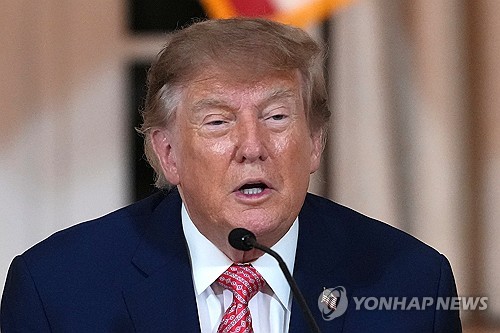
Donald Trump did not announce the lifting of Russia sanctions on Tuesday. He did something subtler and, for allies across the Pacific, arguably more unsettling: he suspended the Graham Act, a bipartisan bill designed to penalize countries buying Russian energy.
The timing is not accidental. Trump has framed the move as part of a broader effort to broker peace in Ukraine, and the White House has signaled that restarting European imports of Russian natural gas could serve as a confidence-building measure in stalled negotiations. But the actual mechanism — an executive pause on a law that would have slapped tariffs on Russian energy purchasers — is also a direct enabler of Trump’s domestic agenda. The administration wants to increase Russian diesel imports into the United States ahead of the November midterm elections, betting that cheaper fuel will blunt inflation and win votes.
That the law was described by its own sponsors as a national security measure, and that Trump has now shelved enforcement of it, tells you everything you need to know about where this administration sits on the concept of allied solidarity. The Graham Act, named after its principal sponsors, was never going to pass the Senate as written. Its suspension does not require a repeal; it requires only a pen stroke and the political will to ignore congressional intent. That is the point. The administration is demonstrating that it can unmake bipartisan consensus with a single executive action, and that its predecessors’ careful legislative frameworks are thinner than allies believed.
Who Wins, Who Loses
In the short term, Trump wins politically. He can point to lower gasoline prices and a willingness to pursue “peace” without the constraints Congress placed on previous administrations. Russia’s economy, already strained by sanctions, gets a lifeline it did not earn. European governments that had pinned their energy strategy on decoupling from Moscow are left looking indecisive, if not compromised. Germany, which spent billions building alternative LNG infrastructure only to see Russian pipelines sit idle, faces a particularly awkward reckoning. Poland and the Baltic states, which argued that energy interdependence was a vector for Kremlin coercion, see their warnings dismissed as alarmist.
Japan and South Korea lose something harder to quantify but impossible to ignore: predictability.
Both allies have staked their security architectures on a straightforward premise — that Washington remains committed to a rules-based order, even when it is inconvenient. Sanctions on Russia were not just economic policy; they were a signal that aggression carries a cost, and that the United States would help enforce it. When that signal wavers, allies begin to calculate on their own. That calculation is dangerous for everyone.
The erosion of predictability does not happen overnight, but it accumulates in ways that compound across domains. A Japanese defense minister reviewing force posture plans cannot factor in a suddenly unreliable American security guarantee the way they once did. A South Korean strategist assessing Beijing’s options must now model a Washington that may cut deals behind their backs. The cost is not measured in any single policy shift but in the paralysis that sets in when no one trusts the architecture anymore.
The Asian Consequence Nobody Is Discussing
The conversation in Seoul and Tokyo right now is likely about tariffs, not Russia. The administration has been equally unpredictable on trade, levying steep duties on Japanese automakers and threatening fresh rounds against South Korean semiconductors and steel. The Russia sanction pivot reinforces a pattern: Washington treats alliances as a menu, not a contract.
For South Korea, the implications cut deeper than most analysts are admitting. Seoul has positioned itself as a middle power capable of balancing between Washington and Beijing, while also maintaining a principled stance on territorial integrity and international law — principles that include support for Ukraine. If the United States is willing to make deals with Moscow that reward aggression, what happens to that framework when Beijing tests Taiwan? What happens to Seoul’s own security calculus, which depends on a credible American deterrent in the Indo-Pacific?
South Korea’s calculus is further complicated by its own historical relationship with authoritarian states. Seoul has long maintained a pragmatic dialogue with North Korea’s neighbors, including China and Russia, and has occasionally resisted joining sanctions regimes it viewed as overreach. The Graham Act suspension validates that instinct in the worst possible way. It tells Seoul’s harder-line critics that American commitments are conditional and contingent on domestic political timing, not on shared democratic values or strategic necessity.
Japan faces a similar problem on a larger scale. Tokyo has been one of the most consistent supporters of the Ukraine sanctions regime, contributing financial aid and accepting refugees. The Graham Act suspension undermines that posture without offering any compensating security guarantee. Instead, it offers the opposite: an invitation to treat alliance commitments as negotiable.
Tokyo’s response has so far been characteristically muted — a statement of “deep concern” followed by a quiet acceleration of defense spending. But the psychological shift is real. Japanese strategic planners, who have operated under the assumption that American engagement in Asia was structural and durable, are now forced to treat that assumption as provisional. That changes everything from force deployment to arms procurement to diplomatic posture.
The Second-Order Effects Across the Region
The ripple effects extend well beyond Seoul and Tokyo. China’s Communist Party is watching closely, and not with confusion. The suspension of the Graham Act provides empirical confirmation of what Beijing has suspected for some time: American alliances are transactional and temporary. This belief reinforces Xi Jinping’s strategy of patient encirclement. If the United States can suspend sanctions on Russia because it suits domestic politics, why should Beijing assume that American commitments to Taiwan or the Philippines are anything more than rhetorical?
India, too, is recalibrating. New Delhi has already been buying Russian oil at scale, and the Graham Act suspension removes a potential diplomatic stumbling block that Washington might have raised. But the broader message is equally important: the United States is signaling that it will not penalize strategic autonomy when it conflicts with its own short-term interests. That gives New Delhi more room to deepen ties with Moscow without American objections, further complicating Washington’s Indo-Pacific strategy.
Australia and the Quadrilateral partners face their own version of the problem. The AUKUS framework and the Quad were built on the assumption of sustained American leadership. If that leadership is intermittent and self-serving, the architecture begins to show cracks. Defense ministers in Canberra and Tokyo are already discussing contingency scenarios that were unthinkable five years ago — scenarios that assume Washington may not always come to the table on the same terms.
The Political Math Behind the Move
The domestic drivers are transparent. Russian diesel, if allowed into the United States, could meaningfully depress fuel prices at the pump. In a midterm election cycle where inflation remains a vulnerability for the governing party, that is worth political capital. The suspension of the Graham Act costs Trump nothing in the current political economy of his base — energy prices matter more to Republican voters than sanctions consistency.
But the cost to alliance credibility is real. It accumulates. Each suspension, each tariff threat, each public dismissal of NATO or bilateral agreements erodes the trust that makes forward-deployed deterrence viable. Alliances are not maintained by ink on paper. They are maintained by reputation, and reputation is fragile.
The administration appears to believe that allies will absorb these shocks without recalibrating. That belief is rooted in a decades-long assumption that Japan and South Korea have no viable alternatives. But assumptions are not strategies. The more Washington tests that conclusion, the more likely its partners are to develop them.
What Comes Next
The immediate next step is unlikely to be a formal deal with Moscow. Trump enjoys the leverage that comes from ambiguity, and a negotiated settlement on Ukraine would require concessions he has not yet signaled he is willing to make. The suspension of the Graham Act is a signal first, a policy second — a test of how much friction Washington can generate with its partners before they start adjusting their expectations.
For Seoul and Tokyo, the adjustment should begin now. That means accelerating defense spending commitments, diversifying security partnerships where possible, and preparing for the likelihood that Washington will continue to prioritize domestic politics over alliance consistency. It also means recognizing that the era of assuming American unpredictability will correct itself is over. It is not correcting itself.
The most important question for Asian allies is no longer whether the United States will support them. It is whether that support will come with conditions that change from week to week, and how much strategic autonomy each capital is willing to develop in response. The answer to that question will determine the shape of Asian security for decades — regardless of what happens in Ukraine, regardless of tariff negotiations, and regardless of whether the Graham Act suspension is eventually reversed or hardened into permanent policy.
Alliances are contracts written in trust, not ink. Once that trust is depleted, no amount of diplomatic rhetoric can restore it. Seoul and Tokyo are beginning to understand this. The question is whether they will act on it before the cost of inaction becomes catastrophic.