Trump's Skybow Gambit Is a New Kind of Alliance Pressure
Trump's decision to publicly amplify a think-tank call for Seoul to sell its Skybow II interceptors to Ukraine signals a shift from quiet alliance management to performative pressure — and it could recalibrate South Korea's defense exports in ways that reach far beyond Kyiv.
The Silent Escalation
Donald Trump did not write an original column. He did not issue a statement, hold a press conference, or make a telephone call. On April 4, he simply posted a link on Truth Social — no comment, no exclamation mark, no framing — to an op-ed that had appeared in The Washington Post the day before. What he shared was a policy prescription from Mark Teisen, a senior fellow at the American Enterprise Institute, arguing that President Lee Jae-myung should be pressured into selling South Korea’s domestically developed Skybow II (M-SAM II) interceptor missiles to Ukraine.
That Trump chose to amplify this particular column without annotation is itself the story. By linking to an argument he did not author, he transformed a think-tank suggestion into a presidential signal. The gap between silence and endorsement is where the real pressure lives.
Who This Is About
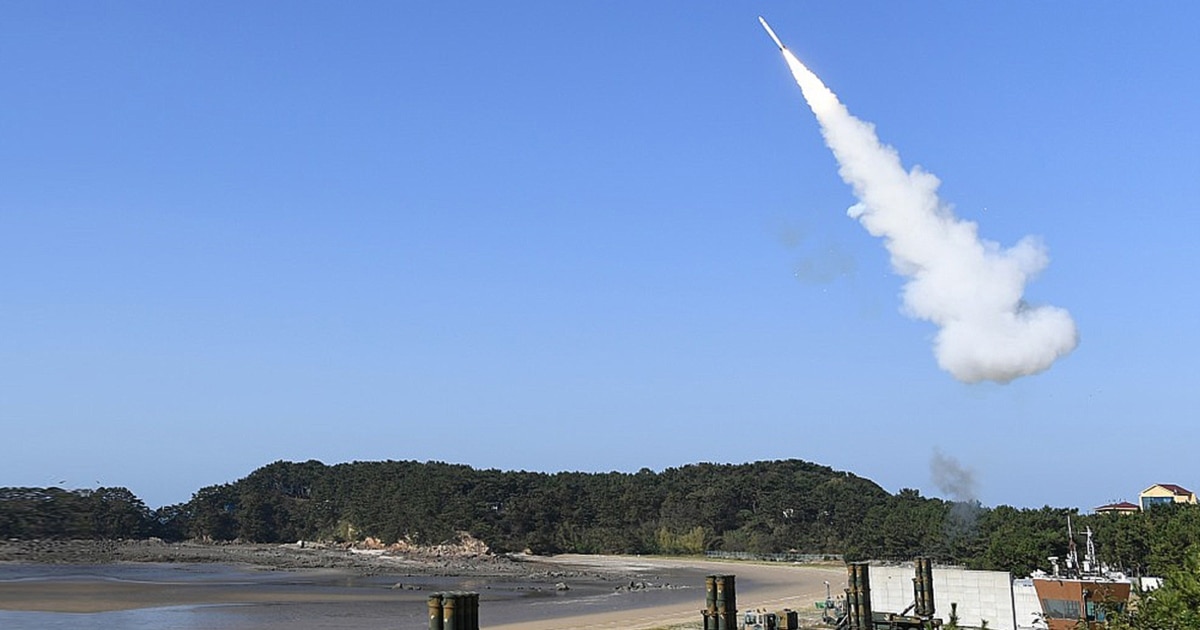
The Skybow II is South Korea’s answer to the Patriot system, a medium-range surface-to-air missile that has become the backbone of the country’s air and missile defense architecture. South Korea has invested heavily in domestic production capacity for the system, and it already holds significant stockpiles. The UAE, a US ally that has been actively engaged in military operations in Yemen, is a known foreign buyer of the system. That fact is important, because Teisen’s op-ed uses the UAE deal to argue that Seoul’s objection — that it cannot sell weapons to a country at war — is inconsistent.
The logic here is deliberately sharp. If Korea can sell Skybow II to the UAE, which is fighting a war, why not to Ukraine, which is also fighting a war? The op-ed treats the discrepancy as evidence not of principle but of political reluctance, and it frames a sale as a corrective measure that would serve both Ukrainian interests and Korean strategic positioning.
There is also a second-layer argument buried in the piece: that deploying Skybow II against North Korean missiles used by Russia against Ukraine would give Seoul a live-fire testing ground. It is a claim that has not been independently verified, but its presence in the op-ed reveals what the advocates see on the other side of the transaction — a chance to stress-test Korean defense technology in conditions no simulation can replicate.
The Pence Signal
The Trump-administration linkage did not begin with this op-ed. In late March, former Vice President Mike Pence appeared on CNN and suggested that South Korea could transfer its interceptor missiles to the United States, which would then deploy them in Ukraine, the Middle East, or elsewhere. Pence cited contacts between President Lee and Ukrainian President Volodymyr Zelenskyy and framed the arrangement as a logical bypass around Korea’s existing restrictions on arms sales to active conflict zones.
The Pentagon has not confirmed whether any such transfer framework exists. But the fact that a former vice president is publicly outlining a workaround suggests that the idea has circulated within the US national security establishment. What makes Trump’s op-ed share distinct is that it elevated a policy paper into the president’s personal feed, making the pressure unmistakable and immediate.
What Changes Now
The most direct consequence is reputational, not operational. South Korea’s defense ministry now faces a public question from the US president — via proxy — that it cannot easily ignore. Refusing to engage could be read as ingratitude for decades of US security guarantees. Engaging too enthusiastically could accelerate technology transfer concerns, complicate relationships with Arab partners who monitor Korean arms deals closely, and embroil Seoul in a conflict it has deliberately kept at arm’s length.
There is also a structural question. The Skybow II sale, if it moves forward, would establish a new precedent: that South Korean defensive missile systems can flow into an active European theater through a framework that circumvents the government’s existing export controls. The administration’s preference for routing the weapons through the US, as Pence outlined, is not incidental. It preserves the legal fiction that Seoul is not selling to a belligerent, even as the missiles change hands. That fiction may satisfy American domestic politics but offers thin protection for Seoul’s diplomatic standing.
Who Wins and Who Loses
Washington wins if the missiles move. Ukraine wins if they arrive. The South Korean defense industry wins on volume, but potentially loses on strategic autonomy: the conversation is no longer about what Korea wants to sell and to whom, but about what the US asks Korea to provide and how quickly. If Korea complies, it earns favor in Washington and sets a template that could be repeated for other systems. If it resists, it risks a credibility gap with its most important alliance partner.
The European defense manufacturers watching this sequence — especially those competing for contracts in Ukraine — are likely to note that American pressure can open markets faster than any trade mission. That lesson will shape procurement debates in Brussels and Berlin well beyond the current conflict.
The Longer Game
What Trump’s op-ed share reveals is not just a policy preference but a governing style. The old model of alliance management involved quiet diplomacy, private requests, and careful public distance. The current model treats public amplification as a substitute for diplomatic negotiation. An op-ed link becomes a policy demand. A retired vice president’s television remark becomes a strategic signal.
For Seoul, the challenge is that the old reflexes no longer match the new rhythm. The Korean government’s instinct is to respond with measured statements and behind-the-scenes consultation. But pressure delivered on Truth Social does not wait for consultation. It lands immediately, and it demands a visible answer.
How Korea responds to this particular demand will tell you how it responds to the next one. The Skybow II question is not simply about missiles. It is about whether the alliance still negotiates between governments or whether it operates through public performance. The answer will determine the shape of Korean defense policy for years to come.