Trump's $2 Oil Gamble and the Election-Timed War
Trump publicly tied the end of an Iran conflict to the November midterms and promised oil would crash below $2 a gallon. The move merges war strategy with election politics—and sends shockwaves through energy markets.
The Price Tag on a President’s Timeline
Donald Trump made a statement last week that, on its surface, sounds like campaign rhetoric. It isn’t. It’s market infrastructure.
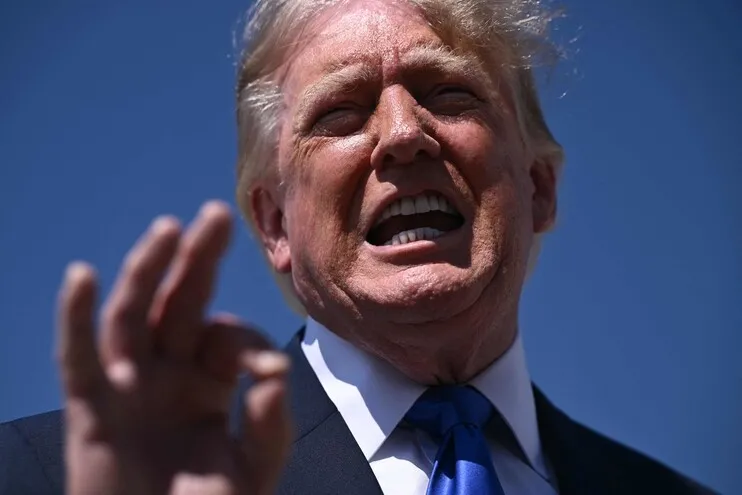
Speaking at Andrews Joint Base in Maryland before departing for the Republican midterm convention in Dallas, Trump said the conflict with Iran would end shortly after the November elections and that oil prices would crater accordingly. He went further, projecting gasoline below $2 a gallon. Fifty days out, he offered a specific date-shaped horizon for both a war and a commodity collapse—and he did it from the tarmac of Air Force One.
That sequencing matters. A sitting president publicly anchoring an end-date to an active military engagement, while simultaneously forecasting a commodity price trajectory, is unprecedented in modern American politics. The markets are already absorbing it. Futures traders don’t wait for official briefings; they trade the president’s words as policy signals. Trump’s timeline is now a factor in every desk pricing Middle East risk.
The First Explicit Election Deadline
Until now, Trump has used vaguer language about the conflict’s end—phrases like “very soon” that kept options open and avoided market commitment. Pushing the expected endpoint to roughly 50 days after this statement marks the first time he has attached a concrete electoral deadline to the war. The shift is deliberate.
His framing was transparent: Iran is acting desperately to influence the election outcome because a Republican loss would, in his view, allow Tehran to pursue nuclear weapons unchecked. He called a nuclear agreement a 99.9 percent certainty, though he dismissed the utility of returning to negotiations, saying Iran had “almost nothing left” to offer. The logic chains together—conflict escalates to pressure Iran, Iran flails ahead of the vote, the vote breaks Trump’s way, the war ends, and oil follows.
That’s not strategy description. That’s a campaign advertisement wrapped in national security language, delivered before a military airbase.
$2 Gasoline and the Credibility Trap
The most startling element is the price target itself. Trump explicitly said oil would drop sharply after the midterms and gas would fall below $2 per gallon. For context, US retail gasoline has hovered well above that threshold throughout the conflict’s escalation. A move to sub-$2 would require either a dramatic surplus in global supply or a demand collapse that no major forecast currently models.
This is where the gambit turns dangerous for Trump himself. By putting a number on the table, he has created a credibility trap. If oil doesn’t collapse after the elections—or if it rises instead, as supply disruptions often do when conflicts linger—the narrative he’s built around his own dealmaking strength fractures. Markets notice these promises. So do voters at the pump.
He’s effectively bet his political capital on a specific post-election scenario playing out exactly as he envisions. That’s a rare move for a president who has spent his career avoiding fixed commitments.
What This Does to Energy Markets
The immediate effect is already visible in how traders are positioning. Public statements from the Oval Office about conflict timelines and price outcomes compress the “war premium” in crude futures differently than covert diplomatic signaling would. When a president says the war ends in 50 days, hedge funds adjust their long exposure. When he adds a price target, they adjust again.
OPEC+ faces a harder problem. The cartel has spent years managing production cuts to stabilize prices. A US president publicly promising a post-election oil crash forces Saudi Arabia and its allies to respond—or appear irrelevant. If they cut further production to defend prices, they look reactive. If they do nothing and Trump’s timeline holds, they lose leverage. Either way, the group’s ability to set the pace of market events has been disrupted by a single press pool conversation.
Iranian oil exports, already a variable in the conflict calculus, now carry an additional political dimension. Every barrel Tehran sells or withholds is read not just as market behavior but as election interference—a framing that raises the stakes of every shipment.
The Nuclear Question No One Is Answering
Trump’s confident projection of a nuclear deal—99.9 percent, he said—deserves scrutiny. He also said the US no longer wants negotiations, that Iran has “almost nothing left” to offer. Those two statements don’t reconcile cleanly. A deal requires something to negotiate over. If Trump believes the outcome is predetermined, the process is theater. If he believes the process matters, the outcome isn’t guaranteed.
The Kremlin confirmed that Trump spoke with Vladimir Putin the day before, a conversation lasting roughly an hour. Trump relayed that Putin wants a settlement and would welcome one Ukraine accepts. The timing—two simultaneous conflict timelines being publicly managed—suggests Trump is treating the Iran and Ukraine fronts as interconnected levers rather than separate crises. That’s either sophisticated coordination or dangerous conflation.
Who Wins, Who Loses
Trump wins if the timeline holds: lower gas prices bolster his electoral message, the conflict ends on his terms, and the nuclear deal becomes his signature achievement. The Republican Party benefits from a post-election sense of restored stability and affordability.
Consumers worldwide win only if the supply shock that followed the conflict’s escalation reverses quickly. Many import-dependent economies—Japan, South Korea, India—face a dual hit if the war disrupts shipping lanes before Trump’s projected endpoint arrives. Their vulnerability isn’t political; it’s logistical.
OPEC+ loses ground. The cartel’s pricing power erodes when a single national leader can publicly override its production discipline with a tweet-length timeline.
Iran loses the most if Trump’s assessment is correct and its election meddling fails. But it also gains leverage in the interim: every day the conflict continues raises the insurance premium on every barrel crossing the Strait of Hormuz.
The Danger of Public Timelines
The deeper issue isn’t the price target or the election framing. It’s the normalization of public military timelines as political tools. When a president announces when a war will end and what commodity prices will do, he transforms strategic uncertainty into political inventory. Markets price the announcement. Voters price the promise. Adversaries price the bluff.
If the conflict drags past the midterms—or if oil refuses to obey a presidential forecast—the credibility damage extends beyond Trump. It reshapes how future administrations can use diplomatic ambiguity, a tool that has historically allowed wars to end without anyone admitting they didn’t go as planned.
Trump has removed that cushion. Whether that makes him stronger or more vulnerable depends on whether the next 50 days behave the way he says they will.