The irony of justice served through silence that finally broke
The conviction of Duane Davis closes a 30-year chapter on Tupac Shakur's murder — but the path to justice reveals how hip-hop's mythology swallowed the facts, and how one man's refusal to stay quiet finally delivered accountability.
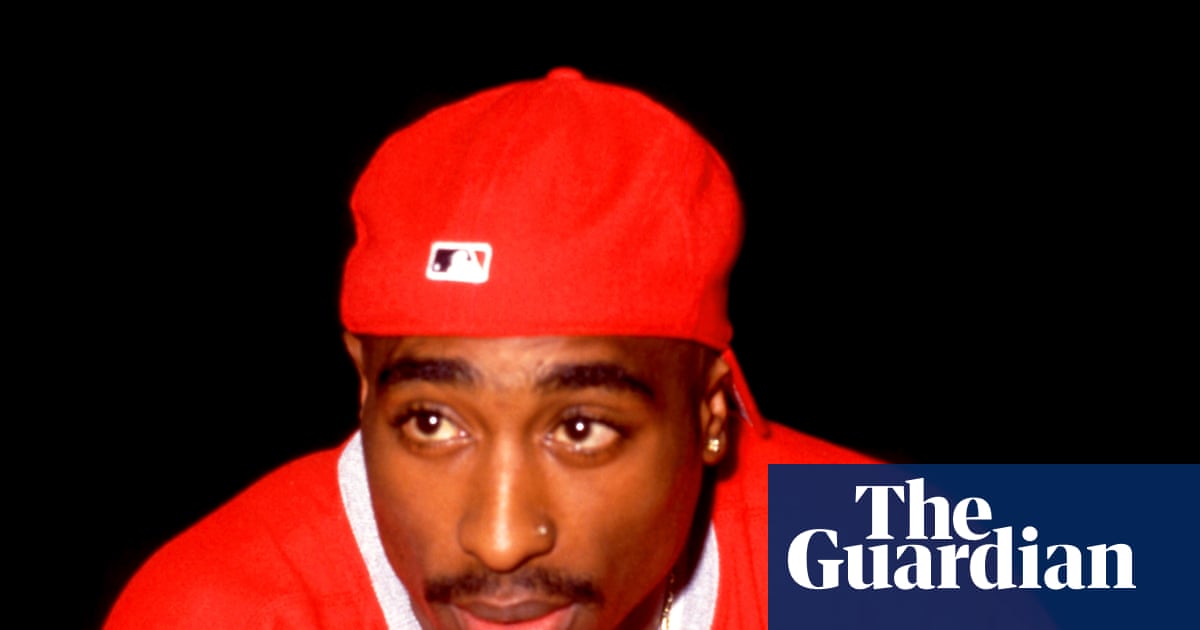
The conviction that arrived three decades late
Duane “Keffe D” Davis was found guilty of murder this week. Not of pulling the trigger — no one alive knows for certain who that was — but of designing the revenge that killed Tupac Shakur. The verdict closes a case that has hovered between news report and urban legend for thirty years, yet it does so through an irony that cuts almost as deep as the bullets fired outside the MGM Grand on 7 September 1996.
The case cracked open because Davis himself would not stop talking about it.
His 2019 autobiography, Compton Street Legend, contained confessions that detectives could finally build a prosecution around. Without those pages, without a 63-year-old man recounting a shooting he helped plot, the case may have remained exactly what it felt like for so long: an unanswered question draped in hip-hop mystique.
How the myth grew around the facts
The 1990s West Coast hip-hop narrative was already saturated with rivalry, betrayal, and violence before Tupac died. Death Row Records versus Bad Boy. Dr. Dre versus Eazy-E. The line between art and autobiography blurred until it vanished. When a young Black man with a megaphone was shot dead in broad daylight, the cultural machinery that surrounded him consumed the story before the investigation could.
For twenty-five years, fans filled the vacuum. Conspiracy theories flourished because the official record offered almost nothing. Was Tupac still alive? Did Biggie Smalls’ death trigger a cover-up? Was the shooting orchestrated by a rival label or by someone in his own circle? The theories were not all baseless — they reflected a genuine confusion about a world where gang conflicts, music industry greed, and personal vengeance overlapped without clear boundaries.
Casey Rain, a British musician who moderated HitEmUp.com in the early 2000s, admitted he bought into those rumors himself. He called the entire episode “a middle ground of historical events and folklore,” and that description is precisely the problem. When a murder becomes folklore, the victim stops being a person and starts being a symbol.
The conviction grounds it back in reality. This was not a myth. A 25-year-old man was murdered, and a specific chain of cause and effect can now be traced, however incompletely.
Who wins, who loses
Kelly Wilson, a fan from the Seattle area, described feeling bittersweet about the verdict. His 22-year-old son Julian connected the outcome to Tupac’s Hail Mary, whose video opens with an incarcerated man warning that “revenge has a funny, funny way of setting the score.” The Wilsons represent a generation that grew up with Tupac’s music and his absence, and their response is neither simple celebration nor pure relief.
The Wilsons are right to feel complicated. Justice arrived, but the person most often suspected of being the actual gunman — Orlando Anderson, Davis’s nephew — has been dead since 2004. He died before answering for what many believe he did. Several other figures connected to the night’s events are also gone. A conviction matters, but it is a narrow one: Davis orchestrated, Anderson apparently fired, and the record will never be complete.
Davis is facing at least 40 years. His sentencing is set for October. The victims’ family may finally have a chapter they can close, but the broader question of accountability remains stubbornly partial.
What this means for other cold cases
TheDavis conviction will be studied by detectives working other unsolved murders, particularly those involving public figures. The lesson is both practical and sobering: confessions matter, but timing matters more. Davis spoke publicly in 2019. Twenty-three years passed before his words carried legal weight.
For families of other victims whose cases have gone cold, this outcome offers a template and a warning. The template is that someone involved may one day talk — whether in a memoir, an interview, or a plea deal. The warning is that waiting three decades exacts a toll that no verdict can fully repay. Evidence degrades. Witnesses die. Memory distorts. And the people who mattered most — the victims and their closest relatives — are not there to see it through.
Tupac’s mother, Afeni Shakur, died in 2016. She spent twenty years pushing for answers. She did not live to see this verdict.
Why the irony matters
There is something almost darkly comic about the mechanism of justice here. The case was solved not by forensic breakthroughs, not by witness cooperation, not by police doggedness — though those played roles too — but by a gang leader publishing a bestselling memoir and refusing to leave the story alone.
It speaks to a culture that consumes criminal violence as entertainment even as it demands accountability for it. Davis wrote his book. People read it. Police read it. The rest followed.
The conviction itself is real. The prison sentence will be real. But the path that produced it reveals how fragile the bridge between legend and law actually is. For thirty years, Tupac’s murder lived in the space between news and myth. This week, that space collapsed — not through dramatic investigation, but through the slow accumulation of a man’s own words.
The story is not finished
The hip-hop world will absorb this verdict the way it absorbs everything: as content, as debate, as fuel for the next round of speculation. Some will call it closure. Others will point to the missing pieces — the gunman, the full chain of command, the role of institutions that failed to protect or properly investigate.
The Wilsons, Rain, and others who waited three decades know better than anyone that conviction is not the same as truth. It is the legal system’s best approximation of it, earned through evidence and procedure, but it is still an approximation.
What remains is the question that haunts every high-profile cold case: how many more years must pass before the dead are owed more than a verdict? How many families must age alongside their unanswered questions before the system treats time as the enemy it is?
Davis’s conviction is a milestone. It is not the end of the story.
The guns that killed Tupac Shakur spoke in 1996. It took one man’s voice — his own, in print, decades later — to answer them.