Ukraine's Deep-Strike Campaign Is Rewriting the Rules of Energy Warfare
Ukraine's strikes on Russia's Yaroslavl refinery and Engels airbase signal a strategic pivot that could recalibrate both sides' calculus on the cost of this war — and send shockwaves through global energy markets.
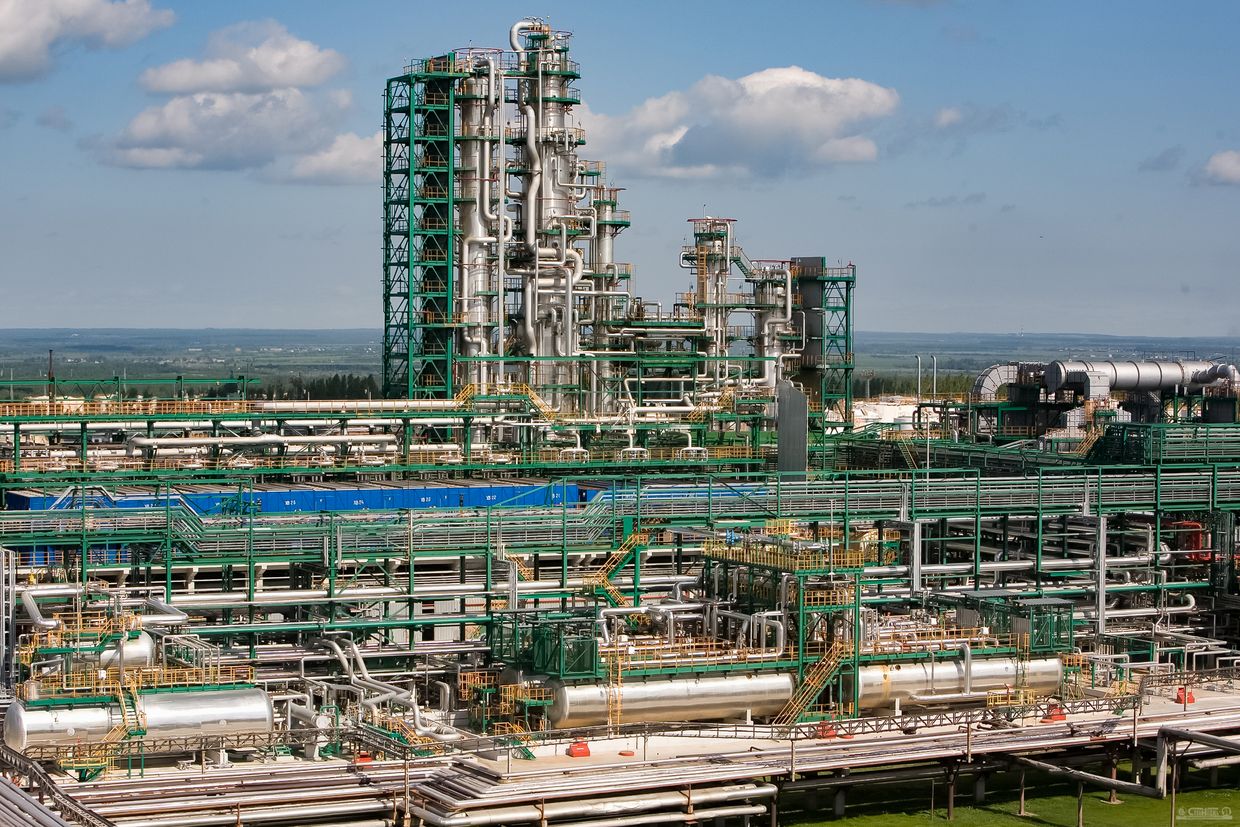
The Target Wasn’t Just Fuel
Ukraine’s overnight strike on the Slavneft-YANOS refinery in Yaroslavl and the damage inflicted on a Tu-95 strategic bomber at Engels airbase represent something larger than a coordinated hit on two facilities. This is a campaign that has reached a stage of maturity where Russia can no longer treat its own hinterland as shielded from the consequences of its war.
The refinery is one of Russia’s five largest, processing roughly 15 million tons of oil annually. It sits approximately 700 kilometers from Ukraine’s border — deep inside territory that Kyiv once considered beyond reach. It is owned jointly by Rosneft and Gazprom, the two state energy giants that funnel revenue into the Russian war machine. The plant produces gasoline, diesel, aviation kerosene, and fuel oil. On August 28, at least two fires burned across its territory.
This was not the first time Slavneft-YANOS has been hit. It is the eighth strike on this single facility in 2026. Previous attacks came on March 28, April 26, May 8, May 22, July 6, July 16, and August 6. Each one tests the same assumption: that Russia’s critical energy infrastructure can survive a war it chose to start. So far, the assumption is losing validity.
Who Loses When the Bombers Can’t Take Off
The Engels strike, confirmed by President Volodymyr Zelensky, may carry even heavier military significance than the refinery attack. The Tu-95 is Russia’s primary platform for launching cruise missiles against Ukrainian cities and military positions in volume. These bombers operate from Engels Air Base, more than 600 kilometers from Ukrainian-controlled territory, and have been central to Moscow’s strategy of attrition through missile saturation.
Zelensky identified the Alpha special forces unit of the Security Service of Ukraine (SBU) as the executing force — the same unit behind Operation Spiderweb in June 2025. That operation used small truck-launched drones to strike strategic bombers at Russian airfields. The repetition of tactics suggests institutional learning on both sides, but Ukraine is clearly moving faster.
A damaged Tu-95 means fewer cruise missiles on Ukrainian targets. Fewer cruise missiles mean less pressure on air defenses, less disruption to civilian infrastructure, and more breathing room for Ukraine’s military logistics. The second-order effect on Russian morale should not be understated either. Crews who once launched missions from Engels with confidence now face the reality that the base itself is penetrable.
The Human Cost Inside Russia
Yaroslavl Oblast Governor Mikhail Yevraev reported one fatality and 27 injuries from the attack, including ten people injured when drone debris struck a bus. Debris fell on industrial infrastructure, residential areas, and shops. Traffic toward Moscow was restricted and public transport routes adjusted.
These numbers are small in the context of the war overall, but they carry symbolic weight. For the first time in significant scale, Russian civilians in regions far from the front are experiencing direct consequences of the conflict. The psychological impact on populations that were told the war would remain contained beyond Ukraine’s borders is difficult to quantify but impossible to ignore.
What This Means for Global Markets
Russia remains one of the world’s top oil producers, and any disruption to its refining capacity feeds into global supply chains. The Yaroslavl facility’s output — particularly diesel and aviation kerosene — matters to Russian domestic distribution as much as to export flows. A refinery that cannot process at full capacity creates bottlenecks that ripple through Russian fuel markets, driving up prices for consumers and complicating logistics for the military.
The repeated strikes on a single facility suggest Ukraine is not aiming for catastrophic, permanent damage in every hit. Instead, the pattern points to cumulative degradation — a strategy of making Russia pay for every barrel it tries to refine and every missile it tries to launch. This is a war of attrition waged from the air, and the target set has expanded well beyond frontline positions.
Global markets are already pricing in some risk from the conflict, but the escalation of deep-strike capability introduces a new variable. If Ukraine continues to degrade Russia’s refining capacity systematically, the impact on Russian fuel availability and export revenue could accelerate faster than current market models assume.
The Strategic Shift
Kyiv has long considered Russian energy infrastructure a legitimate military target, citing the dual role of oil facilities in funding the war and supplying Russian forces. But the scale and frequency of these strikes have intensified sharply in 2026, marking a qualitative shift in Ukraine’s operational approach.
The message to Moscow is unambiguous: the war will not stay at the frontier. Every facility that fuels the Russian military is exposed. Every airbase launching cruise missiles is vulnerable. The calculus facing Russian decision-makers is no longer about winning or losing on the battlefield alone — it is about whether the cost of continuing the war can be absorbed domestically.
For Kyiv, these operations serve a different purpose. They demonstrate that Ukraine retains the capacity to strike deep, that its intelligence and special operations capabilities are improving, and that Russia’s homeland is not a sanctuary. This matters for Western confidence as much as for Russian calculations.
What Happens Next
Russia will respond. Air defenses around key energy and military infrastructure will be hardened, bombers will be dispersed to additional bases, and retaliatory strikes on Ukrainian energy facilities will intensify. The cycle is already underway.
But the trajectory is clear. Ukraine is expanding the perimeter of the war deeper into Russian territory with each passing month. The question is no longer whether Ukraine can reach these targets — it is how much damage it can accumulate before Russia finds an effective counter.
The strikes on Slavneft-YANOS and Engels are not isolated events. They are markers in a campaign that is reshaping how both sides understand the geography of this war. For Russia, the distance between the front line and the home front has shrunk dramatically. For Ukraine, the ability to project power deep inside Russia has become a weapon of strategic consequence.
The cost of prolonging this war just went up — and it is no longer borne only by soldiers on the line.