Ukraine's Deep Strikes on Russian Refineries Are a New Phase of Energy War
Ukraine's second strike on the Taneco refinery in ten days and a hit on the Tamanneftegaz terminal signal a systematic campaign against Russia's oil infrastructure. The question is whether this economic attrition reshapes fuel markets and constrains Moscow's war effort.
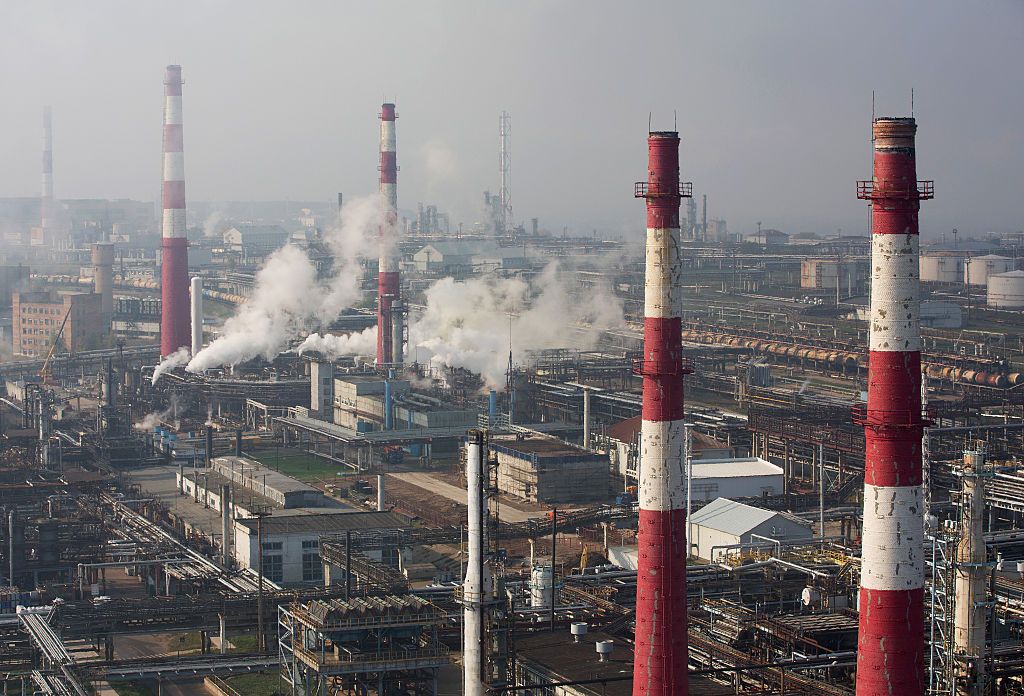
Kyiv hit Russia’s Taneco refinery in Tatarstan and the Tamanneftegaz terminal in Krasnodar Krai overnight on August 20, the Ukrainian General Staff confirmed. This was Taneco’s second strike in ten days — the facility was hit on August 10, when Ukraine recorded a fire at the site. The repeat targeting, coupled with a simultaneous blow to a key Black Sea export terminal, marks a shift in how Ukraine is conducting its deep-strike campaign.
Taneco, owned by Tatneft, processes up to 16 million tons of crude oil annually in Nizhnekamsk, roughly 1,200 kilometers from the Ukrainian border. It produces motor fuels and petroleum products that supply Russian military operations, according to Kyiv’s military briefings. The Tamanneftegaz terminal, described by the General Staff as “one of the key Russian oil terminals in the Black Sea region,” was struck previously in June when three storage tanks, a pipeline, and loading infrastructure were damaged.
These are not isolated incidents. The Nizhnekamsk industrial corridor — home to Taneco, the TAIF-NK refinery struck in July, and the Nizhnekamskneftekhim petrochemical plant hit in May and June — has become one of the most frequently targeted energy zones inside Russia. The additional strike on the 500-kilovolt Taman electrical substation, which powers Russian-occupied Crimea, extends the campaign into occupied territory’s critical infrastructure.
The pattern matters more than any single strike. Ukraine is no longer reacting to Russian military movements; it is systematically degrading the infrastructure that funds and equips them. Each successful hit on a refinery reduces Russia’s ability to refine crude into usable fuel. Each attack on an export terminal constrains the volume Russia can ship to paying customers. The compounding effect is what separates this campaign from the sporadic drone attacks that characterized the first two years of the war.
For Russia, the mathematics are uncomfortable. The country refined approximately 240 million tons of crude oil in 2025, producing vast quantities of diesel, jet fuel, and gasoline. Even a fraction of that output flows through the facilities Ukraine is now targeting. Taneco alone accounts for roughly seven percent of Russia’s total refining capacity. Repeated damage to a single refinery does not eliminate its output — repairs can be staged, operations can be partially restored — but it introduces chronic uncertainty into a supply chain that Russia depends on to finance its war.
The second strike on Taneco in such a short window signals that Ukraine is not deterred by Russian defensive measures. Air defense systems around Nizhnekamsk and other industrial targets in the Volga region have been reinforced since the spring. Despite those countermeasures, Kyiv’s drones have continued to penetrate, suggesting either an evolving capabilities gap or a willingness to absorb losses in drone attrition. For every Ukrainian drone shot down, the one that reaches its target imposes repair costs, operational delays, and insurance premium increases on Russian energy companies — a form of economic warfare that operates on thin margins but compounds over time.
The global fuel market angle is where this story extends beyond Eastern Europe. Russia is a major exporter of refined petroleum products, and disruptions to its refining sector have real consequences for international supply. European buyers, which previously absorbed significant volumes of Russian diesel and fuel oil, have largely redirected to other suppliers since sanctions tightened. But the structural shift is incomplete. Russian refined products still flow into global markets through alternate routes and intermediaries, particularly to markets in Asia, Africa, and the Middle East that have expanded their purchasing agreements with Moscow since 2022.
The question for energy traders and policymakers is whether Ukraine’s strikes are producing measurable reductions in Russian refining throughput or simply raising the cost of maintaining operations. There is no independent verification of current output levels at Taneco or Tamanneftegaz. Ukraine’s General Staff reported fires and damage; it did not provide estimates of lost capacity. Russia has not disclosed production figures for either facility since the strikes. What is clear is that the frequency of attacks is increasing, and the geographic range of Ukraine’s deep-strike capability is expanding — the 1,200-kilometer distance to Nizhnekamsk represents significant reach for drone operations.
Satellite imagery analysis by independent open-source investigators has shown smoke plumes and visible damage at both facilities in the days following the August 20 strikes. Tanker movements at Taman have slowed compared to pre-strike levels, though whether this reflects damage, operational caution, or schedule adjustments remains unclear. Marine traffic data shows some vessels rerouting away from the Black Sea exit, but the overall flow of Russian petroleum exports has not collapsed — a sign of both resilience and the difficulty of strangling a supply chain that now moves through a web of floating storage, transshipment, and flag-of-convenience vessels designed to obscure origins.
Europe faces a different calculus. The continent has invested heavily in diversifying its energy supply away from Russian pipelines and seaborne crude. Refining capacity adjustments are underway, but they take years, not months. If Russian refined product exports decline meaningfully due to infrastructure damage, the residual demand does not simply disappear — it shifts to other suppliers, potentially driving prices higher. The International Energy Agency and other monitoring bodies have flagged the risk of tighter distillate markets in 2026, and Ukrainian strikes on Russian refineries add an unpredictable variable to that assessment.
Second-order effects are already visible. Russian refinery damage reduces domestic supply, which can push diesel and gasoline prices up within Russia itself — a political sensitivity for a regime that has worked to insulate consumers from wartime price shocks. Higher domestic fuel costs compress margins for Russian logistics companies and agricultural operations, creating feedback loops that ripple through the economy. Meanwhile, the disruption to Tamanneftegaz’s export capacity affects not only revenue from finished products but also the throughput of crude that would otherwise flow through the terminal for shipment to Asian buyers. Even partial damage to export infrastructure can cause bottlenecks that reverberate through scheduling contracts and force price discounts that eat into margins even when volumes are maintained.
What is less certain is whether Kyiv’s strategy will achieve its strategic objective. Attacking refineries raises the cost of war for Moscow, but it does not directly reduce the number of troops on the front lines. It constrains revenue, but Russia has demonstrated an ability to reroute exports and absorb financial pressure. The campaign’s effectiveness depends on whether the cumulative damage exceeds Russia’s capacity to repair and compensate — a question that will take months, perhaps years, to answer.
What is notable about the August 20 strikes is the coordination between targets in different regions. Hitting a refinery in Tatarstan and a terminal in Krasnodar simultaneously suggests advance planning and an understanding of Russian infrastructure dependencies. The Taman substation attack extends the operation into Crimea, complicating Moscow’s ability to maintain power for occupied territories while defending its own territory.
This coordination points to a broader operational concept: the targeting of infrastructure nodes that are mutually reinforcing. A refinery needs electricity; an export terminal needs grid stability; a substation feeds both. Disrupting one element creates cascading vulnerabilities. The electricity substation hit near Taman is particularly significant because it is rated for 500 kilovolts — the kind of high-voltage infrastructure that is difficult to replace quickly and whose failure can cascade across regional grids. Restoration of such facilities typically requires specialized transformers and components that, under sanctions, are harder for Russian operators to source.
This is escalation by attrition, not by shock. Ukraine is not seeking a single decisive blow. It is building a pattern of repeated strikes that makes Russian energy infrastructure permanently vulnerable — a strategy designed to erode the economic foundation of the war over time. Whether that erosion translates into political or military constraint remains the open question. But the targeting pattern suggests Kyiv is prepared to wait and see, applying sustained pressure until the cost of maintaining the war effort becomes politically unsustainable for Moscow.