Ukraine's drone parade is a sales pitch to the world
Ukraine held its first-ever all-unmanned military parade on Independence Day, showcasing drones, ground robots, and unmanned boats instead of soldiers. The demonstration carries direct implications for defense buyers worldwide — especially in South Korea.
No soldiers. Just machines.
Ukraine’s 35th Independence Day parade in Kyiv on August 24 made a point that needed no words: the future of war has arrived, and it doesn’t march on foot.
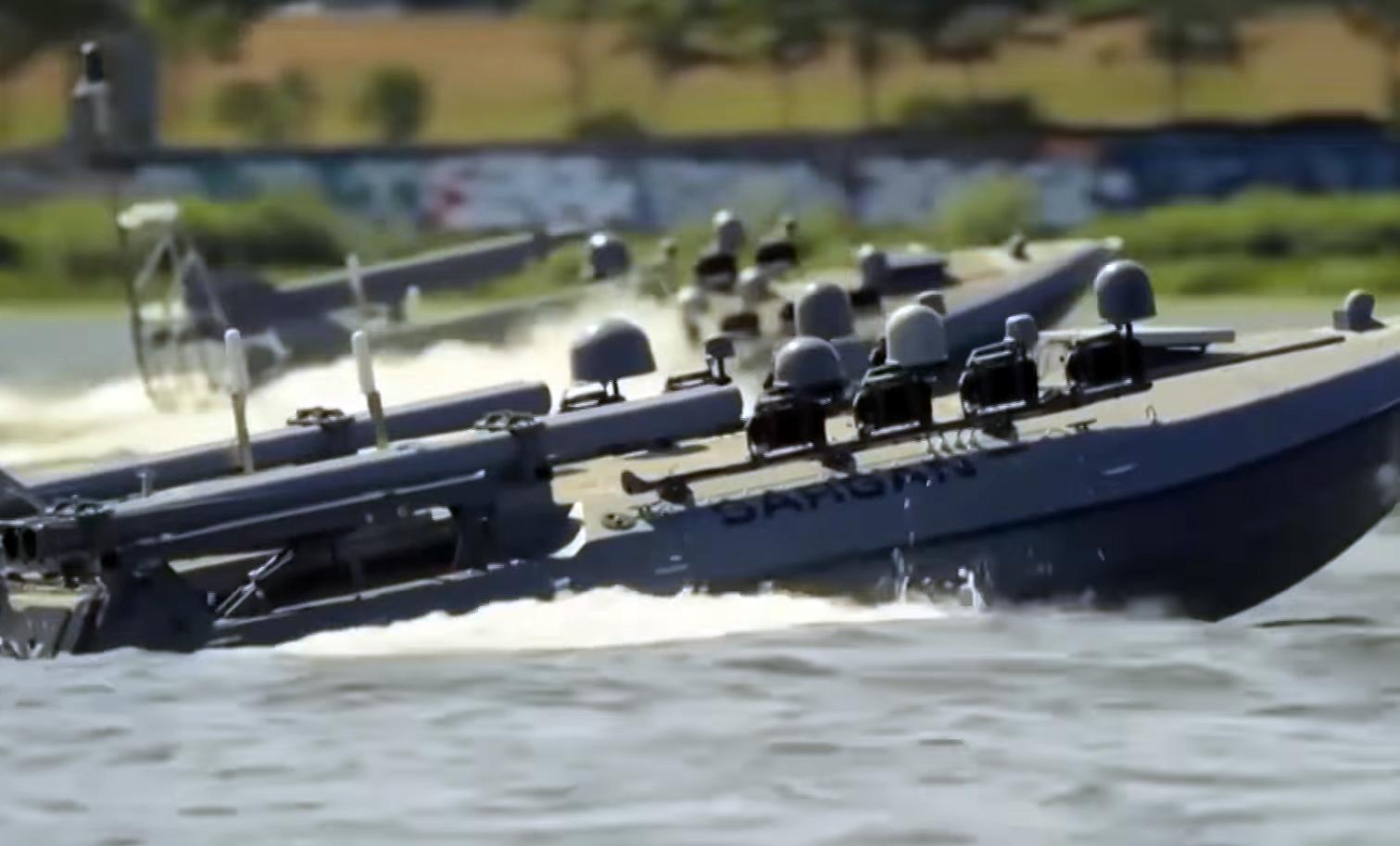
Where a traditional parade would fill the streets with troops and tanks, this one filled the sky with drones, the Dnipro River with unmanned boats, and the ground with robots performing logistics, reconnaissance, and casualty evacuation missions. Euro News called it a window into how dramatically Russia’s February 2022 invasion transformed the Ukrainian military. Defense Express went further, calling it the world’s first all-unmanned combat-systems parade.
The implication for defense buyers — especially in countries like South Korea that depend heavily on military technology imports — is not abstract. Ukraine is effectively running a live product demonstration for the 21st-century battlefield.
What Ukraine showed off
The Ukrainian presidential office released photos and video of dozens of unmanned ground vehicles rolling through Kyiv’s streets, flying drones hovering over the capital, and autonomous boats cutting across the Dnipro. The robots have already completed more than 66,000 missions this year alone, according to the office — carrying ammunition, planting and clearing mines, and extracting wounded soldiers under fire.
Perhaps most striking was the emphasis on long-range strike capability. Ukraine has faced a chronic shortage of attack missiles, so it has compensated with drones capable of reaching up to 3,500 kilometers into Russian territory. That range turns a cheap aerial platform into a strategic weapon, one that bypasses traditional air defense layers and strikes deep behind enemy lines.
The unmanned boats serve a different but equally important purpose. Ukraine’s conventional navy is a fraction of Russia’s Black Sea Fleet in tonnage and firepower. Autonomous surface vessels give Kyiv a way to contest waterways without matching Moscow ship-for-ship.
The AI layer underneath
What makes this parade more than a collection of gadgets is the artificial intelligence infrastructure being built around them. Ukraine has established the “Avengers AI Institute,” which analyzes more than 100,000 drone footage clips per month to train automated target-recognition systems. This month, Kyiv granted the United Kingdom access to the institute’s data — a rare concession that signals how seriously Ukraine treats its wartime AI gains as a strategic asset.
Russia is racing to catch up. According to the New York Times, Russian forces recently deployed an autonomous loitering munition equipped with an NVIDIA Jetson Orin mini-computer at a fuel depot in the Zaporizhzhia region. The key detail: the drone selects and engages targets without any external communication antenna, meaning a human operator cannot intervene or abort the strike mid-flight. That crosses a threshold in autonomous lethal decision-making that military ethicists and arms control advocates have warned about for years.
Britain’s visit was a signal, too
UK Prime Minister Andy Burnham chose Kyiv as his first overseas trip since taking office on August 20. He co-chaired the Coalition of the Willing summit with President Volodymyr Zelenskyy, bringing together leaders from more than 30 partner nations. The most concrete outcome: Britain, France, and Italy agreed to share classified technical details of the Storm Shadow long-range cruise missile so Ukraine can produce it domestically. That is a significant escalation in Western weapons transfers — moving from supplying finished systems to transferring the know-how to build them.
Burnham also played guitar in front of Ukrainian troops, something he said was meant to boost morale. The gesture drew a sharp response from the Kremlin. Deputy Foreign Minister Andrei Kelin was recalled to Moscow, and presidential spokesperson Dmitry Peskov accused Britain of participating directly in the war.
Not everyone in the West agrees with the direction. Some CNN analysts argued that Ukraine’s most urgent need remains air defense — specifically Patriot systems to intercept the relentless Russian ballistic missile barrage — rather than offensive missile technology. The tension between offense and defense in Western aid packages is a debate that will shape how long Ukraine can sustain its current operations.
Why this matters for South Korea
South Korea watches these developments with particular attention. The country faces an imminent threat from North Korea’s expanding missile and drone programs, yet its own defense industry has traditionally relied on importing key systems rather than developing indigenous unmanned warfare capabilities at scale.
Ukraine’s experience offers several lessons that Seoul cannot afford to ignore.
First, the cost asymmetry is stark. A $50,000 commercial-grade drone can neutralize a $5 million tank. North Korea is reportedly accumulating tens of thousands of such systems, and South Korea’s current force structure is not optimized for the kind of layered, drone-centric defense that Ukraine has been forced to build.
Second, the AI dimension is decisive. Ukraine’s Avengers Institute represents a feedback loop — every drone strike generates data that improves the next generation of target recognition. South Korea’s military AI efforts remain fragmented across agencies and services. Harmonizing that capability would be as important as any single platform acquisition.
Third, the Storm Shadow technology transfer shows what industrial cooperation can look like under pressure. South Korea could draw a parallel in its own relationships with European and American defense contractors — pushing beyond buy-and-operate arrangements toward shared production and co-development, especially for systems that matter most to its survival.
Finally, there is the question of autonomy. Russia’s deployment of AI-directed lethal drones without human oversight is a warning signal. Any nation preparing for conflict on the Korean peninsula needs to think about how to counter autonomous weapons — and how to deploy them responsibly before an adversary forces their hand.
What comes next
Ukraine’s unmanned parade was not merely symbolic. It was a declaration that a country fighting for survival has rewritten the playbook on modern warfare — and it is inviting the world to take notes.
The real test will come not in Kyiv’s city center but on contested front lines where drone swarms meet electronic warfare countermeasures, where AI target recognition collides with camouflage and decoys, and where the cost equations keep shifting faster than any defense budget can track.
For South Korea and other nations watching, the message is clear: the war in Ukraine is not just a regional conflict. It is the largest live trial of next-generation warfare ever conducted, and the lessons being learned there will reshape defense procurement for decades.