Ukraine's St. Petersburg Strike Rewrites the War's Geometry
A massive Ukrainian drone attack hitting an oil terminal, data center, and bridge in St. Petersburg signals a dramatic escalation in Kyiv's reach into Russia's critical infrastructure — and undercuts the fragile ceasefire narrative.
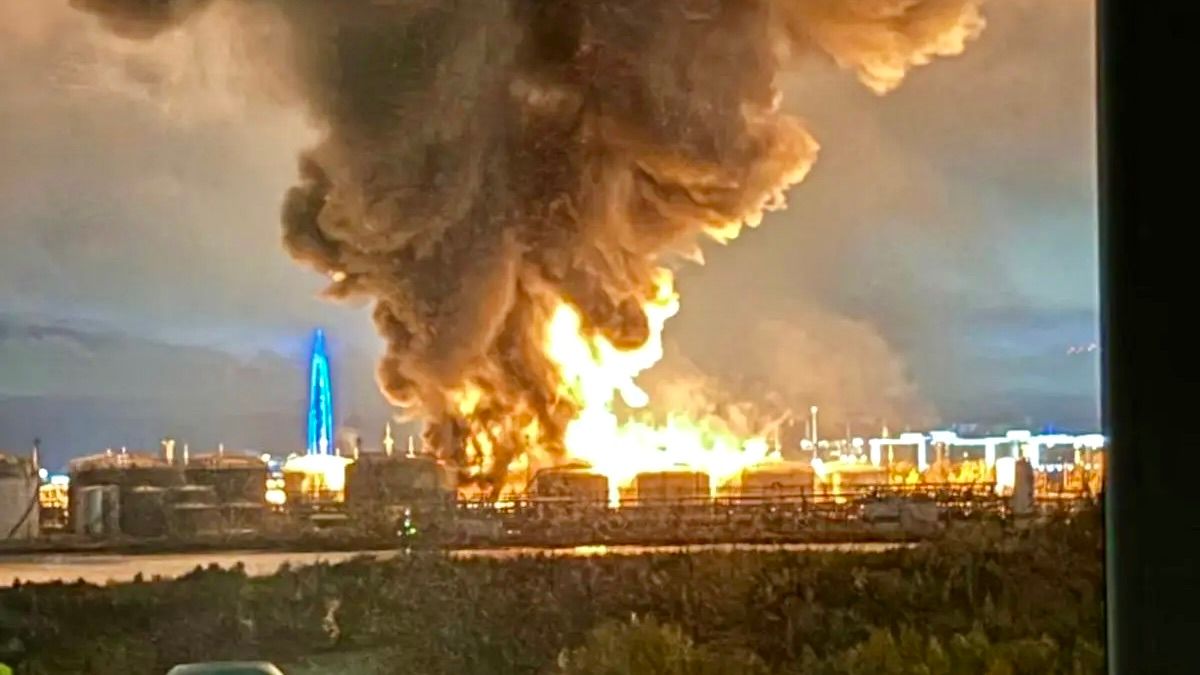
A City That Should Have Been Safe
St. Petersburg sits 856 kilometers from the Ukrainian border — deep inside what Moscow has long treated as its strategic rear. The city of 5.6 million has been bombed before during this war, but the scale and scope of the overnight attack on October 18 are qualitatively different from anything that came before.
One hundred and twenty-seven drones were intercepted over Leningrad Oblast alone. Fires burned at the St. Petersburg Oil Terminal, the Ruchei oil depot, and industrial warehouses in the Kolpinsky District. A power substation was struck. Blackouts and reduced water pressure rippled through parts of the city. One person died. Five others were injured. Twelve apartment buildings and two houses were damaged. Drone debris struck four parked cars in a residential lot.
Russian Governor Alexander Beglov confirmed the attacks. Kremlin spokesperson Dmitry Peskov tried to minimize them, telling reporters that Ukrainian strikes were incapable of changing the course of events. The language was dismissive. The reality was more complicated.
The Oil Terminal Matters More Than You Think
The St. Petersburg Oil Terminal is not a minor target. It is one of Russia’s largest fuel storage and export facilities, handling 12.5 million tons of petroleum products annually. The terminal receives and ships fuel by river, rail, and road — a logistical hub that feeds both domestic markets and export routes that have become critical revenue streams for the Kremlin’s war effort.
This is the second time in three months that Ukrainian forces have struck this specific facility. On July 4, drones damaged the terminal in a previous overnight raid. The recurrence is deliberate. Ukraine is not testing Russian defenses with a single opportunistic strike. It is building a pattern of degradation.
Fire Point, a Ukrainian drone manufacturer, claimed its FP-1 attack drone was used against the terminal. Whether that claim is verified or not, the implication is the same: Ukraine now possesses the range, persistence, and precision to return to the same target and hit it again.
The Data Center Hit Is the Quiet Escalation
Perhaps more significant than the fire at the oil terminal is the reported strike on a VKontakte data center. VKontakte, Russia’s largest social media platform, operates critical digital infrastructure that underpins everything from communication to content moderation to state propaganda distribution.
This follows a clear pattern. Ukrainian forces have struck multiple Yandex data centers in recent weeks. President Volodymyr Zelensky explicitly promised that Ukraine would respond in kind to Russian attacks on Ukrainian data centers. The logic is straightforward retaliation, but the strategic effect is expansive.
Russia’s information infrastructure is concentrated. Hitting VKontakte’s data centers does not just disrupt a social network — it attacks a node in the ecosystem that helps sustain domestic narrative control. In a war where perception is as important as territory, knocking out a major platform’s backend is a meaningful strike, even if the outage is temporary.
The Ceasefire Fracture
The timing of this attack carries geopolitical weight. It comes after U.S. President Donald Trump’s attempted energy ceasefire between Russia and Ukraine failed to prevent strikes on energy infrastructure. The ceasefire did not hold. More importantly, it appears not to have constrained Ukraine’s operational choices.
This is a fracture in the diplomatic landscape. If Kyiv is conducting large-scale drone raids on Russian critical infrastructure while a peace framework is being discussed — or at least while external powers are pushing for de-escalation — then any negotiated settlement will face a fundamental problem: the infrastructure that makes peace viable is still being actively attacked on both sides.
Russia continues to intensify its own attacks on Ukrainian civilian and energy infrastructure. Ukraine continues to hit sites deep inside Russia. The two patterns reinforce each other. Each side’s strikes validate the other’s grievances and make political compromise harder, not easier.
Who Wins, Who Loses, What Happens Next
Ukraine wins a significant propaganda and psychological victory. The images of explosions over St. Petersburg’s night sky, captured by residents and shared globally, demonstrate that Russia’s second city is not secure. That fact alone changes how Moscow plans its air defense investments and how its population perceives the war’s proximity.
Russia loses credibility in its own defensive narrative. Governor Aleksandr Drozdenko reported that 127 drones were shot down — which means some got through. The fact that multiple high-value targets were hit in a single night, including facilities that should sit well beyond effective drone range, undermines confidence in Russia’s layered air defense system.
Energy markets get a reminder that Russian fuel infrastructure is vulnerable. The St. Petersburg Oil Terminal’s 12.5 million ton annual throughput represents a non-trivial share of Russia’s domestic fuel distribution network. Disruptions here do not immediately collapse Russian energy exports, but they add to the cumulative pressure on a system that has already absorbed sanctions, diversions, and capacity constraints.
The ceasefire narrative loses ground. Whether any negotiated settlement is imminent or years away, the fact that both sides continue striking deep infrastructure makes any agreement far harder to construct. Trust is not built when oil terminals and data centers are burning in cities that were supposed to be safe.
What happens next depends on whether Ukraine treats this as a one-off or a new doctrine. The July strike on the same oil terminal and the repeated Yandex data center attacks suggest the latter. If Ukraine commits to a sustained campaign against Russian energy and digital infrastructure — even at the scale of this single night’s operation — the war’s economic and psychological dimensions will continue to widen well beyond the front lines.