Ukraine's Laser Drone Kill Rewrites Counter-Drone Math
Ukraine confirmed the first combat laser intercept of a Russian jet-powered drone, a move that slashes the per-engagement cost of air defense by orders of magnitude. The private-sector model behind the Blysk system and the 57 percent interception gap for jet drones together signal that NATO's current air-defense procurement stack is already a generation out of date.
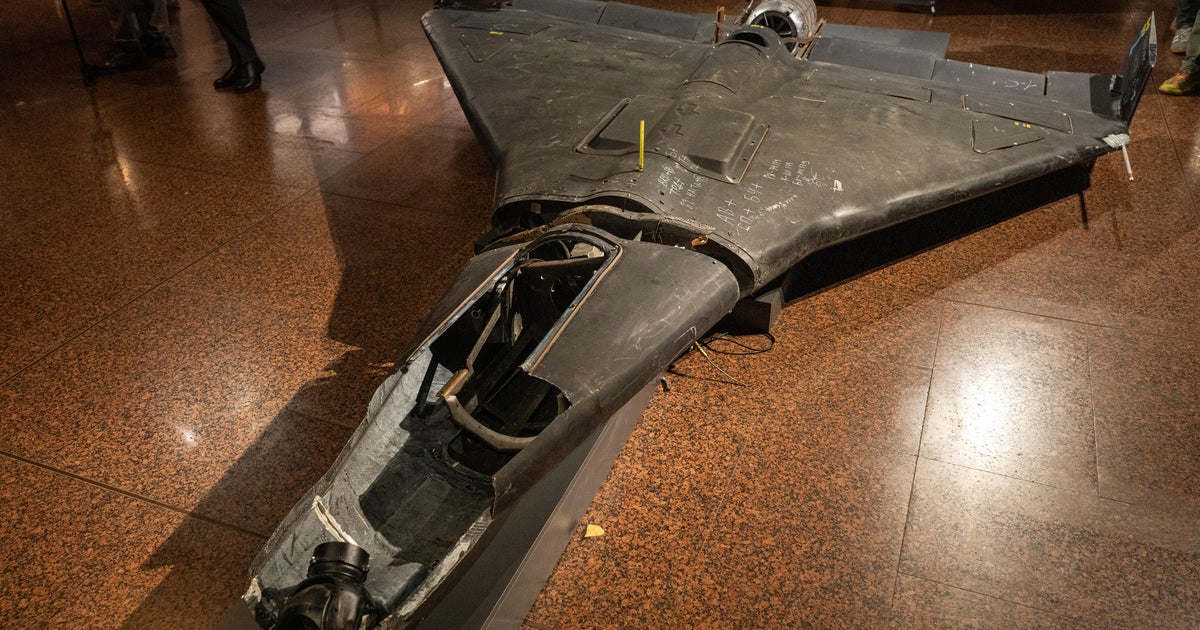
The per-shot cost just collapsed, and nobody in Brussels has noticed yet
One laser pulse costs roughly a few cents in electricity. A Patriot intercept missile costs somewhere between $2 million and $4 million. A NASAMS round runs closer to $450,000. Now multiply that gap by the fact that Russia is allegedly producing around 1,200 Geran-4 and 800 Geran-5 jet-powered drones in a single month, per estimates from the Ukrainian military nonprofit Come Back Alive. Even if those numbers carry a margin of error, the order of magnitude is clear: Russia is flooding Ukraine with cheap, fast, one-way munitions at a pace that makes conventional air-defense interceptors financially absurd within two years.
Ukraine’s confirmation this week that the Blysk laser system, built by Carmine Sky, has killed a Russian jet drone in combat is not a footnote to the war. It is the first public data point proving that the directed-energy answer to that cost asymmetry works outside the lab. Senior military adviser Serhii “Flash” Beskrestnov, speaking for President Volodymyr Zelenskyy’s office, did not disclose which installation was protected. That omission matters. The fact that the test was run over critical infrastructure, not a training range, tells you the threat level is already past the point where you wait for a peer-reviewed demonstration.
The 57 percent problem
Here is the number that should be on every NATO defense-ministry dashboard. In June 2026, Ukraine was intercepting roughly 57 percent of incoming jet-powered drones. The same network was shooting down about 90 percent of the older, propeller-driven Shahed-derivative drones. That 33-point gap is not a tuning issue. Jet engines push those drones into the 500-plus-knot regime, which shrinks the engagement envelope for radar-guided missiles to a window of seconds. The interceptors have to be closer, the solution times are shorter, and the volume of incoming targets per sortie has climbed so high that batteries are burning through their magazines faster than resupply can keep up.
Russia’s shift to the Geran-4 and Geran-5 earlier this year was not an incremental upgrade. It was a deliberate attempt to break the economics of Western and Ukrainian air defense. If every intercept costs you $1 million and every drone costs $20,000, the attacker only needs to sustain a ratio of 50-to-1 to bankrupt your interceptor supply chain. The laser collapses the defender’s cost side of that equation by roughly five orders of magnitude. A battery that fires 300 shots of electricity per night is not the same procurement problem as one that fires 300 missiles.
The private model is the quieter story
What makes the Blysk development harder to file under “government R&D” is that it sits inside Zelenskyy’s Private Air Defense program. Around 100 Ukrainian companies are now working under that umbrella. Carmine Sky built the hardware; the state provided the testing framework and, presumably, the targeting data. Beskrestnov was explicit that serial production is “still too early,” but the architecture is already visible: a decentralized, multi-vendor pipeline where a private firm can take a field kill, publish the result, and iterate on the next generation without waiting for a seven-year ministry acquisition cycle.
That model is not new in idea. The U.S. has dabbled in defense-as-a-service and in small-business rapid prototyping under SBIR. But it has never been the primary counter-drone strategy for a country under sustained, daily saturation attack. Ukraine is running it in the open, under fire, with the production targets and the test sites in the same country. The feedback loop between “shot down” and “next iteration” is measured in weeks, not fiscal years. No Western defense ministry currently runs that cadence for air-defense systems.
What this does to NATO’s procurement calendar
NATO’s next round of air-defense replenishment is still structured around the Patriot, the MEADS program, the SAMP/T, and the IRIS-T family. Each of those is a ballistic-missile-intercept derivative, optimized for high-value, low-volume targets. None of them were designed to shoot down 2,000 jet drones a month at a per-unit cost that keeps the defense budget solvent. The laser intercept in Ukraine is the first in-combat proof that the problem has shifted from “can you intercept fast enough?” to “can you afford to intercept fast enough at all?”
The practical implication for procurement offices in Washington, London, Brussels, and Tokyo is uncomfortable. If the directed-energy layer is cheap, scalable, and battle-tested, the marginal value of another Patriot battery drops sharply. The money shifts to the laser and to the sensor network that feeds it. The conventional air-defense spend that has anchored national budgets since the 1990s starts looking like a sunk cost, not a capability.
That shift is not going to happen this year. Beskrestnov’s caution about serial production is well placed. One confirmed kill of one jet drone does not equal a battalion of Blysk units on a line. Thermal management, power supply, atmospheric degradation, and the question of whether a single laser can track multiple simultaneous targets at jet speed all remain open. The system is in its first combat loop, and the gap between “it worked once over a power plant” and “it holds a division-level air corridor