Ukraine Legalizes Porn to Fund Drones
Ukraine's parliament has advanced a bill to legalize the adult entertainment industry, a move that could raise $25 million annually for drones. The unorthodox war-finance experiment reveals how desperate states are reimagining revenue streams in prolonged conflicts.
The Unlikely Revenue Frontier
Kyiv has found itself in a tax dilemma that sounds like satire but is entirely real: adult content creators in Ukraine face prosecution if they don’t report their income, and prosecution if they do. The country currently criminalizes the production, distribution, and possession of adult entertainment, with violations carrying penalties of up to seven years imprisonment. Yet the underground market thrives—particularly on platforms like OnlyFans, where Ukrainian models earned an estimated $131 million in 2023 alone.
The government’s attempt to collect taxes from this hidden economy created an absurd catch-22 that played out in real time across social media. Tax officials obtained income data on Ukrainian OnlyFans creators from Phoenix International, the UK-based parent company, through standard information-sharing channels. When Kyiv started sending tax assessments, models faced the impossible choice: comply and confess to an illegal trade, or refuse and face tax evasion charges. Some simply left—relocating abroad or moving operations to neighboring countries, taking their tax revenue with them. Ukrainian Telegram channels lit up with threads of creators sharing tips on how to structurally distance themselves from Kyiv’s tax net, redirecting payments through Lithuanian accounts or Estonian virtual offices.
A Legalization Gamble
The solution emerging from Ukraine’s parliament is starkly pragmatic: legalize the industry. Yaroslav Zheleznyak, chair of the parliamentary finance committee, introduced legislation that would decriminalize adult content production and distribution. The bill passed its first reading in July and now awaits a second vote, where it faces scrutiny from both ideological opponents and fiscal pragmatists.
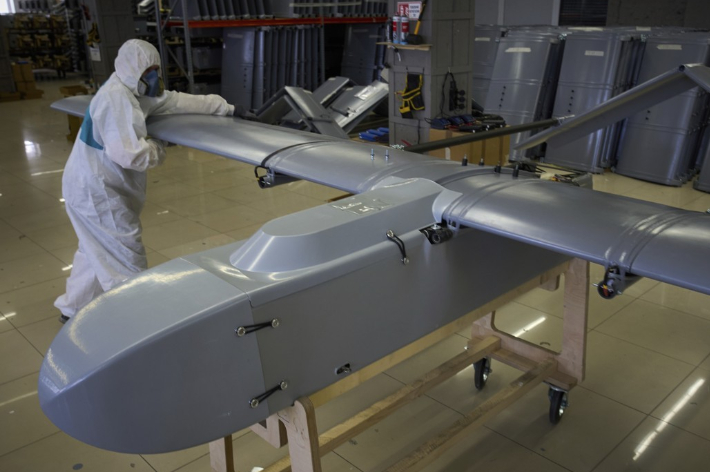
The numbers matter here. Zheleznyak projects legalization could generate up to $25 million annually—roughly 33.7 billion Korean won in converted terms. That figure may seem modest against the backdrop of a multi-year war costing billions, but it translates directly into military capability: approximately 30,000 drones. In a conflict where unmanned aerial systems have become the currency of frontline warfare, that conversion rate carries weight. A single combat-grade drone can cost anywhere from $500 to $30,000 depending on configuration, meaning the lower-end estimates stretch the math while the upper end makes the projection conservative.
Volodymyr Zelensky recently responded to a national petition supporting legalization, confirming the parliament would review the measure. The petition was spearheaded by Svitlana Dvornikova, an OnlyFans creator with one million subscribers who reportedly paid $900,000 in taxes—a figure that shocked even seasoned fiscal observers. Her argument was blunt and repeatedly quoted in parliamentary debates: the state should thank her for the revenue, not brand her a criminal. She calculated her taxes alone could fund 2,000 drones or 100 military trucks, a direct line from her bedroom to the front that bypassed the usual abstraction of taxation.
Dvornikova’s case exposed the full absurdity of the current framework. She was voluntarily paying taxes on income from an activity the state simultaneously criminalizes, effectively subsidizing the war effort while remaining legally vulnerable. Her public profile gave the debate a human face that abstract fiscal arguments could not achieve.
Why This Matters Beyond Ukraine
What makes this story significant isn’t merely that a war-torn nation is considering legalizing its adult industry—it’s what the episode reveals about the evolving mechanics of conflict finance. Ukraine isn’t borrowing or requesting aid; it’s tapping into an existing shadow economy and formalizing it. This represents a shift in how modern states approach wartime revenue, particularly when traditional sources dry up and foreign aid becomes increasingly conditional or unpredictable.
The digital dimension is critical and largely unprecedented for a country of Ukraine’s scale. Unlike physical commodities, adult content can be produced and distributed globally through platforms headquartered in London, Stockholm, or San Francisco. The tax jurisdiction problem is structural: platforms hold the data, creators operate across borders, and governments struggle to map economic activity that exists primarily online. Ukraine’s predicament with OnlyFans data from Phoenix International illustrates this perfectly—foreign tech companies can become unwitting tax informants when governments press them for information, creating diplomatic friction even as they solve domestic collection problems.
The precedent risk is real and immediate. If Ukraine succeeds in legalizing and taxing this industry, other nations facing fiscal pressure—particularly those involved in prolonged conflicts from Myanmar to Ethiopia to Venezuela—may follow. The moral and cultural dimensions will vary by country, but the fiscal logic is universal: when you have millions of citizens already earning money in a banned sector, formalization often makes more economic sense than enforcement. Estonia, which already legalized sex work in 2001, has quietly become a gateway for Ukrainian creators seeking EU-aligned operations. That geographic shift alone demonstrates the policy’s second-order effects even before passage.
Who Wins, Who Loses
The winners are predictable: the Ukrainian state gains a new revenue stream, adult creators gain legal protection, and the military gains equipment. The losers are harder to identify but potentially more significant. Those who oppose legalization on moral grounds will face an awkward reality—that their preferred outcome (a ban) coexists with widespread violation and zero tax revenue. The contradiction between prohibition and actual behavior has always been the industry’s central flaw, and legalization strips away that pretense.
International platforms may gain a foothold in a market previously inaccessible due to legal uncertainty. OnlyFans, Fansly, and similar services could expand operations formally into Ukraine rather than operating in the gray zone that currently exists. This brings regulatory obligations, age-verification requirements, and labor protections—but also stability and growth for companies that have been navigating Ukrainian law by default rather than design.
Ukrainian creators who haven’t participated in the shadow economy may also feel disadvantaged, having operated under stricter constraints while their competitors exploited regulatory gaps. The exit of some models to other jurisdictions suggests the policy debate isn’t just theoretical—it’s already reshaping where this economic activity takes place. Creators in Poland, Georgia, and Moldova report increased inquiries from Ukrainian counterparts, creating a quiet brain drain of a different kind.
Conservative religious groups have already mobilized opposition, framing the issue as a moral corruption that undermines Ukraine’s European aspirations. But their arguments have collided with the practical reality that Ukrainian women are already producing and selling this content at scale, paying taxes they’re legally prohibited from earning. The cognitive dissonance has been visible in parliamentary sessions.
Second-Order Effects and Unintended Consequences
Beyond the immediate fiscal impact, several secondary dynamics are already unfolding. The professionalization of Ukraine’s adult industry could create a new export sector with genuine economic multiplier effects—agencies, marketing firms, legal counsel, payment processors, and housing markets near creator hubs in Kyiv and Lviv. Tax revenue, even at $25 million annually, would flow through the budget system and create employment beyond the creators themselves.
There is also a reputational dimension. Ukraine’s global image has been carefully cultivated around resilience, democracy, and European values. Legalizing the adult industry adds a layer of complexity to that narrative—both negative from conservative quarters and positive from liberal ones. The government has been careful to frame the measure strictly as a wartime fiscal tool rather than a cultural statement, but that framing may not hold under normal circumstances once the war ends.
Cybersecurity concerns have emerged as well. A legalized industry generates more official records—tax filings, licenses, identity verification—which creates data targets for Russian intelligence. Ukraine’s digital infrastructure has already suffered repeated attacks, and adding another category of sensitive personal data to government databases introduces risk that lawmakers are still evaluating.
What Comes Next
The legislation’s path through parliament remains uncertain. The second reading could reinforce, amend, or stall the proposal. Even if passed, implementation details—tax rates, licensing requirements, enforcement mechanisms—will determine whether the projected $25 million materializes or falls short. Experience from other legalized industries suggests that regulatory overhead can consume a significant portion of expected revenue, particularly in the first years of operation.
The timing is politically significant. With presidential elections expected in 2027, any successful revenue generation from this source would bolster the current administration’s fiscal credibility, while failure could embolden opponents. The war’s trajectory—if it de-escalates, stabilizes, or intensifies—will also reshape the fiscal calculus that made this proposal necessary in the first place.
But the broader trajectory is clearest. Ukraine’s war has exposed the limits of conventional fiscal policy under sustained conflict. When aid flows waver and defense budgets strain, governments experiment. Legalizing an existing black market for revenue is one such experiment—and it may prove to be the kind of unorthodox move that defines how future conflicts are financed, not just fought. The question is no longer whether desperate states will find creative revenue sources, but which ones will follow Ukraine’s lead and what happens when the shadow economy becomes the official one.