Ukraine's Siberian Gas Strike Changes the War's Economic Calculus
Ukraine has struck Russia's natural gas hinterland for the first time, hitting facilities in Novy Urengoy nearly 3,000 kilometers from the Ukrainian border. The move signals a strategic escalation with implications for European energy security and Russia's war economy.
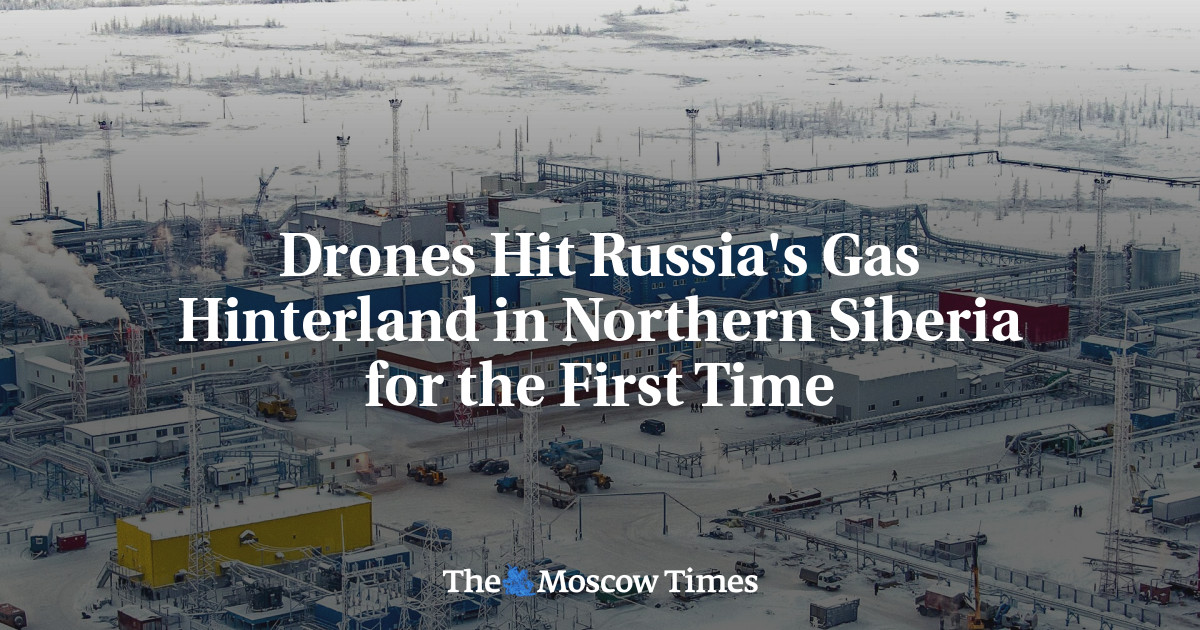
A Line Crossed in the Permafrost
Three thousand kilometers from the Ukrainian border, an industrial facility caught fire on a Wednesday morning in Novy Urengoy. The city sits in the Yamal-Nenets autonomous district, a flat, treeless expanse of permafrost and pipeline infrastructure that Russia calls its gas heartland. The attacker was a Ukrainian drone. The target was Russia’s natural gas production network. And the significance of that pairing should not be lost on anyone tracking the war’s trajectory.
Regional Governor Dmitry Artyukhov confirmed the attack on Telegram, noting there were no fatalities. He declined to identify the specific facility. Gazprom, the state energy giant that dominates this region, did not respond to requests for comment. The silence itself is telling.
This was the first recorded drone strike on Russia’s gas hinterland. Previous Ukrainian attacks have targeted refineries, airfields, and military depots — mostly within a few hundred kilometers of the border or deep in occupied territory. Novy Urengoy is different. It is Russia’s unofficial gas capital. The Yamal-Nenets region holds an estimated 26.5 trillion cubic meters of gas reserves, according to Gazprom’s own 2020 figures. That is enough to satisfy global demand for more than six years.
Why This Matters Economically
The war has always been as much an economic contest as a military one. Russia’s budget runs on hydrocarbon revenues. In 2024, energy exports still accounted for roughly a third of federal budget income, despite Western sanctions and the gradual pivot of pipeline gas sales away from Europe toward China and anonymous tanker buyers.
Striking infrastructure this far inside Russian territory changes the risk profile for gas production. Novy Urengoy is not a frontier outpost. It is a hardened industrial city with thousands of workers, compressor stations, processing plants, and pipeline junctions that feed gas into the domestic Russian network and, critically, into the pipelines that run west toward Europe — or used to, before the war severed most of those flows.
The psychological dimension matters too. For years, ordinary Russians outside the border regions could credibly believe the war was happening somewhere else, that their daily lives were not under threat. A fire in Novy Urengoy shatters that illusion for a population that depends on gas heating through winters that regularly dip below minus 40 Celsius. It also signals to Moscow that nowhere connected to the energy economy is safe from Ukrainian strike drones, regardless of distance.
Europe’s Winter and the Pricing Rethink
Europe largely weaned itself off Russian pipeline gas after 2022, replacing it with liquefied natural gas from the United States, Qatar, and other suppliers. But the continent still imports some Russian gas through Ukraine and the Turkish Stream route, and European spot prices remain sensitive to any disruption in Russian supply corridors.
If Ukraine can hit gas facilities in Yamal, the question becomes whether it can sustain that capability. Each successful strike raises the insurance costs for Russian gas production, the cost of deploying additional air defenses to protect remote infrastructure, and the cost of keeping workers willing to live and labor in places like Novy Urengoy during active conflict. Those costs flow through to the price of gas — both domestically in Russia and in whatever markets Russia can still reach.
For Europe, the immediate implication is limited. The continent’s gas storage levels entering winter are generally healthy, and direct reliance on Russian pipeline gas is a fraction of what it was before 2022. But the longer-term implication is a shift in leverage. Every confirmed strike on Russian energy infrastructure adds pressure on Moscow to negotiate, or at least to divert more resources to homeland defense — resources that would otherwise go to the front lines in Ukraine.
Putin’s Dilemma
The Kremlin has spent years building a narrative of invulnerability. Sanctions were supposed to cripple Russia. Western weapons were supposed to fail. Ukrainian counteroffensives were supposed to fizzle. Each claim has unraveled to varying degrees. A drone strike on Novy Urengoy unravels another.
Putin faces a genuine strategic choice. He can escalate further — threatening nuclear signaling, expanding mobilization, or targeting European energy infrastructure in retaliation. Or he can absorb the blow, reinforce air defenses around key industrial sites, and continue the war of attrition on Ukraine’s eastern front. Both paths carry risks. Escalation invites more severe Western responses. Defense-in-depth consumes resources and exposes the fragility of the home front.
The fact that Artyukhov described the damage as still being assessed suggests the attack may have been more significant than a minor fire. If that assessment proves accurate, Moscow will face difficult questions about why its most critical energy infrastructure remained unprotected against a drone strike from thousands of kilometers away.
What Comes Next
Ukraine has demonstrated a new operational range. Whether it can replicate this strike depends on drone availability, intelligence on Russian facility locations, and the willingness of Western allies to provide the sensors and targeting data needed for precision strikes this deep inside contested airspace. The United States has been cautious about allowing Ukrainian strikes on Russian territory with Western-supplied weapons, though that posture has softened over time.
Russia will almost certainly respond by tightening air defense around energy sites, increasing patrols, and potentially accelerating the construction of hardened shelters for critical equipment. But hardening infrastructure does not make it invisible. It makes it more expensive to defend, and expense is something Russia is already stretching to cover.
The war in Ukraine has entered a phase where the distinction between front line and homeland continues to blur. A fire in Novy Urengoy is not just an incident. It is a sign that the economic ground beneath Russia’s war effort is becoming increasingly unstable — and that instability has consequences that reach all the way to European living rooms and factory floors.