The US Just Picked Up a Chip Export Loophole Without Saying So
Washington quietly reframed its latest China chip restrictions as mere loophole-closing, not a policy escalation — while telling Beijing it has no grounds for retaliation. The gambit could shift the entire tech cold war calculus.
The Meeting Where Nothing Was Said
On July 20, in Shenzhen, Donald Trump and Xi Jinping sat down for what was billed as the third bilateral meeting of the year. Previous encounters had taken place in Beijing in May and Washington in September. This time, the host city mattered less than the subtext: both leaders wanted to signal continuity in their personal dynamic, and neither wanted to walk into an economic stalemate.
But outside the room, American trade officials were already drawing up an alternate narrative — one that would let Washington tighten its grip on semiconductor access without appearing to escalate.
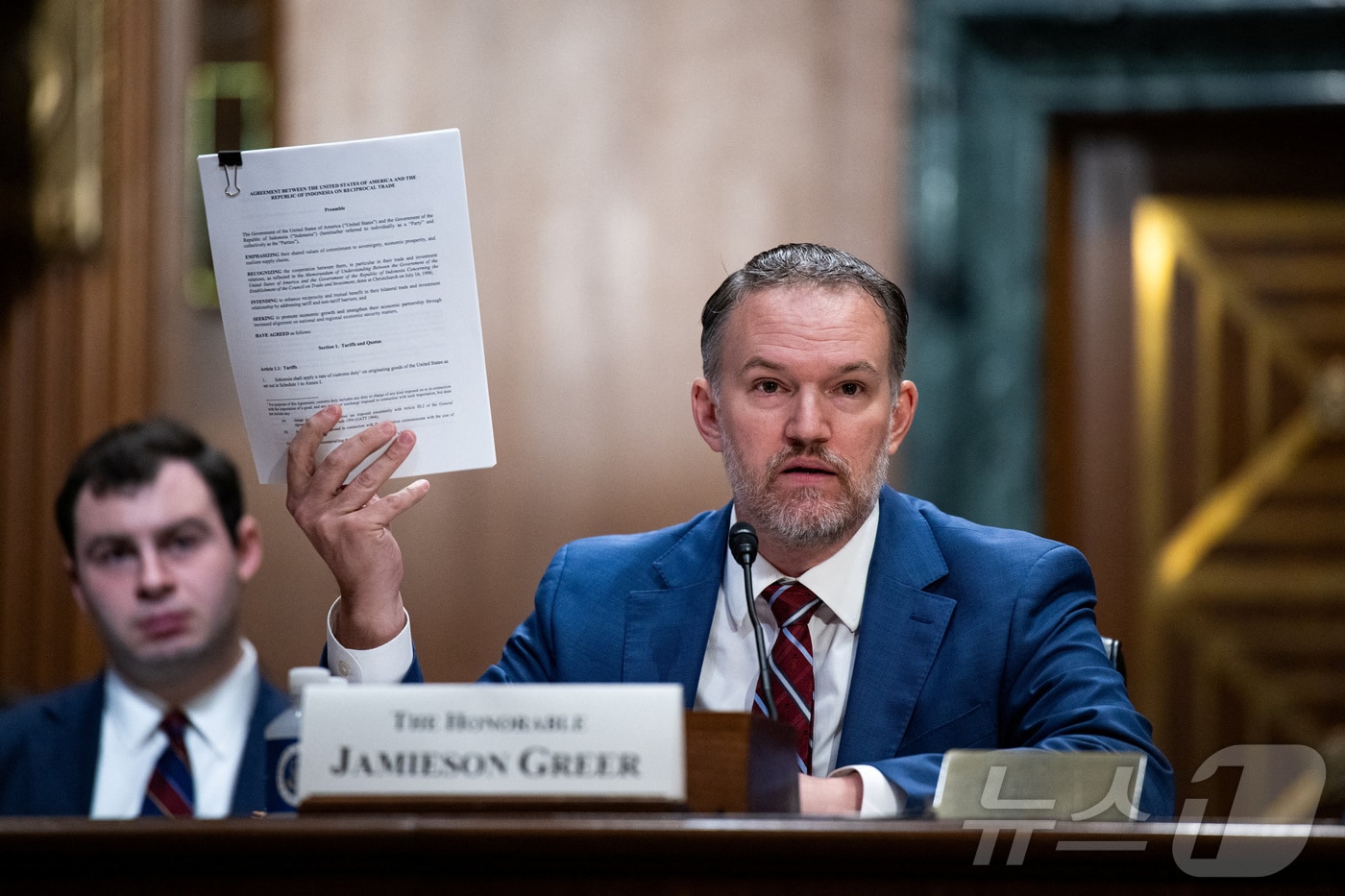
Jamieson Greer, the USTR representative, laid it out clearly before the Senate Finance Committee on July 22: Xi never brought up the chip export controls. Not once. And therefore, Greer argued, China had no basis for retaliation.
That claim did more work than a single sentence should. It wasn’t merely reporting a fact — it was constructing a legal and diplomatic framework for the United States to continue its policy squeeze while deflecting accusations of bad faith.
What the New Rule Actually Does
Ten days earlier, on July 16, the Bureau of Industry and Security unveiled a regulation targeting a scenario the Biden administration never quite closed: Chinese firms routing American AI chip compute power through foreign cloud infrastructure. The rule restricts how China can access US-origin high-performance semiconductors via overseas data centers, effectively closing a path that some firms had been exploiting since domestic restrictions bit harder.
China’s Ministry of Commerce responded the very next day with warnings of countermeasures. Markets braced for tit-for-tat moves.
Then Trump and Xi met — and Washington announced that nothing of the sort had occurred. No confrontation, no grievance, no reason to retaliate. The new restriction was framed not as a escalation but as maintenance: a patch to existing policy, aimed broadly across 20 to 25 countries, not singling out Beijing specifically.
Who Gains From This Framing
Greer’s testimony was careful to note that China hasn’t lost access to chips it previously could purchase. What has changed is the administrative layer — everything now runs through a licensing procedure. The substance, in Washington’s telling, remains unchanged.
This is a deliberate choice of language. By defining the measure as incremental rather than structural, the US gives itself room to keep pushing the boundary while denying China any clean diplomatic handle. If Xi doesn’t raise it publicly, he can’t credibly threaten retaliation afterward. If the measure applies to multiple countries, it loses the appearance of being weaponized exclusively against one.
The beneficiary here is obvious: America’s chip allies. Samsung and SK Hynix, which had paused certain China-bound shipments, now face a landscape where they can argue compliance with expanded licensing requirements without appearing to capitulate to a unilateral US strike on Chinese industry. TSMC faces a similar calculus — its foundry business sits at the center of these controls, and ambiguity about enforcement boundaries is something it can exploit operationally.
The Rare Earth Lever
Perhaps the most consequential part of Greer’s testimony came when he linked the tariff truce to rare earth supply. The current ceasefire on additional tariffs expires in January 2027. Whether it extends depends partly on whether Washington receives sufficient rare earth volumes from China at agreed-upon speeds and quantities.
This flips the leverage dynamic. For years, US hawks have treated semiconductor controls as the primary pressure point against Beijing. Now a senior trade official is openly tying the broader commercial truce to resource access — implying that China’s strategic mineral advantage is worth trading concessions for, or at least negotiating around.
The Section 301 investigation, expected to conclude by year’s end, will determine whether additional tariffs replace the existing reciprocal framework. Greer declined to name potential targets, but the scope — covering 16 economies including South Korea, Japan, the EU, and China — suggests the administrative machinery for a much wider trade fight is still being assembled.
What Doesn’t Change
Samsung and SK Hynix paused China-bound memory chip shipments in recent weeks, mirroring TSMC’s tightening of advanced-node orders. Those pauses weren’t undone by Greer’s comments. The licensing regime is real, regardless of how Washington describes it. Companies moving products through these filters will feel friction — delay, uncertainty, cost — even if the total volume of restricted exports appears modest on paper.
Chinese AI ambitions won’t halt because of a licensing form. But they will slow. Every additional month of review, every denied application, every redirected procurement channel adds drag to an industry racing against the clock.
Xi may not have spoken about the controls in Shenzhen. That silence, however, is not agreement. It is a tactical decision to preserve the personal channel and avoid giving Washington ammunition for further escalation. The question is how long that strategy survives when each new regulation arrives wrapped in the same language — not a policy change, merely a procedural update.
The Next Move
If the tariff truce holds through January and rare earth flows improve, expect another round of measured restrictions — each small enough to deny China a retaliation target, each substantial enough to narrow China’s options incrementally. The US appears to be betting that chronic pressure outperforms dramatic confrontation precisely because it leaves Beijing unable to identify a single moment to respond.
The allies watching most closely are Seoul and Tokyo. Both have advanced semiconductor industries built on American technology frameworks and both face enormous exposure to the Chinese market. Greer’s message that the rules apply uniformly across two dozen countries offers both governments a cover story: this isn’t America picking a fight with China, it’s everyone following updated standards. Whether that story holds under scrutiny is the next thing to watch.