US Court Lets DRAM Antitrust Case Against Samsung, SK Hynix Proceed
A US federal judge rejected a motion to dismiss a DRAM price-fixing lawsuit against Samsung, SK Hynix, and Micron, opening the door to years of litigation that could reshape global memory pricing and squeeze GPU maker margins.
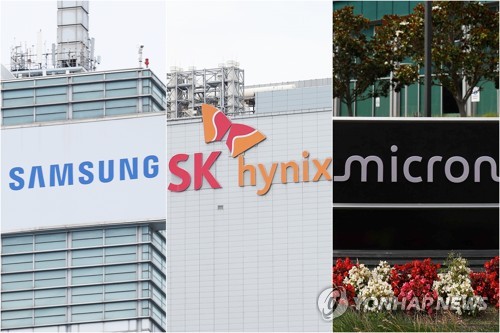
A lawsuit just survived its first test — and it could reroute billions in memory-chip revenue.
A US federal judge in the Northern District of California has denied a motion to dismiss an antitrust class action against Samsung Electronics, SK Hynix and Micron Technology, according to court records posted on CourtListener. Judge Noelle C. Wheeler ruled on November 14, clearing the way for discovery and eventual summary-judgment briefing in a case that alleges the three memory giants ran an informal supply-restriction scheme across multiple DRAM product lines.
The decision is not a finding of liability. It is a finding that the plaintiffs — fourteen individual consumers and three small-to-midsize PC assemblers and distributors who filed suit in June — have stated a plausible claim worth litigating. That distinction matters. But the practical consequence is the same: the case moves forward into a phase where internal documents, email chains and production schedules will become public, and every major GPU, CPU and server builder that buys HBM and standard DRAM will be watching closely.
What the court found suspicious
Wheeler’s order focuses on a cluster of events that occurred between early 2024 and mid-2025, when all three companies reported parallel moves away from legacy DRAM products and toward high-bandwidth memory (HBM), the stackedDRAM variant required for next-generation AI accelerators.
The key observations in the ruling include:
- In April through June 2024, Samsung, SK Hynix and Micron each announced reductions to DDR4 production capacity — a mature, commodity product line — within the same quarter.
- All three companies subsequently accelerated HBM output as AI-data-center spending surged, a shift analysts widely covered at the time but one the plaintiffs now argue was coordinated to keep older DRAM scarce while the industry retoolled.
- In January 2025, the three firms reportedly introduced a similar customer-audit procedure designed to verify end-user demand and order volumes before allocating production. Wheeler wrote that the uniformity of the practice across competitors raised the possibility of something beyond parallel behaviour — what she characterised in the record as closer to coordinated movement than the kind of tacit alignment markets routinely produce on their own.
Notably, the judge did not rule that collusion existed. She ruled only that the plaintiffs had pled enough factual content to survive dismissal and proceed to discovery, where the evidence will either expand or shrink the case.
Who this affects — beyond the courtroom
This case sits at the intersection of two of the most important supply chains in modern technology. Memory chips fund the R&D cycles of every major semiconductor company, and the economics of HBM production in particular determine the cost structure of nearly every flagship AI accelerator shipped over the next few years.
Samsung, SK Hynix and Micron collectively hold roughly 90 percent of the global DRAM market by revenue. Any adverse judgment — or even the settlement value a protracted discovery process would create — flows directly into the bills of companies like NVIDIA, AMD, Intel and the cloud operators that buy from them. NVIDIA’s current-generation Blackwell GPUs use HBM3E; its next iteration, expected later this decade, will push into even denser HBM stacks. If memory pricing comes under judicial scrutiny, contract terms renegotiation becomes likely across the industry.
For NVIDIA specifically, the risk is twofold. First, if the case establishes that historical memory pricing was inflated, retroactive damages could reshape the cost basis for existing GPU designs that were priced assuming certain DRAM input costs. Second, if prospectiveinjunctive relief follows — such as restrictions on how the three fabricators coordinate capacity allocation — NVIDIA’s ability to secure long-term HBM supply agreements could become less predictable, potentially advantaging rivals who already have diversified sourcing arrangements.
AMD, which has historically relied more heavily on SK Hynix for HBM supply, may face a different calculus than NVIDIA. The legal precedent set here could influence how fiercely each vendor negotiates future contracts.
Why this matters outside the US
Korean press coverage of the case tends to focus on Samsung and SK Hynix as the primary defendants, with Micron sometimes treated as an incidental party because it is the only American-based DRAM maker. But the structural issue transcends nationality. China is building out domestic memory fabs. TSMC is exploring advanced packaging options that could alter the HBM supply landscape. Japan’s Sony is investing in specialty sensor-memory integration. An antitrust ruling that imposes penalties on the current trio could accelerate exactly those diversification bets.
There is also a timing dimension most reporters miss. The case was filed in June 2025, during a period when memory prices had already rebounded sharply from the late-2023 trough caused by an AI-demand-driven reallocation of fab capacity. Plaintiffs are arguing that the three companies exploited that upcycle to extend price increases beyond what pure supply-and-demand dynamics would justify. Whether they can prove that at trial remains open.
What happens next
Discovery will begin. The three defendants will move to compel narrow scope or challenge document requests rooted in competitor communications. Samsung and SK Hynix, both South Korean entities with significant operations in multiple jurisdictions, may attempt to remove certain evidence to Korean confidentiality protections, though US Federal Rule of Civil Procedure 26(b)(1) generally requires disclosure of non-privileged information relevant to any party’s claims. Micron, headquartered in Idaho, faces fewer cross-border friction points.
If the case survives summary judgment — and that is far from certain given the evidentiary burden in cartel cases — a trial could take 18 to 24 months. Class certification for the consumer putative class alone often adds another year. Settlement before trial remains the most probable endpoint for a case of this complexity and magnitude, but only after discovery produces leverage on both sides.
For the semiconductor industry, the immediate effect is uncertainty. Supply agreements with long tails, already tense due to HBM capacity constraints, may see renegotiation clauses invoked. Buyers who previously accepted price escalations tied to memory-market indices now have a legal argument to push back.
The US government has not joined the case as a plaintiff, but the Department of Justice’s Antitrust Division monitors large industrial cases closely. A standalone civil ruling against Samsung, SK Hynix or Micron could trigger parallel enforcement interest — not necessarily now, but potentially if discovery uncovers communications that cross into territory the DOJ considers criminal.
That远景 is distant. The nearer reality is a docket that will occupy a federal judge for years and a market that will price in the risk incrementally with every filing.