The US Is Waging Economic War on Iran Through the Strait of Hormuz
US strikes on Iranian tankers mark a strategic shift from military retaliation to economic strangulation. With Iran coordinating a multi-front attack through its regional proxies, the cycle of escalation is harder to break than in previous rounds.
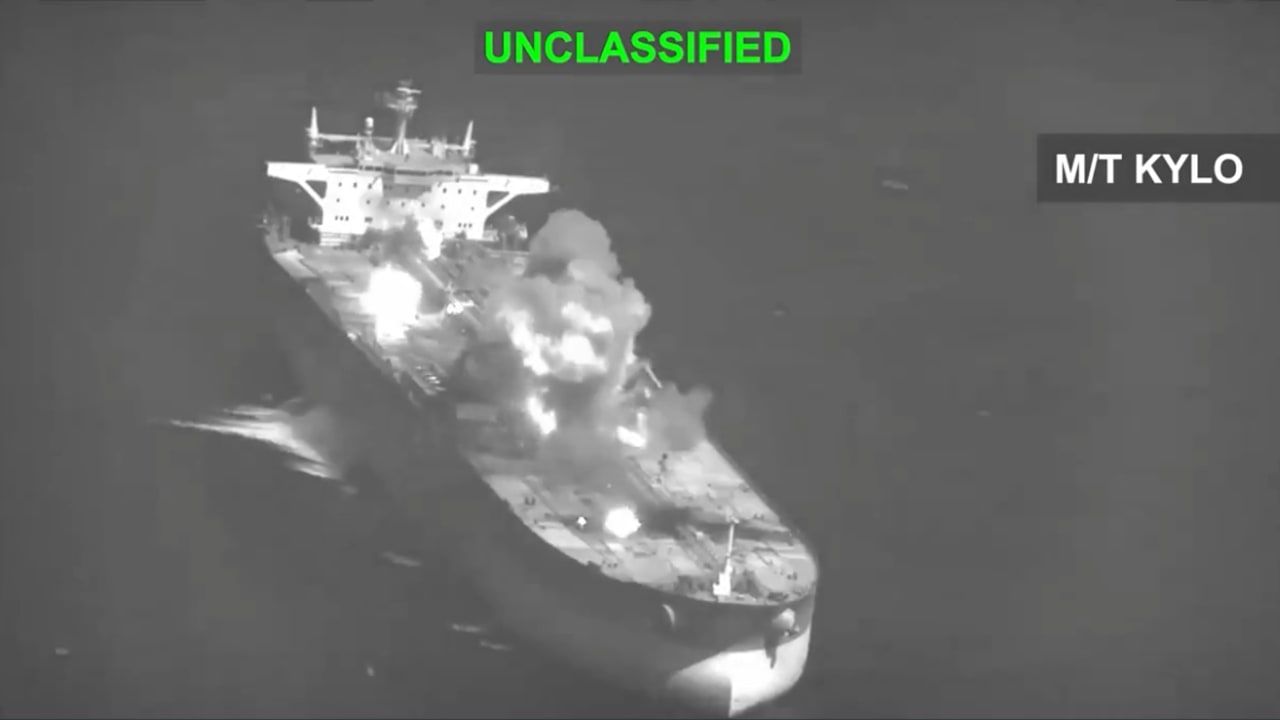
The Target Wasn’t Military — It Was Economic
On September 5, 2026, US Central Command struck three Iranian oil tankers in the Strait of Hormuz. Admiral Brad Cooper’s message was deliberately asymmetrical: Iran had fired ballistic missiles at two US Navy ships, and Washington would impose “an even higher economic cost” in response. Defense Secretary Pete Hegseth amplified the signal on X, calling Iran’s tanker fleet “defenseless” and promising that any further fire on US vessels would be met with the destruction of Iran’s entire oil shipping capacity.
This is not a return to the pattern of prior rounds of escalation. In 2019, the US responded to the shooting down of a drone with a limited strike on a radar site. In 2020, the killing of Qasem Soleimani was a decapitation operation, not an economic campaign. What we are witnessing now is something different: the deliberate targeting of Iran’s commercial oil infrastructure as a mechanism of coercive statecraft. The IRGC may have launched missiles, but the American response was calculated to bleed Iran’s economy, not just degrade a military unit.
Why This Cycle Is Harder to De-escalate
Three structural factors make this escalation harder to unwind than previous crises.
First, the targeting of tankers creates a feedback loop. When the US hits Iranian oil shipping, Tehran faces immediate revenue loss. When Iran retaliates — as the IRGC claimed Saturday, striking three tankers and three US-affiliated vessels — it demonstrates that it can also disrupt global flows. The Strait of Hormuz carries roughly 21 million barrels per day, about a fifth of global petroleum consumption. Even unconfirmed strikes on commercial shipping send shockwaves through energy markets and give Tehran leverage that purely military strikes do not.
Second, the strategy now being discussed explicitly aims at regime destabilization through economic suffocation rather than territorial control or deterrence. Jacob Nagel, a former NSC adviser now at the Foundation for Defense of Democracies, told Israeli radio that six to nine months of sustained economic pressure could create the conditions for popular uprising inside Iran. That is a fundamentally different objective from previous US strategies in the region, which sought to constrain Iranian behavior, not compel internal political change. When the goal shifts from deterrence to regime survival, both sides have far more at stake — and far fewer off-ramps.
Third, Iran appears to be learning from its coordination failures. Israeli intelligence assessments indicate that Tehran is now actively coordinating a multi-front assault across its regional network — Hezbollah in Lebanon, Hamas in Gaza, the Houthis in Yemen, and pro-Iranian militias in Iraq. The October 7 attack proceeded largely without this kind of synchronized preparation, and Iranian planners have since treated that lack of coordination as a strategic liability. A simultaneous attack across four fronts would stretch Israel’s air defenses beyond their current capacity and force the US to defend allies across a far wider geography.
The Post-War Strategy Already Underway
While the fighting continues, the Trump administration is already drafting what Axios reports as a post-war strategy for the Middle East. Two officials told the outlet that the plan, still in early stages, would address the fallout from the October 7 massacre, reshape Israel’s security architecture, and advance normalization between Israel and US allies — presumably including the stalled Saudi-Israel track. Secretary of State Marco Rubio and Defense Secretary Pete Hegseth have been briefed, and President Trump has held at least two strategy meetings with senior advisers.
US Ambassador to Israel Mike Huckabee used a trip to the West Bank town of Turmus Ayya to deny that Israel planned to force Palestinians out of Gaza. “I can tell you categorically there is no plan of the Israelis to displacement people out of Gaza against their will,” Huckabee said. The timing of that denial — amid active conflict and a developing post-war strategy — suggests Washington is already preparing the political framework for whatever comes next, even as the kinetic phase continues.
Who Wins, Who Loses, What Happens Next
The short answer is nobody wins in the traditional sense. The US has demonstrated its ability to strike Iranian economic infrastructure with precision, but it has also shown that Iran can retaliate against shipping without requiring a navy or air force of its own. The Strait of Hormuz is now a contested chokepoint, and every vessel transiting it carries a risk premium that no government can fully insulate against.
Iran’s regime faces the longest horizon problem. Six to nine months of economic strangulation, if sustained, could erode the purchasing power that holds the system together. But the same pressure also gives the IRGC a compelling justification for further provocation — each US strike becomes evidence that compromise is impossible, reinforcing the hardline narrative rather than undermining it. Nagel’s assessment assumes that economic pain translates directly into political mobilization. History suggests the relationship is far less predictable.
For Israel, the threat is multiplying. A coordinated attack involving Hezbollah’s thousands of rockets, Houthi drones and missiles, and Iraqi militia fire would be the most complex air-defense challenge in the country’s history. The Iron Dome system already experienced a glitch on September 5 when it launched an interceptor at a false target during operations in Gaza. Scale that pressure across multiple fronts simultaneously and the system’s reliability becomes a strategic question, not just an engineering one.
For global energy markets, the warning signs are already visible. Tanker insurance rates in the Hormuz zone will rise. Spot prices for crude and refined products will respond to uncertainty, not just actual disruption. The question is whether the market prices in a prolonged closure or a brief scare — and neither outcome is good for consumers.
The ceasefire that took effect on April 8 after the February 28 launch of Operations Roaring Lion and Epic Fury has now fractured. What replaces it will determine whether this cycle tightens into a broader regional war or settles into a new, more dangerous equilibrium. The US has chosen economic coercion as its primary tool. Iran has chosen proxy coordination as its primary shield. Neither approach offers a clean exit.