America's Digital Infrastructure Breaks During Routine Maintenance
A week in mid-December 2026 saw Microsoft, FAA, banks, Apple, and the NSA all stumble simultaneously — not from a hacker, but from ordinary upgrades and scheduled repairs. The hidden vulnerability is far more alarming.
Something Different This Time
In mid-December 2026, a remarkable thing happened in American technology. Five separate critical systems — corporate email, air traffic control, consumer banking, personal cloud storage, and the nation’s most classified intelligence network — all broke down within a single week.
No hacker claimed responsibility. No ransomware group posted demands. The Federal Bureau of Investigation initially reported no evidence of malicious activity. Instead, what we got was something arguably worse: proof that routine maintenance on America’s digital backbone is now a high-wire act without a safety net.
The Week the Machines Stopped
It began on December 12 when Microsoft took down Outlook and Teams for nearly 24 hours. The company said it was expanding computing capacity. It did not say why the expansion brought everything else crashing down.
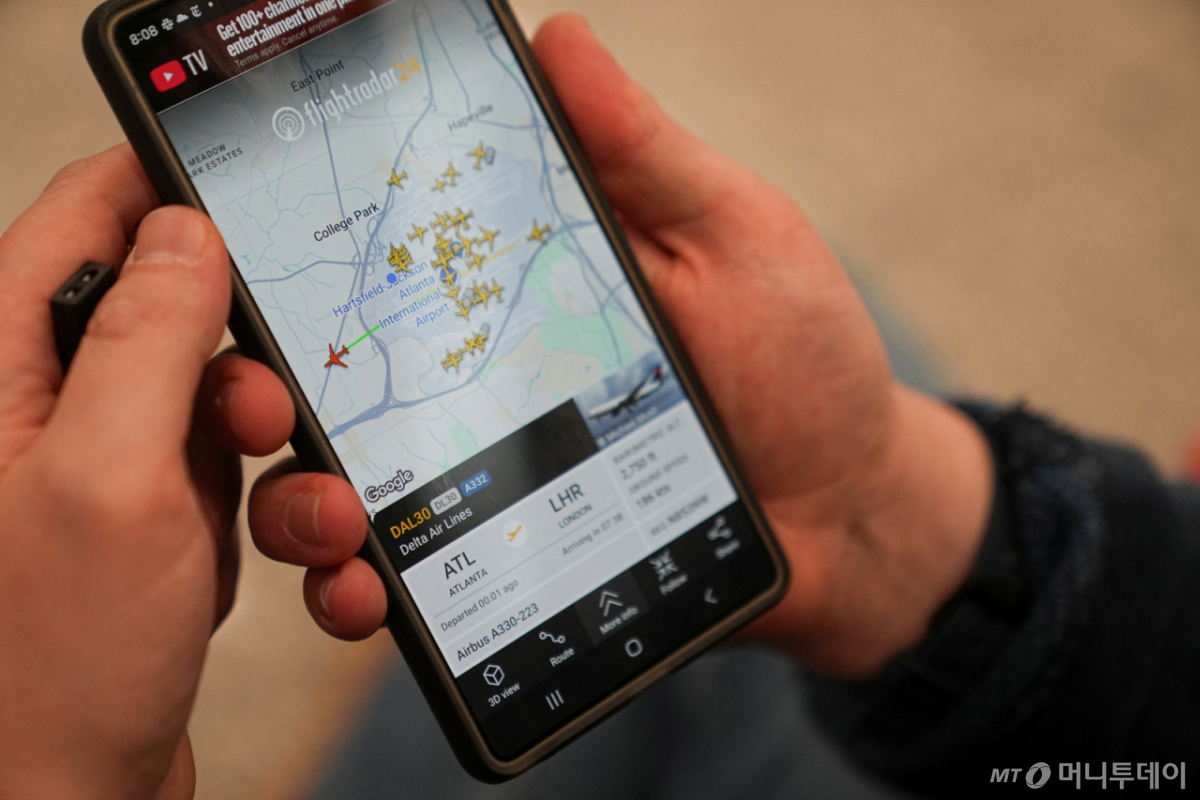
Two days later, the Federal Aviation Administration grounded thousands of flights after a router upgrade at an aging communications facility went wrong. Officials insisted this was not a cyber attack. They also insisted it was avoidable.
Then came the banks. On December 16, JPMorgan Chase reported that its online banking platform and Zelle payment system suffered a “software bug” in its own server equipment. Bank of America and US Bank customers filed similar complaints. Down Detector recorded the spikes.
On December 17, the NSA revealed that its internal classified network — the infrastructure that connects the country’s most sensitive intelligence operations — experienced a disruption during routine maintenance. Employees checking their voicemail received a message coded “yellow,” an internally recognized alert flagging degraded performance. The agency called it temporary. It lasted long enough to make headlines.
Apple joined the list the same day. iCloud, the App Store, Apple Music, and Apple Pay all stuttered. The company attributed the glitches to an internal update.
Five independent breakdowns. One common denominator: every incident traced back to an attempt to improve, maintain, or upgrade existing systems rather than to external malice.
The Layer Cake Problem
The New York Times drew the analogy that stuck with analysts. American critical infrastructure does not look like a modern building. It looks like a geological formation. Each decade added a new sedimentary layer — new operating systems, new protocols, new security patches — stacked on top of foundations poured in the 1980s and earlier. Dig into any one layer and the whole structure shifts.
That is exactly what happened with Microsoft. Engineers added computing resources to handle growing demand. Somewhere beneath those additions sat code written before many of the current workers were born, and the new load exposed a weakness the old code could not absorb.
The FAA story followed the same shape. Replacing fiber-optic cables and routers on a network designed for teletype messages introduced timing discrepancies the outdated hardware could not reconcile. Planes sat on tarmacs. Passengers missed connections. The system was not hacked. It was simply asked to do something it was never designed to do, on equipment it was never designed to run.
The banking failures carried the same signature. Legacy core banking systems at the largest US lenders date back decades. Modern interfaces layer on top, but when a bug surfaced in JPMorgan’s server software, it moved through those layered dependencies fast enough to knock out mobile payments for millions of customers.
And the NSA’s experience should chill anyone who thinks this is an industry-specific problem. The agency that spends more on offensive cyber operations than any organization on Earth cannot protect its own internal network from a maintenance-induced glitch.
The Upgrade Paradox
Here is the paradox that keeps infrastructure engineers awake: you must upgrade systems to stay secure, but the upgrade process itself is where they are most vulnerable. Leave systems untouched and hackers find the gaps. Touch them and you risk bringing everything down.
This is not unique to the United States, though American infrastructure shows the strain most visibly because of its sheer scale. Every major economy runs on overlapping legacy and modern stacks. But the US carries particular weight because its digital architecture underpins global finance, international aviation coordination, and cross-border data flows.
When the FAA fails, European airports notice. When SWIFT-adjacent systems wobble, Asian trading desks adjust positions. When Apple’s services flicker, billions of devices worldwide pause.
Why This Matters Beyond America
The implications extend well past American borders. First, the narrative of American technological supremacy — the idea that the US builds systems inherently more resilient than anyone else’s — just took a serious hit. The failures were not dramatic enough to suggest foreign sabotage, which makes them harder to explain to allies and competitors alike. A system that breaks during maintenance is a system whose designers did not fully understand their own creation.
Second, the timing is ominous. We are years away from quantum computing posing a direct decryption threat, but today’s maintenance-induced fractures suggest the pre-quantum landscape may already be more fragile than assumed. If routine operations can destabilize the internet’s central nervous system, what happens when a determined adversary learns to exploit the same fault lines?
Third, global supply chains rest heavily on US-based cloud and communication infrastructure. Every hour-long outage ripples through manufacturing schedules, shipping logistics, and financial settlements worldwide. The December episodes were brief. Longer ones are possible.
Who Is Winning, Who Is Losing
The winners are the vendors selling remediation tools, consulting contracts, and contingency planning services. The losers are everyone who depends on uptime — patients waiting for hospital records, pilots preparing for takeoff, investors executing time-sensitive trades, citizens trying to access government services.
Regulators stand in the awkward position of acknowledging the problem without having clear authority to force fixes. Critical infrastructure sits across dozens of private companies and public agencies, each with different compliance timelines and different levels of investment in modernization.
What Comes Next
Some experts are already pointing toward artificial intelligence as a potential stabilizer. Michael Kusumano of MIT’s Sloan School of Management argued that these systems have grown too complex for human operators to fully trace or predict. In his view, AI-driven simulation and monitoring is the only path forward — letting machines model the interactions that no individual engineer can hold in their head.
That logic has merit, but it introduces a new dependency. If we hand over the oversight of our most critical systems to algorithms whose behavior we cannot fully audit, we create another vector for failure.
What seems clearer is the need for a systematic reassessment of how America builds, tests, and maintains the digital infrastructure it cannot afford to lose. Not just at the Department of Homeland Security or CISA, but inside the private companies whose servers run the country’s daily life.
The December outages were not an attack. They were a warning shot fired from the inside.