US Infrastructure Failures Signal Cyber-Resilience Gap
Cascading IT outages hitting banks, airlines, and aviation control raise alarms about US digital infrastructure fragility. Asian observers see a pattern Western officials insist isn't there.
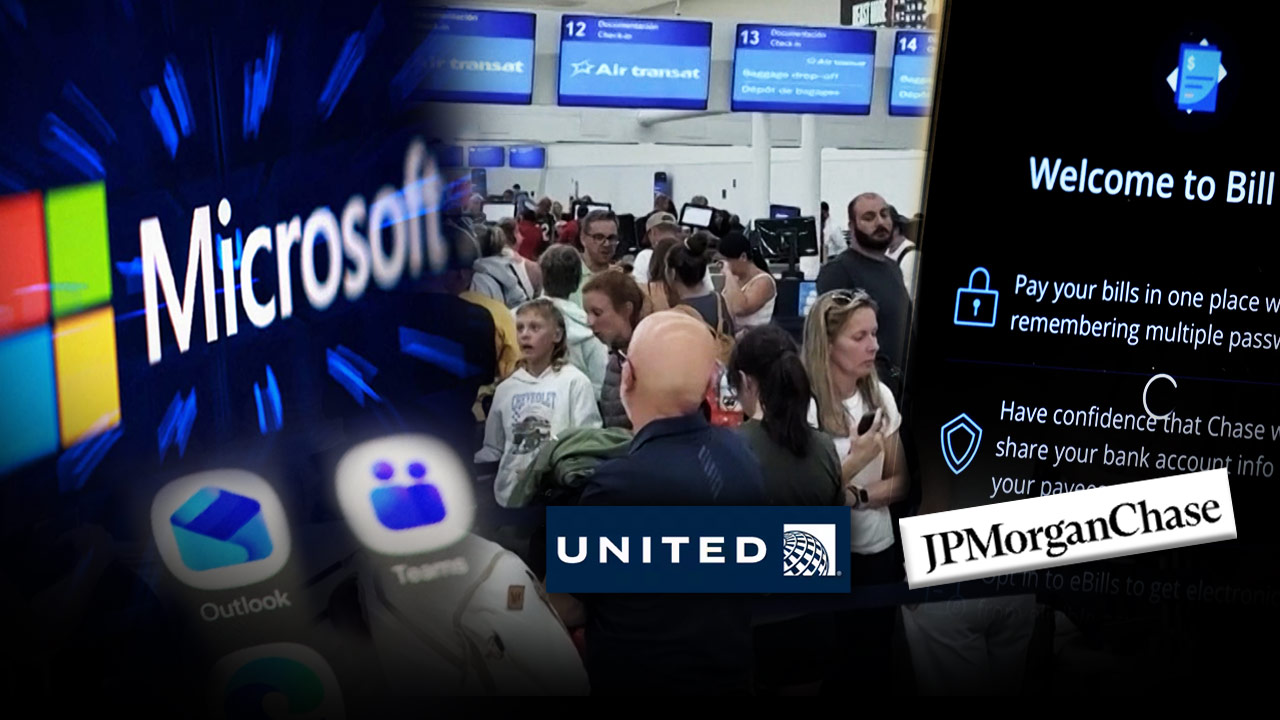
Five Outages. One Week. No Explanation.
Start with the timeline and the scale of what happened.
November 12: Microsoft Outlook email services went down across the United States. November 13: FAA ground-stop protocols kicked in, keeping every aircraft on US runways for more than four hours after air traffic control communications failed entirely. November 16: JP Morgan Chase — with roughly 86 million American customers — couldn’t process transactions. Customers locked out of online banking. ATMs refusing withdrawals. Other banks reporting failures routing funds into Chase accounts, meaning the contagion spread beyond Chase’s own customers.
Same day. United Airlines grounded planes because its weight-and-balance calculation system — a pre-takeoff safety requirement — wouldn’t compute. United said it was fixed in ninety minutes. Both companies issued statements saying there was zero evidence of a cyber attack.
So there you have it. Four days apart, five major infrastructure systems failing in sequence, all operated by different companies using different technology stacks, and officials telling everyone to calm down.
The Korean press didn’t buy it. MBC ran the headline the way English-language desks still can’t quite bring themselves to write: “Why all at once?” That question matters because it’s the right one to be asking.
Who These Outages Actually Hit
JP Morgan Chase alone touches roughly 86 million US consumer accounts. When its transaction layer stalls, the ripple effects land on every other bank that depends on Chase as a correspondent or clearing partner. Businesses can’t pay payroll. Merchants can’t settle card transactions. The domino geometry is larger than any single outage report will admit.
United Airlines’ weight-calculation failure is a narrower incident on paper but symbolically loaded. Weight and balance is non-negotiable under FAA rules — fly without it and you’re violating fundamental flight-safety doctrine. Grounding aircraft for that reason signals a single point of failure embedded in an airline’s operational backbone.
The FAA communication breakdown days earlier kept the entire US airspace on the ground. That wasn’t a local glitch. That was continental paralysis.
Put these together and you don’t get three separate bad days. You get a stress test your infrastructure never asked to take — and failed every element.
The Denial Pattern Is the Story
Every company involved said the same thing in the same language: software bug, not a cyber attack. No evidence of malicious activity. Temporary issue, now resolved.
Official denials are standard operating procedure during infrastructure crises. Panic sells worse than pragmatism. But when five different organizations issue nearly identical statements within a forty-eight-hour window, the coordination of messaging becomes as notable as the outages themselves.
The Associated Press flagged it directly: no evidence of malign activity, yet the sequencing makes people uneasy. “Many feel something abnormal is happening,” AP noted. That’s journalist code for observing public anxiety while withholding a conclusion the evidence doesn’t yet support.
Asian analysts weren’t so careful.
Korean outlets moved fast to connect the dots precisely because Western desks remained fragmented across verticals — each outlet covering either the banking angle or the aviation angle but rarely both simultaneously. Korea’s tech-literate audience has seen this choreography before. The timing overlap between a global cloud provider (Microsoft), a domestic payment processor (Chase), a regulated utility (FAA communications), and an airline (United) isn’t random. It’s the signature of shared dependency, whether intentional or accidental.
The Unanswered Architecture Question
Here’s what almost nobody is putting on the record: how much of modern US critical infrastructure runs on the same underlying vendors, the same cloud backbones, the same authentication layers?
When Microsoft’s email services faltered on November 12, it disrupted more than inboxes — it disrupted the communication channels that downstream operations depend on for incident response coordination. If Chase’s engineers were trying to diagnose their own banking failure through Outlook at the same moment Chase’s transaction layer was buckling, you’ve got a compounding failure mode that looks like coincidence but functions like a cascade.
This isn’t speculation. It’s basic dependency mapping. What’s missing is public disclosure of exactly where those dependencies sit.
The National Security Agency reportedly experienced its own classified-network disruption during this same window. The details around that remain sealed — understandably — but the existence of a third independent failure inside the intelligence community’s own network changes the calculus. Three vectors. Government. Finance. Aviation. All moving against each other in the same week.
Who Wins and Who Loses
No one wins a week like this. But some players lose less than others.
Cybersecurity firms selling incident-response retainers win immediately. Regulatory bodies overseeing financial-tech resilience win by getting forced attention they’ve been denying for years. Insurance markets pricing technology-political risk will start repricing tomorrow morning.
Customers lose trust. That’s the soft damage that compounds. A bank outage recovers in hours. Confidence doesn’t recover on the same schedule. Every time a supposedly resilient system stumbles, the implicit social contract — that critical infrastructure won’t fail without warning — erodes a little more.
China and North Korea watch closely. Not because they necessarily orchestrated any of this, but because they catalog everything. Each unexplained failure gets logged. Each delayed disclosure gets recorded. The gap between what officials say and what infrastructure actually does is intelligence gold for any adversary running steady-state observation.
What Comes Next
Expect congressional hearings. Expect FINRA and SEC joint inquiries into whether Chase’s single-architecture exposure violates operational resilience standards. Expect the FAA to conduct a formal review of its communications architecture — something that should have happened after the November 13 ground stop but likely won’t, given the electoral calendar.
Expect another wave of “it was just a bug” statements that will gradually give way to more honest accounting once the political pressure subsides.
What shouldn’t happen — and probably will — is a unified federal framework addressing shared vendor dependencies across government, finance, and transportation. Fragmentation is cheaper in the short term. It’s catastrophic in the long term.
The Korean press connected dots Western editors are still keeping in separate columns. That’s a failure of framing, not of fact. The data exists. The timeline exists. The only thing missing is the willingness to call a pattern a pattern until something worse forces the conversation.
Five outages in five days. That’s not a streak. It’s a signal.