US-Iran Clashes and Houthi Escalation Threaten to Fracture Middle East Security
The US has bombed southern Iran while Houthis counterattack Saudi Arabia, tightening control over key shipping lanes. Oil prices surge past $101 as global energy routes face fragmentation.
A Fracturing Middle East
The Middle East is witnessing a dangerous escalation that marks a sharp departure from the managed tensions of recent years. The United States has resumed airstrikes against southern Iran, while Houthi forces in Yemen have launched sustained counterattacks targeting Saudi Arabia. This unfolding crisis threatens to destabilize the region and disrupt vital global energy routes, setting off a chain reaction of military, economic, and geopolitical consequences that extend far beyond the immediate combatants.
US Strikes Southern Iran
On May 1, the US military formally resumed bombing operations against Iranian targets, ending a period of constrained engagement that had characterized US-Iran relations since the preceding year. Since that date, American forces have struck Iranian oil tankers and port infrastructure near the strategic Hormuz Strait, a waterway through which approximately 20% of global oil consumption passes daily.
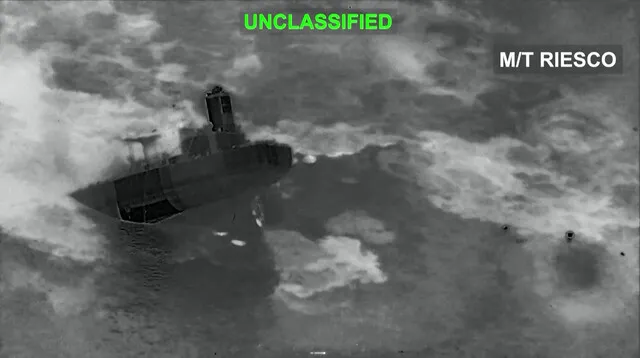
By May 8, the US had sunk five tankers in the vicinity of the strait, bringing the total number of destroyed vessels this month to ten. The strikes targeted both commercial vessels suspected of carrying Iranian crude and what Washington described as IRGC-operated freighters. The US Central Command issued limited briefings, declined to release photographic evidence of the strikes, and offered no independent casualty figures.
Iranian state media reported powerful explosions at the ports of Sirik and Minab, as well as around Kish Island, on the morning of May 10. Multiple explosive sounds were also heard in the Hormuz Strait area the previous night. Iranian officials described the damage as “limited” but confirmed that fire crews were battling blazes at two of the three sites. Neither side has confirmed specific targets or damage assessments, leaving a fog of war that itself serves as a form of psychological pressure on markets and navigators alike.
Iran’s Response and the Navigation Restriction
In retaliation, Iran’s Islamic Revolutionary Guard Corps (IRGC) claimed on May 9 that it attacked two US warships and eight oil tankers in the northern Arabian Sea. The IRGC released grainy video footage purporting to show missile impacts on vessel hulls, though independent verification remains impossible at this distance.
More significantly, the IRGC unilaterally declared a “navigation restriction zone” extending from Chabahar in southern Iran across parts of the Oman Gulf and the Arabian Sea. Under this declaration, only Iran-approved waterways would remain open for vessel traffic, and ships passing through the restricted area would lose access to insurance and port support services—a de facto blockade that effectively makes passage through parts of the Gulf a legal and financial impossibility for most commercial operators.
The move immediately sent shockwaves through the shipping industry. Marine insurance premiums for the region surged an estimated 400% within 48 hours, and several major carriers announced they were rerouting vessels through the Cape of Good Hope rather than risk the Gulf. The World Maritime Bureau reported a 60% drop in vessel traffic through the Strait of Hormuz in the days following the declaration.
Houthi Attacks on Saudi Arabia
Simultaneously, Houthi forces have intensified their campaign against Saudi Arabia, escalating from the hit-and-run tactics of previous years to sustained, coordinated strikes on military and infrastructural targets deep inside Saudi territory.
On the morning of May 10, the rebel group launched a barrage of drones and missiles at the King Fahd Air Base in Taif, western Saudi Arabia, causing two major explosions that were visible from surrounding communities. The base serves as a forward operating point for Saudi forces conducting airstrikes against Houthi positions in Yemen. Saudi air defenses intercepted several of the incoming projectiles, but at least three are believed to have landed on or near the base, damaging runway infrastructure and one hangar.
The May 10 attack is the latest in a series that began on May 9, when the Houthis struck the cities of Khamis Mushayt, Abha, and Jizan with ballistic missiles and drones. Those strikes caused no reported fatalities but disrupted power供应 in parts of the affected areas and triggered civil defense alerts across western Saudi Arabia.
The escalation appears to be direct retaliation for Saudi aerial bombardments of Houthi-held areas in northwestern Yemen—including Al Jawf, Taiz, and Hodeidah—which totaled 54 strike sorties over May 8 and 9. Saudi officials described the operations as targeting “military infrastructure supporting Houthi missile and drone production,” but humanitarian organizations raised alarms about civilian displacement in the affected zones.
The Race for Bab el-Mandeb
Since May 3, Houthi forces have been advancing toward the Bab el-Mandeb Strait, the critical chokepoint connecting the Red Sea to the Gulf of Aden and beyond to Europe and the Indian Ocean. The Houthis are reportedly seizing elevated terrain along the mountainous Red Sea coast in Taiz Governorate to gain strategic oversight of the strait, which sees roughly 10% of global maritime trade pass through it annually.
Saudi Arabia has declared its intent to blockade the Bab el-Mandeb Strait to prevent its use by Houthi-affiliated vessels and to protect its own shipping. This is a dramatic reversal: Riyadh has historically relied on the Red Sea route for access to European and Asian markets and has invested billions in port infrastructure along the Saudi Red Sea coast. The decision to treat the strait as a contested military zone rather than a free waterway signals how far the security architecture has degraded in a matter of weeks.
Riyadh has increased its reliance on Red Sea shipping routes for oil exports precisely because the Hormuz Strait has become increasingly hazardous due to US-Iran hostilities. This has created a dangerous concentration of risk: as one chokepoint closes, traffic concentrates on the other, making the Bab el-Mandeb an even more attractive target and a more critical vulnerability.
Oil Prices Surge and Market Turmoil
The escalating conflict has sent shockwaves through global energy markets. On May 9, November Brent crude futures on the London Intercontinental Exchange (ICE) closed at $101.21 per barrel, up $3.29 or 3.36% from the previous session. This marked the highest closing price since May 22 and represented the sharpest single-day increase in three months.
But the headline price tells only part of the story. Refining margins in Asia widened sharply as buyers scrambled to secure cargoes before potential further disruptions. Natural gas futures in Europe climbed 8% on concerns that redirected LNG shipments would tighten already strained supplies. Gold rose above $2,400 per ounce as investors fled to safe-haven assets, while equity markets across emerging economies posted their worst week since early 2025.
Analysts at multiple energy research firms warned that if the Hormuz Strait remained closed for more than two weeks, global oil inventories would draw down at a rate insufficient to offset the loss, potentially pushing Brent toward $120 per barrel. The International Energy Agency issued a statement calling for “immediate de-escalation and the restoration of free navigation” but stopped short of proposing specific diplomatic interventions.
Second-Order Effects: Alliance Strains and Regional Spillover
The crisis is already producing second-order effects that extend beyond the immediate belligerents. Oman, which maintains careful neutrality and serves as an informal communication channel between the US and Iran, reported increased diplomatic pressure from both sides to either facilitate negotiations or deny its waters to opposing naval operations. Muscat has publicly called for restraint while privately urging Washington to limit the geographic scope of its strikes.
Iraq’s government expressed “deep concern” about the spillover, noting that Iranian military activity near its border had triggered security alerts at Basra’s port. Israel’s Defense Ministry raised its northern alert level to DEFCON 2 for the first time in two years, reflecting fears that Iran might open a second front through its Lebanese proxy, Hezbollah, if it judged the US-engagement in the south to be stretching American military resources thin.
China and India, the two largest importers of Iranian oil, issued cautious statements calling for the protection of commercial shipping but stopped short of condemning the Iranian navigation restriction. Their silence has been interpreted in Western policy circles as a sign that Beijing and New Delhi are preparing contingency plans to secure alternative energy supplies, potentially accelerating long-term moves away from Middle Eastern oil dependency.
What’s at Stake
The simultaneous disruption of both the Hormuz Strait and the Bab el-Mandeb Strait represents a severe threat to global oil supplies that few scenarios in recent memory have prepared for. Together, these chokepoints handle an estimated 30% to 35% of globally traded crude oil and refined products. Any prolonged closure or instability in either waterway could trigger a global energy crisis with cascading economic consequences—including inflationary pressure, supply chain disruptions, and potential rationing in import-dependent economies.
The capture of a US drone by Iranian or Houthi forces, as reported in some accounts, further complicates the situation by potentially providing adversaries with valuable intelligence on American military capabilities, including electronic warfare signatures and surveillance payloads. Defense analysts cautioned that the technical assessment of any recovered drone could take weeks, but the mere possibility has already prompted the Pentagon to review the flight profiles and sensor configurations of its remaining unmanned assets in the region.
Regional Fragmentation and the End of an Era
What distinguishes this escalation from previous tensions is the direct nature of the confrontations. The US is striking Iranian territory, Iran is targeting American vessels, and the Houthis—Iran’s proximate allies—are engaged in active combat against Saudi forces. This multi-front dynamic risks drawing in additional regional actors and expanding the conflict beyond its current boundaries in ways that no single government appears prepared to manage.
The breakdown of maritime navigation guarantees in both the Persian Gulf and the Red Sea signals a broader erosion of the post-Cold War security architecture that has long underpinned global energy trade routes. The institutional mechanisms—maritime coalitions, insurance pools, freedom-of-navigation protocols—that kept these waterways open despite periodic crises have proven inadequate against a coordinated strategy of economic warfare and territorial denial.
A Clear and Present Danger
The trajectory is sobering. Each escalation cycle has produced a new layer of restricted access, new claims of sovereign control over international waterways, and new military assets positioned closer to civilian population centers. The window for de-escalation is narrowing, and the costs of inaction are rising exponentially. Without a diplomatic framework that addresses the underlying security dilemmas—notably Iran’s access to the Gulf, Saudi Arabia’s vulnerability to drone and missile attacks, and the Houthis’ strategic objectives in Yemen—the region risks sliding into a conflict that no participant can win and everyone will regret. The international community’s response in the coming weeks will determine whether this escalation remains contained or becomes the defining security crisis of the decade.