U.S. Just Struck Iran's Oil Tankers. Now Europe Has a Problem
The U.S. destroyed three Iranian oil tankers in retaliation for missile fire on Navy ships — a direct attack on Tehran's economic lifeline that forces European allies to choose between energy security and American military action.
The Strike That Changes Everything
Three Iranian oil tankers sank or were rendered inoperable over the weekend after the United States military responded to ballistic missile fire from Iran’s Islamic Revolutionary Guard Corps. The move was stark, deliberate, and — perhaps more than anything else — it crossed a line that had held for months.
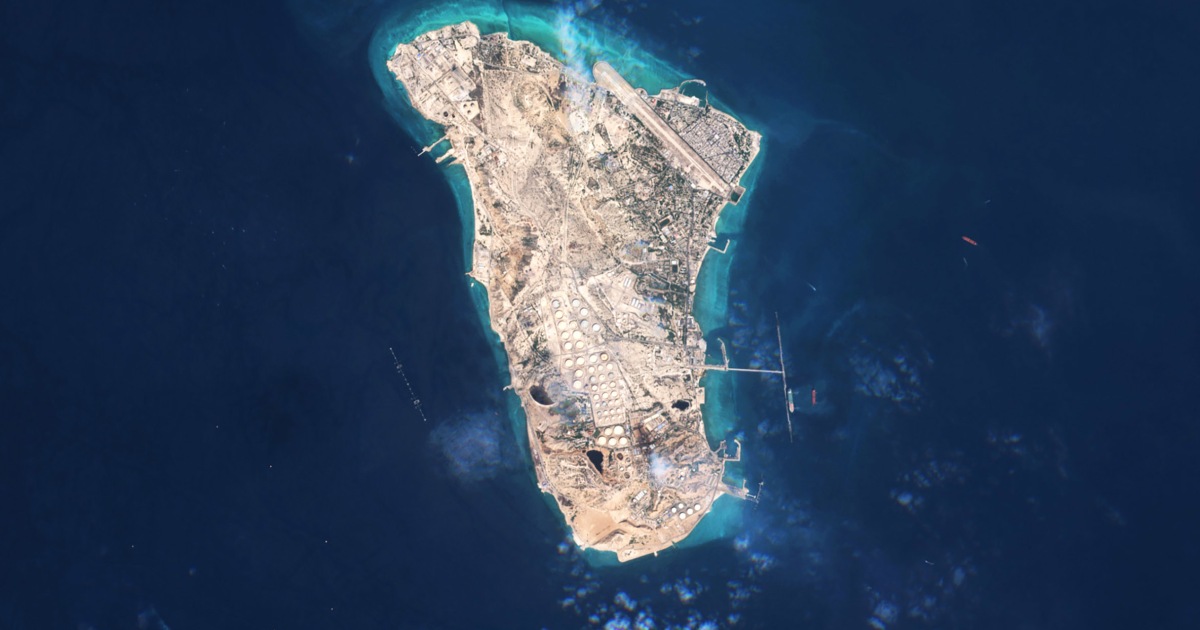
American forces targeted the M/T Downy off Kharg Island, the M/T Stark 1 near Jask, and the M/T Kylo in the Gulf of Oman. The first two were crude carriers actively loaded with oil. The third, the Kylo, was empty — its crew had been told to abandon ship before missiles struck. That detail matters. The U.S. wasn’t just hitting tankers carrying Iranian oil today. It was demonstrating the willingness to target Iran’s entire maritime oil fleet, loaded or not.
Adm. Brad Cooper, commander of CENTCOM, put it plainly: “If you shoot at two of our ships, we will impose an even higher economic cost — taking out three of yours.” The message was not about immediate retaliation. It was about economic leverage and a sustained campaign to compress Iran’s ability to profit from its greatest asset.
No American personnel were hurt. The two Navy ships — a carrier and a guided-missile destroyer — evaded the Iranian attacks intact. But the return fire changed the calculus for everyone watching.
Who Wins, Who Loses
Iran loses first and most obviously. Kharg Island is, as Petras Katinas of the Royal United Services Institute told NBC News, the backbone of Iran’s oil trade infrastructure. It is the primary gateway for Iranian crude exports. The U.S. struck near it — on its doorstop — and signaled that its oil terminals and supporting maritime operations are now fair targets.
The M/T Downy and M/T Stark 1 were crude carriers. Taking them out removes both existing cargoes and future capacity from Iran’s export pipeline. The M/T Kylo — empty, unarmed, crew evacuated — signals that the U.S. is not distinguishing between active exports and idle fleet assets. Iran’s exposed, limited oil fleet is now on the target list in ways that go beyond conventional wartime targeting of military assets.
The United States wins a coercive argument. It has answered an attack with proportional force — three ships destroyed for two ships targeted — and it has made clear that further Iranian aggression will carry escalating economic costs. The strikes were defensive in origin but offensive in execution.
Europe loses. This is the less visible but potentially more consequential outcome. European governments have spent months walking a tightrope over Iran — seeking to prevent regional war while keeping energy supplies flowing and honoring sanctions on Tehran’s oil. The strikes collapse that balance.
European economies still depend on Persian Gulf energy transit through the Strait of Hormuz. The strait handles roughly a fifth of global seaborne oil trade. If the U.S. is willing to sink Iranian tankers near Iranian ports and island infrastructure, the Strait becomes a far riskier route — not just for Iranian vessels but for all commercial shipping. Insurers raise premiums. Shipowners reroute. Supply chains tighten.
Germany, France, and Italy — the key EU players on Iran policy — now face a choice that did not exist before the weekend. Support Washington’s military action and risk being drawn into a broader conflict that disrupts their own energy imports, or distance themselves and risk fraying transatlantic coordination at a moment when it matters most.
The European Dilemma in Practice
Here is what nobody in Brussels or Berlin is saying out loud: the U.S. has made a decision that Europe did not consult on and may not be able to unwind. The strikes were not authorized by any international body. They were not coordinated publicly with European capitals before execution. They represent a shift from deterrence to direct economic warfare against a non-NATO state — a shift that complicates every European negotiation track with Tehran.
European leaders have talked about de-escalation. They have urged restraint. The U.S. has acted. The gap between European diplomacy and American military action is now a chasm.
The risk is not just political embarrassment. It is material. If the Strait of Hormuz becomes a contested waterway — with U.S. forces targeting Iranian shipping and Iran responding by threatening all navigation — then European fuel supplies face real disruption. The EU has no strategic petroleum reserve comparable to America’s. Its members are not positioned to absorb even a short shock to Gulf oil flows without price spikes that hit their industries and households directly.
What Happens Next
Several trajectories are possible, and none are benign.
Iran will retaliate. The Foreign Ministry called the strikes “illegal and aggressive” and accused the U.S. of waging a naval blockade — language that suggests Tehran views this as an act of war, not a limited exchange. Expect IRGC maritime harassment of commercial vessels in the Gulf, possible attacks on U.A.E. or Saudi shipping, and attempts to mine or block the Strait. Kharg Island itself has air defenses and buried mines. The U.S. spared its oil infrastructure in March but has now struck near it. A further strike on Kharg’s military installations is plausible.
Oil prices will react. The immediate market response will depend on whether traders interpret the strikes as contained or as the opening of a broader campaign. The destruction of three tankers is not trivial — those vessels represent thousands of barrels of Iranian crude removed from export. But the real premium will come from risk pricing: the probability that the Strait of Hormuz becomes unsafe for commercial transit.
European allies will fracture. Some — likely the U.K. and possibly Poland and the Baltics — will stand with Washington. Others — likely France and Germany — will publicly urge restraint while privately scrambling to protect their energy supply routes. The EU’s common foreign policy machinery is ill-equipped for a crisis of this kind, and the divergence will be visible within days.
The U.S. will decide whether this is a one-shot escalation or a sustained campaign. Adm. Cooper’s language — “destroy Iran’s limited and exposed oil fleet” — suggests the latter is on the table. If Washington treats Iran’s maritime oil infrastructure as a persistent target, the conflict moves from a military exchange to an economic attrition strategy with global spillover.
The Non-Obvious Implication
The most important thing about these strikes is not that the U.S. responded to Iranian missiles. It is that the response targeted civilian-economic infrastructure — oil tankers — rather than purely military assets. That is a different class of action. It signals that Washington is willing to weaponize energy flows as a coercive tool against Iran, not just defend against Iranian attacks.
The consequence reaches far beyond the Persian Gulf. It reshapes how the world prices Middle Eastern risk. It forces Europe to choose between alliance loyalty and energy self-preservation. And it raises the question that nobody wants to answer: what happens when the U.S. decides that Iran’s oil economy is a legitimate target — and the Strait of Hormuz is no longer safe for anyone’s ships?