US Floats Land-for-NATO Swap That Rewrites Global Deterrence
Washington's new proposal — trading Ukrainian territory for NATO membership — is the most consequential shift in Western war strategy since 2022. The implications extend far beyond Europe.
A Quiet Earthquake in Washington
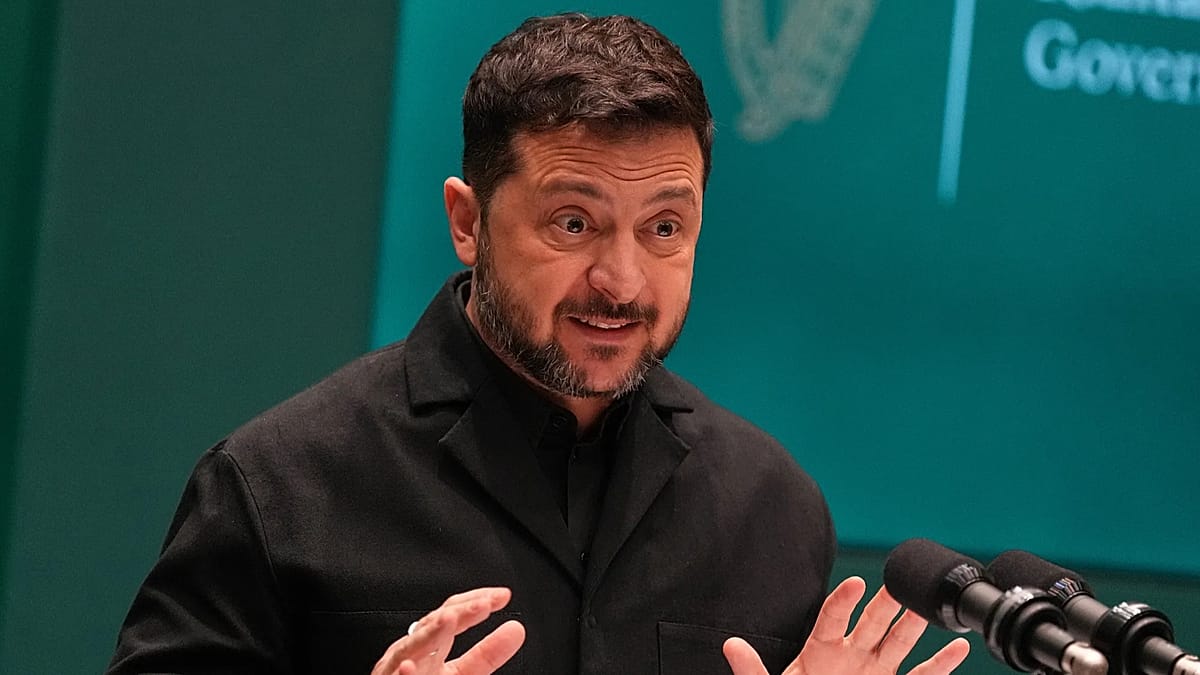
Washington floated something extraordinary on Thursday: Ukraine cedes territory to Russia, and in return joins NATO. President Volodymyr Zelenskyy confirmed it Friday — though notably, as the first time the Americans have raised the question directly. “What if Ukraine joins NATO? Would Ukraine withdraw from Donbas?” That framing represents a fundamental recalibration of US policy that has held firm since the invasion began.
The swap was broached during meetings between US special envoys Steve Witkoff and Jared Kushner and Vladimir Putin in Moscow earlier this week. Afterward, the envoys flew to Ireland to brief Zelenskyy. What emerged was a framework that Kushner described on X as one where Europe would have a “voice” in postwar security arrangements alongside territorial negotiations.
Putin’s response, relayed through presidential aide Yuri Ushakov, was characteristically uncompromising: territorial concessions are non-negotiable for Russia, and foreign peacekeepers on Ukrainian soil are out of the question. Russian foreign ministry spokesperson Maria Zakharova also pushed back, saying the land question itself had not been discussed with the US envoys — a contradiction worth tracking as diplomacies maneuver around their own messaging.
Zelenskyy stopped short of dismissing the proposal. But he was emphatic about one thing: he cannot decide alone. “I have no right to make that decision on my own,” he told reporters. The implication is clear — any deal requiring territorial concession will need a national mandate from Ukrainians who have been fighting a war of survival for over three years.
Who Actually Wins Here
The arithmetic favors no one cleanly. For the Trump administration, it offers a face-saving exit ramp from a conflict that has drained political capital without producing decisive results. For Ukraine, it converts a defensive war into a transaction — land for security guarantees that may or may not hold. For Russia, it validates territorial aggression through legal channels without formally ceding claims.
For NATO, the calculus is more complicated. The alliance has spent years warning against rewarding expansion by force. A land-for-membership deal inverts that logic entirely, suggesting that military conquest can successfully negotiate border changes if the conquering power extracts enough concessions from the victim. That’s a message Moscow will broadcast widely.
But the real winners may be those watching from the other side of the world.
What Asia Is Learning
The Taiwan Strait sits approximately eleven thousand kilometers from Kyiv. The geopolitical grammar connecting them is not subtle. Every precedent set in Eastern Europe is read in Beijing, Seoul, Tokyo, and Canberra as a signal about what Washington considers expendable and what it considers vital.
If the United States can trade territory for NATO membership in Europe — a region its security architecture has guaranteed since 1949 — then what exactly is the American commitment to Taiwan? The question isn’t rhetorical in East Asian capitals. It’s operational. Defense planners there are already stress-testing scenarios based on this interpretation.
South Korea faces its own parallel calculations regarding North Korea. Japan monitors Chinese moves in the East China Sea through a lens increasingly shaped by whether European territorial invasions produce negotiated settlements. The logic cuts both ways: if Russia keeps land it seized after joining NATO, what stops China from taking pieces of Taiwan after bringing it under formal Alliance protections?
Japan’s defense posture has already shifted significantly in response to Ukraine — increasing spending, acquiring counterstrike capability, deepening trilateral ties with South Korea and the United States. This proposal accelerates those trends rather than alleviating them.
The Precedent Problem
The deeper structural question is what this arrangement does to the post–World War II international order on which the current security architecture depends. Since 1945, the norm has been(ish): borders cannot be changed by force. The UN Charter enshrines it. NATO’s founding treaty references it. China itself endorsed it when it joined the联合国.
A formal land-for-NATO settlement doesn’t just bend that norm — it breaks it in a way that’s publicly visible and diplomatically documented. It doesn’t require explicit endorsement from every member state; the mere fact of negotiation signals what’s possible. Other revisionist powers don’t need permission. They need proof that the prohibition isn’t absolute. This provides it.
European leaders who have championed sovereignty and territorial integrity for decades now face the practical reality of participating in negotiations that effectively legitimize their inverse. Ursula von der Leyen and others who framed the war as a test of the rules-based order are now sitting across from someone who wants that order renegotiated — and the United States, its principal architect, is at the table offering terms.
What Happens Next
Three things matter in the immediate future. First, Zelenskyy’s constitutional path: any territorial concession will likely require a referendum or parliamentary supermajority, neither of which is guaranteed. Second, the European “voice” Kushner referenced — what does it mean in practice, and does it give Brussels leverage or just legitimacy to decisions made elsewhere? Third, whether Putin’s rejection today hardens into a permanent position or leaves room for further bargaining as pressure mounts.
The meeting schedule suggests momentum isn’t slowing. Witkoff and Kushner fly between capitals. Zelenskyy’s language about needing public input implies he’s buying time while keeping the door open. The Trump administration appears intent on delivering a deal within its timeframe. Time is the one variable everyone outside the White House is still counting on.
What emerges from these negotiations won’t just shape Ukraine’s future. It will define what kind of world Washington is willing to enforce — and what kinds of boundary violations it considers acceptable price tags for peace.