Why Qeshm Island Strike Tests US Resolve After Midterm Loss
Three days after midterm election defeat, a US airstrike on Iranian territory reveals a paradoxical strategy—using limited force to bolster diplomatic leverage. What it means for Gulf security.
The Paradox of Post-Election Force
Donald Trump lost the House and Senate three days ago. By all conventional logic, that should make him more cautious about opening new foreign fronts, not less. Instead, US warplanes struck inside Iran.
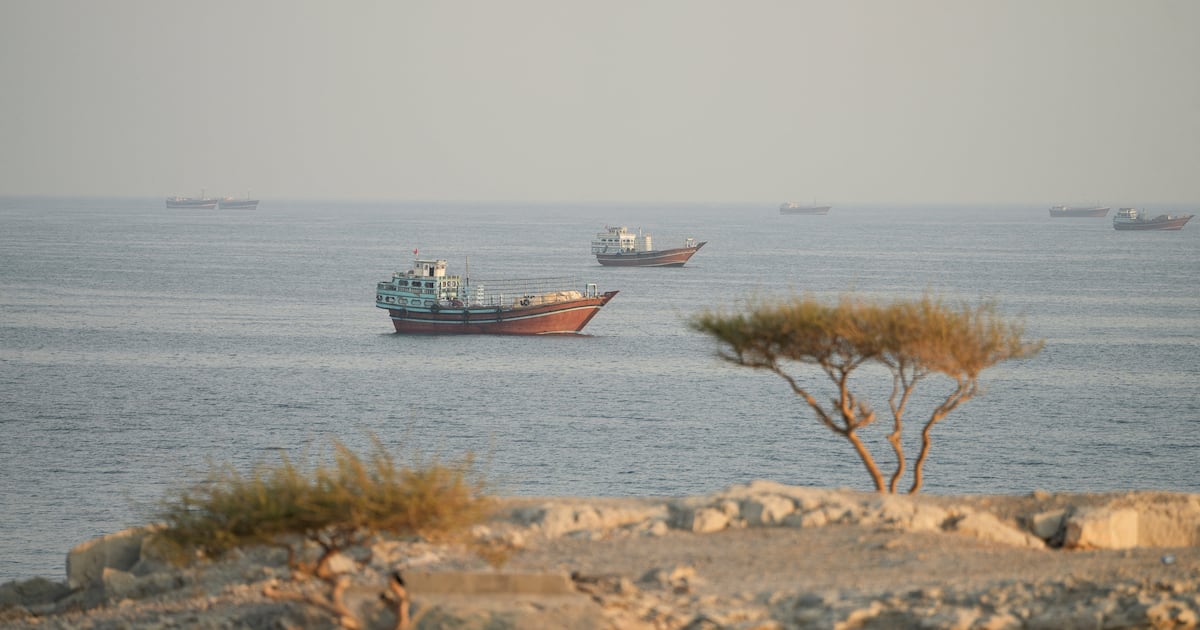
On November 6, American forces targeted air-defense installations on Qeshm Island, a strategically vital piece of territory controlling access to the Strait of Hormuz—the world’s most critical oil chokepoint. Trump himself called the operation “limited” and “minor,” claiming US forces neutralized Iranian portable anti-aircraft systems within five to fifteen minutes.
But the timing tells the real story. Just one day before the midterm elections, the US had already hit Qeshm. Two separate strikes in seven days, wrapped in vague language and contradicting Trump’s repeated pre-election vow not to provoke Iran during the voting period.
This isn’t a sign of presidential overreach or panic. It’s something more calculating—and far more dangerous. Washington appears to be using calibrated force to renegotiate its standing with Tehran, even as its domestic political capital shrinks. Whether that strategy stabilizes the region or drags it toward wider war depends on how both sides interpret these blows.
Who Gains Leverage From a Limited Strike?
Every side in this triangle—Washington, Riyadh, and Tehran—is reading these strikes differently. And each is using them to advance its interests.
For Trump, the message is clear: America remains capable of punishing aggression quickly, even when Congress opposes further commitment. The strikes degrade Iran’s layered air-defense network around Qeshm, a hub for missile production and naval activity. They also signal to Gulf allies that the US will still defend regional sea lanes, however quietly.
But Trump’s narrative is deliberately ambiguous. He hasn’t explained whether these were preventive actions, retaliatory responses, or experiments in coercion. Iran’s state media reported two missiles hitting a water-treatment facility and claimed to have shot down an MQ-9 Reaper drone—a disputed assertion that suggests Tehran wants to project resilience even after absorbing damage.
For Iran, the attacks provide a gift. They validate the regime’s long-standing claim that America seeks regime change, strengthening hardliners who argue compromise is futile. At the same time, striking a populated island rather than a military base invites questions about proportionality. If the US wanted to demonstrate restraint, hitting infrastructure that serves civilians looks counterproductive.
The Gulf states, meanwhile, face an uncomfortable reality. They welcome continued American deterrence against Iranian provocation, but they don’t want to be caught in crossfire. Saudi Arabia and the UAE have spent billions modernizing their own air defenses precisely because they fear being the next target if Washington and Tehran clash.
What emerges is a fragile equilibrium built on misperception. Each side believes it can control escalation. History suggests that belief is often wrong.
What This Means for Gulf Security Architecture
The Strait of Hormuz carries roughly 20% of global petroleum consumption. Any disruption there sends shockwaves through energy markets worldwide. For decades, the US Navy has acted as guarantor of free passage, patrolling alongside coalition partners and intercepting threats before they reach commercial shipping routes.
Those patrols are becoming harder to sustain. Iran’s proxy networks—Hezbollah in Lebanon, Houthi militias in Yemen, Shiite militias across Iraq—have learned to bleed American attention without triggering full-scale retaliation. A limited strike on Iranian soil is one way to break that pattern. But it also raises the stakes for everyone relying on the strait.
If Tehran perceives the US strikes as prelude to broader action, it could close the strait temporarily, mine shipping lanes, or direct proxies to attack Gulf infrastructure. If Riyadh interprets the strikes as weak signaling rather than serious intent, it may accelerate moves toward independent nuclear or conventional capabilities, undermining nonproliferation efforts entirely.
Meanwhile, China and Russia are watching closely. Both have growing economic ties with Iran and Gulf monarchies alike. Moscow sees an opportunity to deepen partnerships with Tehran while Beijing fears supply-chain volatility could disrupt its energy imports. Neither wants a US-dominated Middle East, but both prefer instability managed by others rather than themselves.
The result is a regional architecture increasingly defined by contingency plans rather than permanent alliances. Defense agreements remain in place, but trust between partners is eroding. That erosion will shape how confidently—or recklessly—each actor behaves in a crisis.
The Diplomatic Tightrope Trump Is Walking
Trump has been remarkably inconsistent since the midterms. On one hand, he insists peace talks are progressing behind closed doors, facilitated by unnamed intermediaries—likely Oman or Switzerland, traditional channels between Washington and Tehran. On the other, he authorizes raids deep inside Iranian territory.
This contradiction isn’t accidental. It’s a familiar Trump playbook: apply maximum pressure, then offer off-ramps that look generous because conditions were manufactured by the pressure itself. The theory goes that pain brings pragmatism. The problem is pain alone rarely produces negotiation; it produces desperation, which can look like defiance as easily as surrender.
Trump frames the Qeshm strikes as defensive responses to Iranian provocations, yet provides no evidence of imminent threat. He describes them as minor operations designed to restore balance, but balance implies symmetry—and Iran holds no equivalent capability to strike US bases directly. What we’re seeing is asymmetrical coercion, tested in real time against an adversary experienced in surviving exactly this kind of squeeze.
There’s also a domestic dimension. With Congress shifting away from his party, Trump may feel compelled to demonstrate executive authority through unilateral military action. The legal constraints on warmaking powers are weaker today than at any point since the Cold War, and courts have shown little inclination to check presidential discretion in theater-specific operations.
That creates a feedback loop:每一次打击都在强化“总统有权决定战争节奏”的印象,而每次印象又在削弱国会试图施加影响的动力。长期来看,这可能会改变美国对外干预的整体模式。
Where It Goes Next
Scenarios ahead depend largely on how Iran responds—if at all. A measured retaliation might involve cyberattacks on US infrastructure, proxy strikes on Gulf ports, or rhetorical condemnation followed by renewed indirect dialogue. An unmeasured response could trigger chain reactions across multiple theaters simultaneously.
Washington seems prepared for either outcome. Military assets remain deployed in the Persian Gulf region, and intelligence-gathering satellites continue tracking movements along Iran’s western border. Diplomatic backchannels stay open, though their effectiveness hinges on whether either side actually wants de-escalation versus prolonging controlled tension.
For ordinary Americans, the strikes barely register beyond brief news cycles. For citizens of Bahrain, Kuwait, Qatar, and the United Arab Emirates, they represent daily uncertainty masked by routine life. For Iranians outside government circles, they reinforce narratives of external hostility that officials exploit domestically but cannot always manage internationally.
One thing is certain: the era of predictable US-Iran relations has ended. In its place comes something messier, more unpredictable, and potentially more volatile. Whether that new normal proves survivable depends less on rhetoric than on restraint—and neither side has shown much of that lately.
The Qeshm strikes aren’t merely tactical. They’re diagnostic. They reveal how far a weakened president will push, how resilient an adversarial regime can be, and how fragile the delicate system holding the Gulf together really is.