Valve's Steam Frame Is PC VR's Bet on Wireless ARM
Valve's $1,059 Steam Frame bundles a standalone ARM headset with free Half-Life: Alyx and optional wireless PC VR streaming — a calculated push to move PC VR past enthusiast circles.
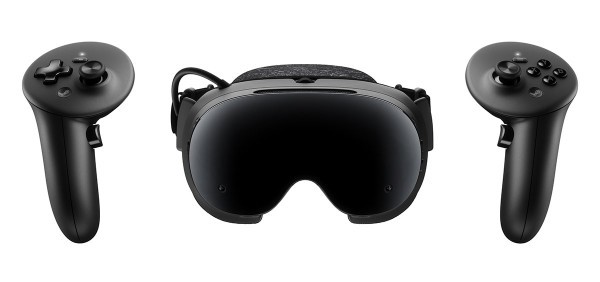
The Real Move Behind Steam Frame
Valve isn’t just releasing another VR headset. It’s making a statement about where it thinks the platform should go.
The Steam Frame launched at ¥19,980 (about $1,059) for the 256GB model and ¥24,498 for 1TB. That’s a standalone ARM-powered device running SteamOS 3, packed with a Snapdragon 8 Gen 3, 16GB of RAM, pancake lenses, and an eye-tracking camera that enables foveated rendering. It ships with a free copy of Half-Life: Alyx. And it connects wirelessly to a PC via an optional adapter that Valve claims offers low-latency streaming.
Read the spec sheet and you’ll see two separate products compressed into one box. A standalone headset. A PC VR headset. The Frame is both, and that dual nature is the whole point.
Why This Matters Right Now
VR has been stuck in a narrow lane for years. Meta’s Quest line dominates the standalone market but remains tethered to a Microsoft ecosystem that doesn’t invite much customization. PC VR — historically the higher-fidelity path — has stayed locked behind $800+ Rifts and Index rigs, reachable only by enthusiasts willing to build or buy expensive gaming PCs.
The Steam Frame attempts to erase that boundary. You can use it wirelessly on its own battery for standalone titles through the Steam Store. Plug in through the wireless adapter and you unlock full PC VR — including demanding sims and multiplayer shooters that no ARM chipset could run natively. One device, two modes.
This is how you pull PC VR out of its niche. You don’t lower the bar — you make the bar optional.
Who the Snapdragon 8 Gen 3 Actually Opens the Door For
The choice of Qualcomm’s flagship mobile chip isn’t arbitrary. The 8 Gen 3 can handle standalone titles like Beat Saber, Superhot VR, and the standalone tier of Half-Life: Alyx without breaking a sweat. But its real significance is what it signals: Valve believes the gap between mobile and desktop VR has collapsed enough that a single chassis can credibly serve both audiences.
The panel specs reinforce this. Each eye gets a 2160×2160 LCD display, 110 degrees of field of view, and a variable refresh rate up to 144Hz — though Valve itself notes the 144Hz mode is experimental. That’s competitive with Meta’s Quest 3 panel and ahead of most standalone headsets on the market.
The foveated streaming feature is the technical flex here. Internal cameras track where your pupils are looking, rendering the center of your vision in full resolution and dropping quality toward the periphery. It’s the same trick the PSVR2 and high-end PC headsets use, and it lets the Frame punch above its weight class on graphics fidelity without requiring a discrete GPU.
The Wireless Adapter Is the Bridge
The Frame’s relationship to PC VR depends entirely on that optional wireless adapter. Without it, you’re a standalone user with a very good standalone headset. With it, you’re on equal footing with anyone running a Link cable or Air Link — except there’s no cable to trip over and the battery inside the headset actually extends play time rather than draining it.
Valve’s claim of low-latency connection is the one detail that needs watching. Wireless PC VR has always been the hardest problem in the space. Latency spikes, compression artifacts, and dropped frames are the enemies of immersion. If the Frame’s wireless solution is genuinely good, it changes the equation for everyone who’s ever wanted to play PC VR games but hated the tether.
Half-Life: Alyx Is the Trojan Horse
Bundling Half-Life: Alyx with every unit isn’t generous — it’s strategic. That game is the benchmark title for VR. It’s the proof point that the medium can deliver cinematic, story-driven experiences at a scale nobody thought possible before 2020. Giving it away removes the single biggest question a prospective buyer might have: what do I actually play?
For the PC VR crowd, the bundled Alyx also doubles as a quality check on the wireless adapter — if it runs smoothly over the Frame’s connection, everything else will too.
What This Means for the Market
Meta owns standalone. Valve is now seriously contesting that space with a device that also happens to be a competent PC VR headset. The Frame undercuts the combined cost of a Quest 3 plus a PC VR setup. It doesn’t replace the Quest for casual users — the Meta ecosystem is deep and cheap — but it creates a credible middle ground for people who want more than social VR and rhythm games.
The Steam Deck precedent matters here. Valve proved that a handheld PC with Linux-based OS could carve out a sustainable niche. The Frame is the VR version of that bet: a platform play, not a hardware margin play.
What to Watch Next
The $1,059 price — and the separate cost of the wireless adapter, which hasn’t been priced in the source material — will determine whether this reaches beyond early adopters. The 144Hz experimental mode raises questions about power management and thermal design that only real-world use will answer. And the broader ecosystem question remains: will third-party developers treat the Frame as a priority target, or file it under “nice to have”?
One thing is clear. Valve sees a moment where wireless ARM headsets can finally bridge the gap between standalone convenience and PC VR fidelity. The Steam Frame is its answer. Whether the market agrees is the story that will unfold over the next few quarters.