Vance’s 'Things Happen' Is the Sound of US Alliances Fracturing
JD Vance's dismissive response to a US airstrike killing four at an Iranian wedding isn't just diplomatic carelessness — it's a live demonstration of why allies like South Korea can no longer assume Washington will absorb collateral damage quietly. The remark arrives at a moment when Seoul is already bracing for US pressure to choose sides over the Strait of Hormuz.
The Strike That Wasn’t a Strike
Four people died at a wedding in Kuhestak, a town in Sirik county on the southern Iranian coast near the Strait of Hormuz. One was a child. The Iranian Red Crescent — an independent humanitarian body recognized by international monitors as credible — reported the toll. Shrapnel from a US missile strike hit a residential home where the celebration was underway, wounding more than 50 others.
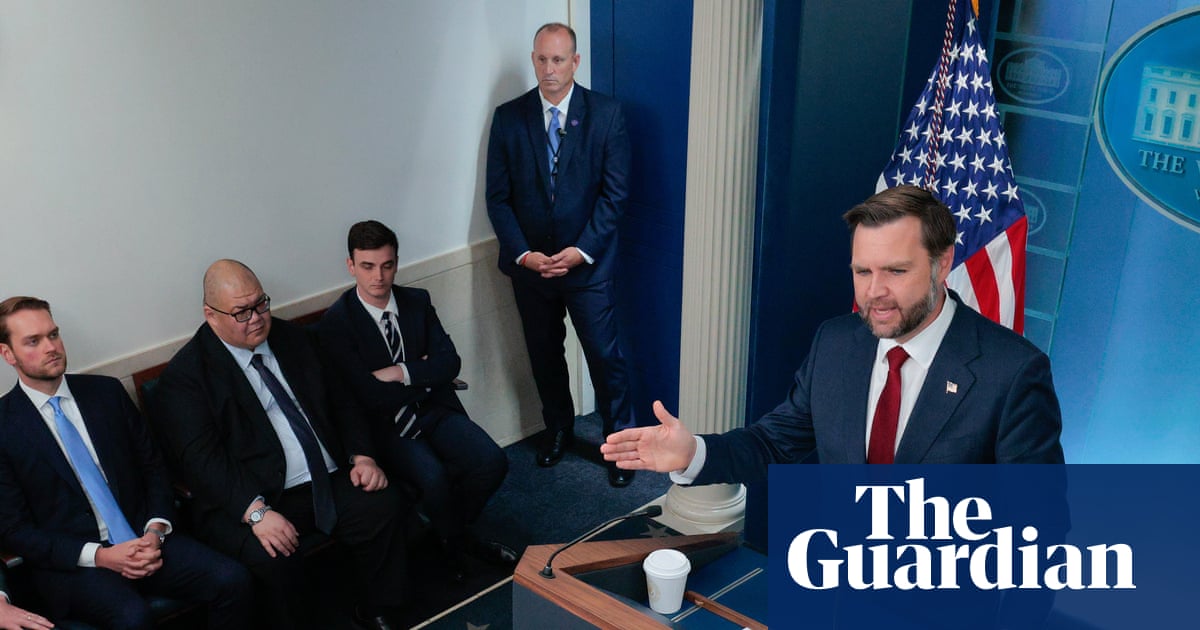
JD Vance’s response: “Sometimes things happen.”
The phrasing, delivered at a White House briefing with no acknowledgment of the Red Crescent’s confirmation and no specifics beyond a vague promise of investigation, was not merely careless. It was diplomatically combustible. And it lands at a moment when the United States is asking allies across Asia and the Middle East to make choices that will define their strategic posture for a generation.
Who Pays When “Things Happen”
Vance insisted the US “never targets civilians in combat.” The distinction matters in legal arguments. It does not matter to a child killed by shrapnel in a residential home during a wedding.
This is not the first incident raising questions about US targeting in the region. On 28 February, a US attack in Minab, roughly 23 miles from Kuhestak, struck a school compound and killed at least 156 people, most of them children. A preliminary military inquiry attributed the strike to a targeting error: outdated coordinates identified the school as part of an adjacent IRGC naval base. The Pentagon said it was investigating. No full report has been made public.
Two strikes. Two different explanations. One region where civilians are paying the price for American operational gaps.
Vance’s refusal to distinguish between the two incidents — or even to acknowledge the credibility gap between Iranian state media reports and Red Crescent confirmation — sends a signal far beyond Iran. It tells every American ally that the US will define the narrative around its own mistakes, and allies are expected to accept that definition or be cast as sympathetic to the adversary.
Seoul’s Dilemma in Real Time
This is where the Korea connection becomes unavoidable.
South Korea is already under quiet but intensifying pressure from Washington to align more explicitly with US operations in the Strait of Hormuz. The strait is a chokepoint through which a significant share of Korean energy imports passes. Any disruption — and the ongoing US-Iran conflict has already disrupted shipping patterns — hits Seoul’s economy with disproportionate force. But deeper than the energy angle is the political question: what does alignment look like when the US cannot even admit its missiles kill weddings?
Seoul has spent decades calibrating its stance between Washington and Beijing, and more recently between Washington and Tokyo on defense cooperation. The Iran conflict has added a third axis. If the US demands Korean participation in Hormuz operations while simultaneously dismissing civilian casualties as “things that happen,” Seoul faces a contradiction it cannot reconcile through standard alliance language.
The alternative — hedging, staying ambiguous, refusing explicit operational commitment — carries its own costs. Washington has made clear it interprets ambiguity as favoritism toward the adversary. But so does blind compliance when the US cannot produce credible evidence that it is not repeating targeting errors.
Trump’s Munitions and the Stockpile Lie
Adding to the noise, Trump claimed on social media that the US has “virtually unlimited” mid- to high-grade munitions and called journalists reporting on dwindling Pentagon stockpiles “treasonous SCUM.” The assertion contradicts public Pentagon reporting and defense industry data. Whether it reflects a genuine belief, a bargaining posture, or something else matters less than its effect: it deepens the credibility gap between official US claims and verifiable reality.
When the vice president cannot distinguish between a confirmed Red Crescent report and Iranian state media — dismissing both with the same skeptical shrug — and the president is calling fact-checking treasonous, the informational environment in which allies must make decisions becomes hostile to their own judgment.
What Comes Next
The US-Iran conflict has now stretched into its seventh month. Eighteen US service members have died. Halting negotiations have produced no lasting framework. Each new incident — whether the wedding strike or the earlier school attack — adds to a record that will outlive this administration’s framing of it.
Allies watching this pattern are calculating something beyond the immediate crisis. They are assessing whether the US will continue to absorb operational friction internally or externalize it — demanding that partners share the political burden of ambiguity, the moral burden of association, and the economic burden of whatever disruption follows.
Seoul’s choice will not be announced in a single statement. It will emerge from a series of smaller decisions: whether to share intelligence on Iranian shipping, whether to permit port calls by US vessels operating from the Hormuz corridor, whether to publicly endorse or remain silent on US strikes. Each decision carries weight. Each will be read through the lens of how Washington has treated its own mistakes.
Vance said “sometimes things happen.” The question for allies is whether they can afford to let things happen without asking who is responsible — or whether the cost of silence is higher than the cost of dissent.
The Bigger Picture
This conflict is not just about Iran. It is about what the United States asks of its partners when it is unwilling or unable to account for its own actions. The answer will shape coalition politics for years — not just in the Middle East, but in East Asia, where the same dynamics are playing out around China, North Korea, and the broader security architecture Washington is trying to rebuild.
“Things happen” is not just a dismissive phrase. It is a policy. And allies are now forced to decide whether they want to live inside it.