A Maker’s Backdoor: How Shenzhen Built Criminal Access Into 1.3
Google uncovered a scheme where Videostrong Technology embedded persistent backdoors in Android set-top boxes sold by multiple brands, then rented compromised devices to cybercriminal gangs for ad fraud and residential proxy networks. Japan's police agency helped shut it down.
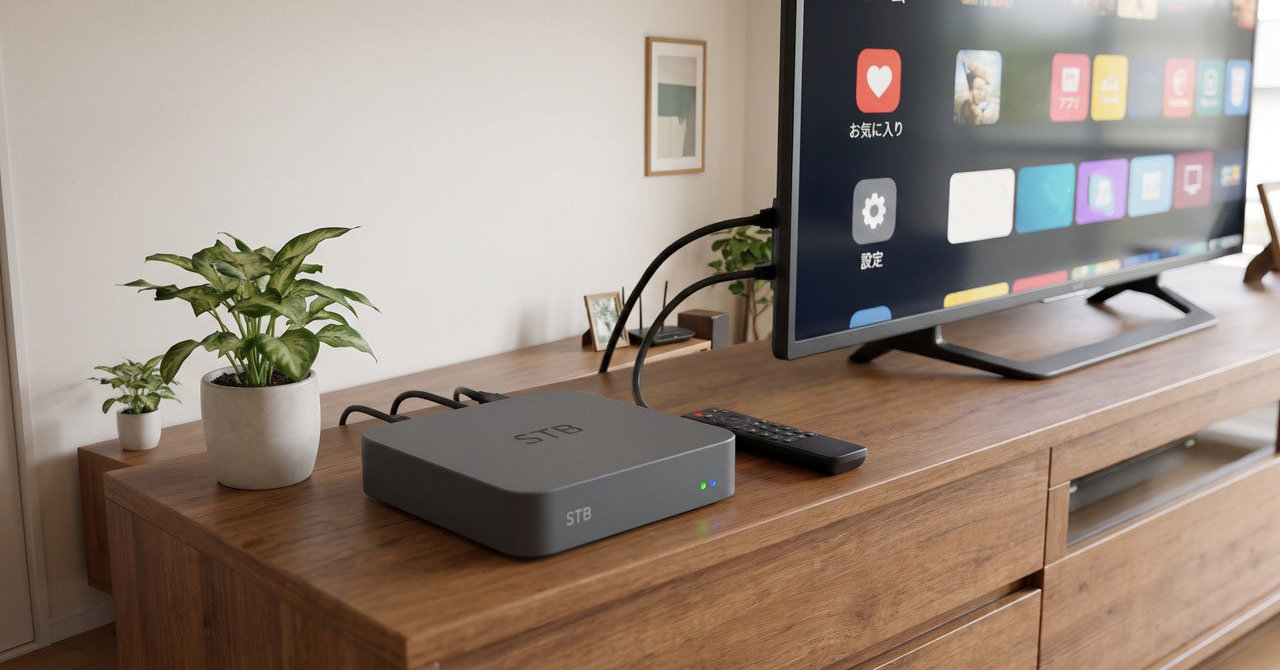
The device that never left you alone
When Google Threat Intelligence Group announced on November 2 that it had neutralized malware called XCPE alongside Japan’s National Police Agency and industry partners, the headline number was staggering: more than 1.3 million set-top boxes hijacked worldwide. But the real shock came two sentences later.
The backdoor hadn’t been added by a rogue actor in a dark web forum. It had been engineered — deliberately, systematically — by the device manufacturer itself.
A factory-installed breach
Videostrong Technology, based in Shenzhen, builds Android set-top boxes for a range of brands under contract. That arrangement is standard practice across consumer electronics: OEMs design hardware, white-label products flow through dozens of brand names, and consumers rarely know who actually assembled the silicon inside their living room box.
That opacity is exactly what made the scheme viable.
According to Google’s assessment, XCPE was baked into the system partition of affected devices at the factory level. It survived reboots. It survived manual deletion attempts. It also quietly disabled Google Play Protect — Android’s built-in malware scanner — without asking the user, then silently installed additional payloads. These are not features that emerge from a developer’s mistake or a sloppy code review. They are coordinated capabilities that point to intent.
Google reached that conclusion by tracing XCPE across multiple机型 and brand badges over several years. A one-off oversight might explain a single firmware build. It does not explain a pattern spanning dozens of SKUs and market regions.
Renting your television to strangers
The business model behind XCPE is almost banal in its simplicity, which makes it all the more unsettling. Videostrong did not just plant the backdoor. It leased access to compromised devices to separate criminal syndicates who paid for the right to use them.
Those syndicates ran two primary operations:
Ad fraud. Compromised boxes opened hidden browser windows that loaded and clicked on advertisements without any human viewing them. Advertisers — often unaware they were paying for phantom impressions — funneled money into campaigns that generated zero legitimate reach. The global cost of ad fraud is estimated in the tens of billions annually; every compromised screen is a tiny faucet feeding that pool.
Residential proxy rotation. A proxy relays internet traffic on behalf of someone else. Commercial proxy services typically rely on data-center IPs, which are easy to flag and block. Residential proxies, by contrast, route traffic through real home connections that look indistinguishable from ordinary users. For a criminal operator — scraping pricing data, evading geo-blocks, launching attacks from an innocent household’s IP — there is no cleaner camouflage. The occupants of those homes had no idea their TV box was functioning as a node in a covert relay network, bouncing suspicious traffic through their broadband line.
Who sells the device also rents your attention
The deeper implication of this case is not just that a single supplier went bad. It is that the structure of modern electronics manufacturing creates a class of risk that traditional cybersecurity has no handle on.
Most consumers buy a set-top box as an appliance — a dumb pipe to streaming video. The security assumption baked into that mental model is that the device does nothing on its own once it boots up.XCPE flipped that assumption on its head. The device was doing things constantly: disabling defenses, installing software, hosting outbound connections, generating fake ad revenue. And none of it appeared in any interface the user could see.
This is not unique to set-top boxes. Any category of connected hardware — smart cameras, baby monitors, automotive infotainment systems, digital signage — shares the same architecture: an opaque supply chain, long support lifespans, weak update mechanisms, and an owner who trusts the thing in front of them. When the builder of that thing is the source of the threat, every trust heuristic collapses.
Why Japan’s involvement matters
The fact that Japan’s National Police Agency participated in disrupting XCPE underscores how cross-border this problem has become. The manufacturer was in Shenzhen. Google operated the takedown from the United States. Affected devices likely shipped globally, including to Japanese households. The criminal buyers may have been scattered across multiple jurisdictions.
Japan has been a particularly sensitive market for this type of compromise. Residential proxy abuse tied to household infrastructure has drawn regulatory scrutiny in Tokyo, and the police’s participation signals a willingness to treat IoT-enabled crime not as a niche computer-science problem but as a public safety issue on par with anything else occurring in physical space.
What happens when the takedown ends
Disrupting XCPE is a significant operational achievement. Neutralizing the command-and-control infrastructure saves 1.3 million devices from active exploitation tomorrow. But it does not fix the fundamental structural exposure.
Hundreds of thousands of affected units remain deployed in homes and businesses around the world. Without a verified firmware patch that permanently removes the backdoor from the system partition, those devices will reboot into the same compromised state every time. Many set-top boxes never receive meaningful updates after purchase — some are designed to run indefinitely on whatever firmware ships off the line.
Brands that sourced these boxes carry reputational exposure. If a product bears their logo but contains a factory-installed breach, consumers who feel betrayed will not distinguish between the brand and the subcontractor. Regulatory bodies in multiple jurisdictions may view the sale of such devices as a product-safety failure, not merely a software bug.
The broader lesson for every electronics market
This story is not just a cautionary tale about one company in Shenzhen. It is a blueprint for a threat vector that can replicate in any category of connected hardware where supply-chain transparency is low and security auditing is absent.
Consumers should ask which companies in their hardware supply chain have ever published a security advisory or committed to a meaningful update window. Brands should audit not just their own code but the code their contract manufacturers embed at the silicon level. Regulators should consider whether factory-installed backdoors constitute a product-liability issue — because in effect, that is what they are: a defect present before the product ever reaches the shelf.
The most dangerous weakness in any IoT ecosystem is not a flaw that a hacker exploits. It is a door that the builder hands you with the key already cut.