Vulcan's Collapse Reveals Amazon's Fragile Satellite Strategy
ULA's Vulcan rocket lost 40 Amazon satellites on its most critical flight yet. The failure exposes mounting risks of relying on third-party launch providers and threatens Amazon's timeline for global satellite internet.
The Right Flight to Fail
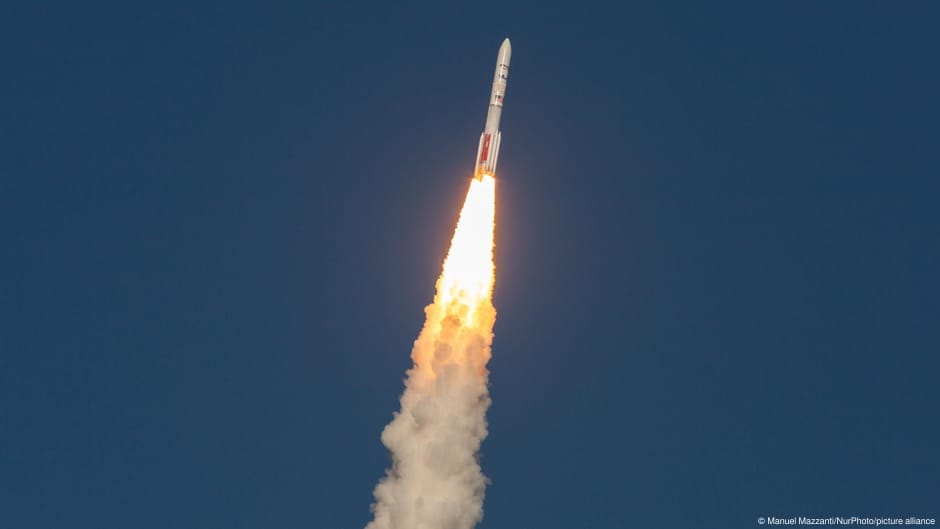
The Vulcan rocket didn’t have to fail on this particular mission. The payload it carried — 40 Amazon Kuiper internet satellites — mattered enormously to both Blue Origin and United Launch Alliance. Each company needed a clean flight not merely as a milestone but as proof of concept. For Blue Origin, a successful Vulcan reinforced that its BE-4 engine could carry the weight of a national partner. For ULA, it validated a product line the company had staked its future on after years of being overshadowed by SpaceX.
Instead, the rocket suffered an anomaly roughly ten minutes into its ascent from Cape Canaveral Space Force Station on Sunday. All forty satellites were lost. The vehicle failed to reach orbit. Preliminary reports suggest the anomaly traced back to a combustion instability event in one of the two BE-4 engines powering the first stage, though investigators have not yet confirmed the precise chain of events. What is clear is that the engine shut down prematurely, leaving the rocket unable to achieve the velocity required for orbital insertion.
This was Vulcan’s fifth flight since its debut in April 2024. It was also the first time the rocket had flown in nine months, having been grounded after anomalies surfaced in its solid rocket boosters and the BE-4 engines it carries. During that layoff, ULA completed a series of booster redesigns and returned to flight in February with what officials described as a thoroughly investigated restart. Amazon’s mission was supposed to be the next step in building a credible launch cadence — instead, it became the latest setback in a pattern that now raises uncomfortable questions.
For ULA, a joint venture of Boeing and Lockheed Martin founded in 2006, this marks the first total mission failure in the company’s history. Before Vulcan, every Delta IV Heavy and Atlas V flight had delivered its payload successfully. A track record stretching nearly two decades ended on a Sunday morning over the Atlantic.
Why It Matters Beyond One Failed Rocket
The immediate casualty count — forty satellites worth an estimated $150 million to $200 million, though Amazon declined to confirm the figure — tells only part of the story. What makes this incident distinctive is its timing and cascading consequences.
The Space Force had already paused Vulcan from carrying national security payloads while it completed its investigation into the engine issues that triggered the nine-month layoff. Amazon’s mission was supposed to generate fresh flight data before the military decided whether to resume using the rocket for classified launches. Instead, the latest failure extends that pause indefinitely and deepens skepticism about whether ULA’s flagship vehicle can ever achieve the reliability its customers require. Every month of delay compounds scheduling conflicts across Pentagon launch manifests, where alternative vehicles are either unavailable or booked years in advance.
The Department of Defense depends heavily on ULA as a secondary launch option alongside SpaceX. Without reliable access to affordable alternative launch services, Washington faces escalating costs and scheduling bottlenecks. The Government Accountability Office has flagged this dependency risk repeatedly in recent years, noting that the loss of a single provider could leave critical national security missions stranded. Each additional Vulcan failure makes it harder for officials to justify maintaining that partnership and harder to defend the budget allocations that keep ULA operational.
There is also a reputational dimension that extends beyond government contracts. Commercial launch providers compete on demonstrated reliability above all else. When a rocket fails publicly, potential customers — especially those deploying expensive constellations — recalibrate their risk assessments. Competitors do not remain quiet during these moments.
The Supply Chain Problem Nobody Is Talking About
Vulcan’s troubles trace directly back to its engine supplier. Blue Origin, the aerospace company founded by Amazon’s Jeff Bezos, designs and manufactures the BE-4 engines that power the vehicle’s first stage. The relationship between ULA and Blue Origin creates a structural tension that few observers outside the industry fully appreciate.
When investigators identified a fault in the engine’s main oxygen valve earlier this year, Blue Origin developed modifications and retrofitted the engines installed on the current Vulcan. The question hanging over all of this is whether those fixes addressed every potential failure point or merely exposed new ones — a pattern that has repeated across multiple test campaigns at Blue Origin’s facility in Texas.
Meanwhile, Blue Origin is racing its own New Glenn rocket toward commercial service, a vehicle that could eventually compete with Vulcan for the same payloads. The company also suffered its own high-profile setback in May when a New Glenn prototype exploded during a ground test. These parallel programs create a situation in which Blue Origin is simultaneously a supplier to its parent company’s launch rival and a direct competitor in the commercial marketplace. ULA finds itself caught between dependence on a supplier that is building its own rival system and managing public expectations for a rocket that keeps encountering trouble.
Industry analysts have noted that vertical integration — owning the engine, the rocket, and the launch operations — appears to confer a reliability advantage that fragmented supply chains struggle to match. SpaceX benefits from controlling every component of Falcon 9. ULA benefits from none of that control.
The Cost of Outsourcing Your Constellation
Amazon entered the satellite internet business assuming it could partner with established launch providers rather than building its own rockets. That gamble was born partly from a desire to avoid the capital expenditure and schedule risk of vertical integration, and partly from the assumption that reliable commercial launch capacity would remain available.
Neither assumption holds up under scrutiny now.
Before Sunday’s failure, Amazon had successfully launched 398 Kuiper satellites across fourteen missions since 2025. That represents roughly twelve percent of the 3,236 satellites required for full global coverage — a pace that was already aggressive and now looks increasingly vulnerable. Amazon had planned to begin offering initial Kuiper broadband service sometime this year, a milestone that now faces real uncertainty. Launch schedules that depended on steady Vulcan cadence will need to absorb delays, and there are no spare launch slots readily available from other providers willing to take priority customers on short notice.
SpaceX, by contrast, operates over eleven thousand Starlink satellites and serves millions of customers worldwide. The difference partly comes down to rocket ownership. SpaceX builds Falcon 9, flies Falcon 9, and learns from every launch without intermediaries. Amazon orders launch slots from ULA and hopes the hardware performs. When it doesn’t, Amazon bears the cost without gaining the engineering feedback loop that comes from operating your own rockets.
The financial implications extend beyond the value of lost satellites. Each failed mission consumes launch insurance payouts, re-manufacturing costs, and opportunity costs associated with delayed service revenue. Analysts estimating Kuiper’s total deployment cost have placed it at tens of billions of dollars. A single unreliable launch provider representing a significant fraction of that deployment timeline is not a marginally risky arrangement — it is a structural vulnerability.
What Happens Next
ULA will conduct a thorough investigation before attempting another Vulcan flight. Based on past experience, that process will likely take several months. Amazon has publicly stated it believes ULA will learn from this mission and deliver on its long-term plans for the rocket. Internal sources familiar with Amazon’s launch planning suggest the company is quietly evaluating contingency options, including shifting some Kuiper missions to other providers and accelerating discussions about whether to develop its own launch capability through Blue Origin’s New Glenn program.
That confidence will be tested repeatedly. The Space Force will withhold its clearance for national security launches until the agency receives satisfactory evidence that the underlying engine problems are resolved. Defense officials are watching closely whether Amazon’s commercial setback is merely an expensive learning curve or a symptom of deeper design flaws. The Pentagon’s next decision on resuming Vulcan flights for classified payloads will signal how seriously the administration takes this recurring pattern.
For Amazon, the calculus grows sharper with each failure. The gap between current capability and the thousands of satellites needed for global coverage means every missed launch compresses an already ambitious timeline. If ULA cannot demonstrate sustained reliability in the coming months, Amazon may face painful choices about how aggressively to pursue its own launch independence or whether to diversify across multiple providers — a strategic pivot that would acknowledge what the Vulcan failure made visible: that relying on someone else’s rocket was always a bet, and bets like this can go wrong.
The Vulcan failure cost forty satellites this week. Over the long arc of satellite internet competition, the cumulative cost of unreliable launch providers may prove far greater — measured not just in dollars but in market position, customer trust, and the window of opportunity that SpaceX is actively exploiting.