Vulcan Failure Exposes the Cracks Beneath SpaceX Dominance
Monday's Vulcan destruction of 40 Amazon satellites is United Launch Alliance's first total mission failure ever. But the real story is what it reveals about the fragile architecture of SpaceX counterweight strategies.
The first total failure in two decades
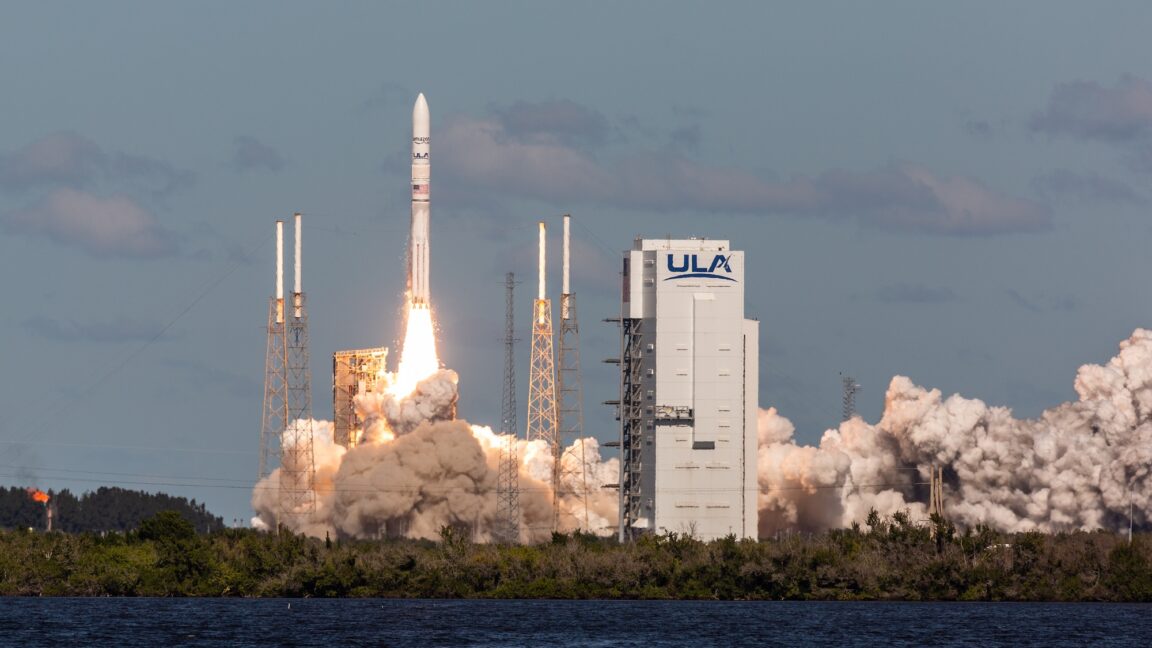
This was United Launch Alliance’s first mission-ending rocket failure in twenty years — since the company formed in 2006 from the merger of Boeing and Lockheed Martin’s rocket divisions. Forty Amazon Leo satellites tumbled back to Earth from low orbit last Sunday along with the Vulcan booster that was supposed to carry them home.
That sentence alone sounds like bad news limited to two companies. It isn’t. What happened at Cape Canaveral ripples through every corner of the American space economy because ULA’s Vulcan was never really a competitor to SpaceX. It was a political solution to the problem of SpaceX’s dominance.
And now the solution has cracked.
How the rocket broke
Vulcan lifted off Sunday at 12:40 pm EDT. Solid rocket boosters separated normally within the first two minutes. Then the anomaly appeared.
Telemetry showed something odd near the five-minute mark: the twin BE-4 methane-burning main engines, manufactured by Jeff Bezos’s Blue Origin, did not shut down when programmed. They continued firing for at least thirty additional seconds. In a normal ascent profile, that kind of overburn typically signals the booster stage was underperforming and the engines were compensating.
Moments after scheduled shutdown, the rocket began spinning. The Centaur V upper stage attempted to vector its RL10 engines back into alignment. It failed. Ten minutes into flight, ULA confirmed the payload had not reached orbit. All forty Amazon satellites were lost.
The company said it had no specific data yet on the root cause. Engineers will investigate.
Who won
SpaceX won, almost immediately.
Before this launch, Amazon had thirteen remaining Vulcan flights in its launch contract with ULA, each designed to deliver 40 or more satellites. The company also maintained backup relationships with Europe’s Arianespace and its own Blue Origin. That gave Amazon apparent redundancy.
It did not.
Arianespace has flown three Ariane 6 missions so far and holds four more through the end of the year — a total throughput that cannot absorb the 37 remaining Vulcan slots Amazon needs to complete its constellation. Blue Origin’s New Glenn returned to flight status only after a May ground-test explosion traced to a faulty BE-4 valve, and that same engine manufacturer now faces renewed scrutiny. NASA has New Glenn committed to lunar lander test flights early next year as part of the Artemis program. The Space Force recently added New Glenn as a third national security launch option alongside SpaceX and ULA.
None of those commitments can flex fast enough.
Meanwhile, Amazon already has ten Falcon 9 launches reserved with SpaceX, but Elon Musk’s company is actively transitioning its crewed and heavy-lift operations toward Starship. SpaceX will retire Falcon 9. There are no more Falcon 9 bookings available once the current queue empties.
Amazon’s best fallback option is a rocket owned by its chief competitor in satellite broadband. That is the structural irony no analyst should miss.
The constellation math
Amazon’s Leo constellation currently operates 396 satellites against a first-generation target of 3,292. That means roughly eight hundred of the company’s network nodes still sit in storage. Amazon manufactured its one-thousandth satellite recently — more than half of all planned first-generation hardware remains on the ground waiting for launch slots that no longer exist at the cadence originally promised.
The company’s public statement after Sunday’s failure was careful: “There is risk with any launch, and that’s especially true for inaugural missions.” Amazon called ULA a trusted partner and expressed confidence it would deliver long-term. Those are the words you say when you cannot afford to switch suppliers mid-stream.
But switching suppliers mid-stream is exactly what Amazon may face. The previous round of Vulcan delays already forced Amazon to book Falcon 9 missions to accelerate deployment. Losing the LV-01 launch makes those earlier delays look manageable.
The defense dimension
The Pentagon feels this failure most acutely, and not only because of ULA’s contract portfolio.
In 2025, the Space Force moved six national security launches from Vulcan to SpaceX rockets because repeated Vulcan delays threatened time-sensitive payloads. Military officials swapped missions voluntarily, accepting shorter launch windows in exchange for getting satellites into orbit on Falcon 9 or Falcon Heavy. The trades preserved ULA’s revenue share on paper but delivered actual flight opportunities to SpaceX.
This failure guarantees more trades. Every month Vulcan remains grounded, more sensitive payloads move to SpaceX launch sites. The Space Force has spent years building a dual-provider architecture precisely to avoid sole-source dependence on Elon Musk’s company. Sunday’s result moves that architecture backward.
Blue Origin’s inclusion as a third provider offers comfort only if New Glenn returns to flight without delay. If investigators link Sunday’s anomaly to a BE-4 fault — the same engine family that exploded during New Glenn testing in May — the path forward narrows sharply. Two of Amazon’s three primary launch options would be simultaneously compromised by problems originating from a single component manufacturer.
The Artemis connection
NASA Administrator Bill Nelson responded to ULA’s failure announcement with a remarkably direct message: “Artemis, Moon Base, and the nation need ULA. We are in your corner and here to help.”
That support is not merely rhetorical. NASA selected a version of ULA’s Centaur upper stage for future flights of the Space Launch System rocket, replacing a more expensive and unproven Boeing design. The agency plans to begin flying the Centaur on SLS crewed lunar missions as soon as 2028.
Investigators must rule out a Centaur fault before NASA can proceed confidently. If the upper stage is cleared — and preliminary reports suggest the anomaly occurred in the booster stage, not the Centaur — the path forward remains open. If it is not, Artemis timelines shift again, and another contractor finds itself absorbing work that was never supposed to go to SpaceX.
What happens next
The immediate consequence is operational paralysis across three major programs. Amazon cannot launch the satellites it has already built. The Space Force cannot fly missions it cannot delay. NASA cannot certify the upper stage it depends on until investigations conclude.
The longer-term consequence is strategic recalibration. The assumption that ULA could serve as a durable counterweight to SpaceX required Vulcan to succeed repeatedly. It failed once where previous close calls had been recovered mid-flight. The difference between recovery and total loss is not merely technical — it is economic. Every failed launch increases per-satellite cost, widens the gap between Amazon’s delivery schedule and Starlink’s market position, and pushes more contracts toward whichever provider can guarantee uptime.
ULA exists to provide assured access to space. On Sunday, assurance failed. The question now is whether that failure represents a solvable engineering problem or a symptom of a model that cannot scale fast enough to challenge SpaceX’s launch cadence.
The answer will determine who wins the next decade of American space dominance.