VW's 100,000-Cut Crisis Is European Auto's Canaries in the Coal Mine
Volkswagen's board approved another 50,000 job cuts, bringing its total to 100,000 — and may ax the Seat brand entirely. The moves signal a continent in industrial distress, and Korean rivals are lining up to take what's left.
The Math Isn’t Getting Better
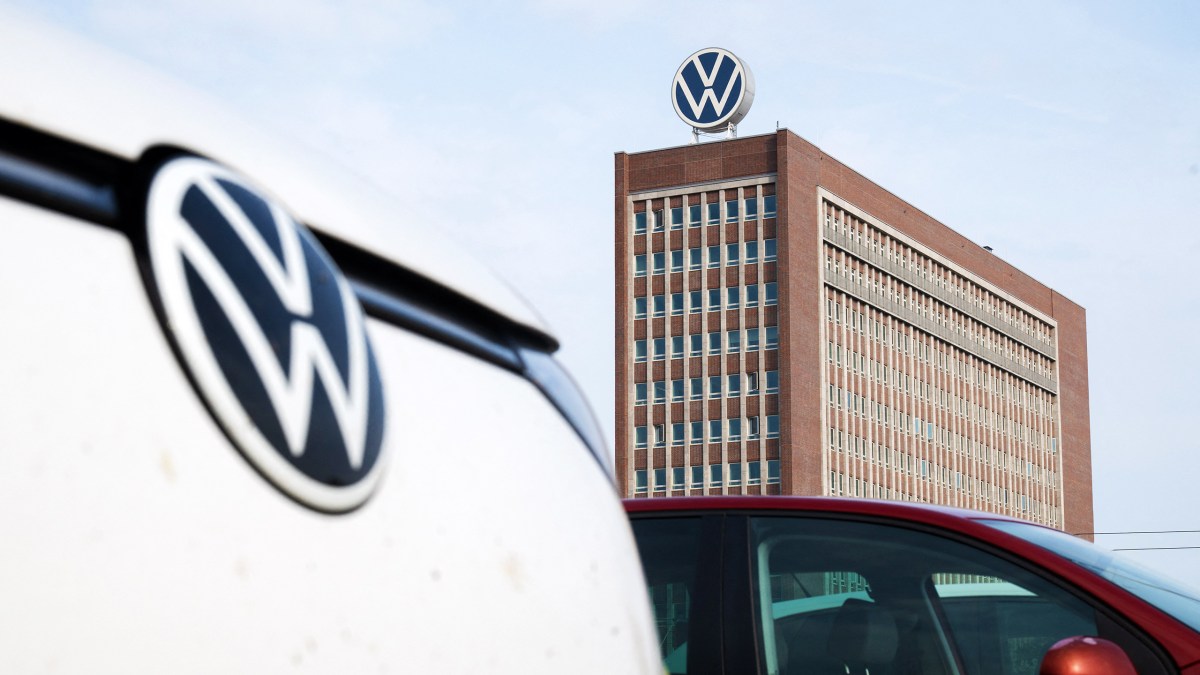
Volkswagen’s board of supervisors approved another 50,000 job cuts Friday, pushing the company’s total planned reduction to 100,000 — roughly one in every six employees across its global workforce of more than 650,000. This is not a rounding error. This is a corporation amputating a limb the size of a mid-tier nation’s manufacturing base.
What makes this particular announcement sharper than previous restructuring waves is what came with it. VW isn’t just closing plants. It’s looking for buyers for four of its most historically significant factories — Emden, Hanover, Neckarsulm, and Zwickau — and it may retire the Seat brand entirely, keeping only the Cupra performance spinoff alive. That’s a strategic pivot that goes beyond cost-cutting into identity redesign.
A Brand Dies (Or Doesn’t)
A leaked document related to VW’s restructuring plan indicates Seat could be retired in the coming years while Cupra survives. For English-language readers, Seat may not carry the same weight as BMW or Mercedes, but it matters enormously in Southern Europe. Seat is Volkswagen’s volume play in Spain, Italy, and the UK — the brand that undercuts the VW badge while still riding on its engineering reputation. Cupra, carved off as a performance subsidiary, has been far more successful at building an identity. It’s younger, flashier, and doesn’t carry the baggage of a company that’s been losing money for three straight years.
Retiring Seat means Volkswagen is effectively conceding the mainstream European volume market in several key countries. That vacuum won’t stay empty. And the players circling it aren’t other German brands — they’re Hyundai, Kia, and increasingly, Chinese makers.
Why This Matters Outside Germany
European carmakers have spent the better part of a decade trying to pivot to electric vehicles while their internal combustion engines were still generating profits. The pivot slowed those profits, the pivot required billions in investment, and now the pivot hasn’t produced competitive products fast enough to replace what’s being lost. The result is a financial squeeze that’s forcing existential decisions.
Volkswagen’s plant sales plan is particularly telling. Rather than shut down Emden, Hanover, Neckarsulm, and Zwickau — facilities that have defined industrial landscapes in their regions for decades — VW is shopping them. That means someone else will run them. Given who’s expanding in Europe, the buyers won’t necessarily be European.
Chinese automakers have already announced plans to build factories in Hungary, Spain, and Türkiye. BYD, SAIC, and others are shipping millions of units into Europe right now, often at prices European makers can’t match without selling at a loss. Volkswagen’s own lobbying coalition — the Alliance for Automotive Innovation, which includes Ford, GM, Honda, Hyundai, Stellantis, Toyota, and VW itself — recently wrote to Congress urging a ban on Chinese vehicle, software, and hardware imports. The letter carefully exempts non-Chinese companies that export from China, like Ford and GM. In other words: protect our market, but don’t punish us for selling here too.
The Korean Position
While German automakers restructure and lobby, Hyundai and Kia have been quietly building market share in Europe. Hyundai’s Ioniq line and Kia’s EV range have gained traction in Norway, the Netherlands, Germany, and the UK — precisely the markets where Seat and Volkswagen’s volume models compete. Korean makers entered Europe’s EV transition earlier, with products that arrive on time and at prices that don’t require massive subsidy adjustments.
Hyundai Motor Group’s European sales have grown consistently through 2024, 2025, and into 2026. The company opened a dedicated EV plant in Ulsan for European-bound models and has been expanding its charging infrastructure partnerships across the continent. Where Volkswagen is liquidating assets, Hyundai is acquiring shelf space.
Kia faces a similar dynamic on a smaller scale. The EV9 and EV6 have become reference points in their segments, and the brand’s warranty and service positioning has resonated with European consumers who’ve watched German reliability metrics slide.
The broader point: European auto’s contraction creates room. Korean manufacturers are already in that room. Chinese manufacturers are walking through the door.
Labor Markets in Distress
One hundred thousand jobs is not an abstract number. These are positions in Lower Saxony, Baden-Württemberg, and Bavaria — regions where automotive employment is woven into municipal budgets, supplier networks, and political representation. The four plants VW is shopping aren’t peripheral facilities. Emden produces the ID.4 and ID.7. Zwickau is Volkswagen’s dedicated EV production hub. Hanover and Neckarsulm are legacy sites with deep supplier ecosystems.
If these plants find new owners, the question isn’t whether they’ll keep operating — it’s under what terms. A Chinese or Korean buyer would bring different labor expectations, different supply chain relationships, and different product strategies. German co-determination rules might soften the transition, but they can’t erase the economic reality that Volkswagen needed to cut 100,000 jobs to stay viable.
What Happens Next
Volkswagen’s restructuring isn’t complete. The 100,000 figure is planned, not finalized. Plant sales require buyers. Brand retirement requires regulatory and market approval. But the direction is clear: Volkswagen is becoming a smaller, more focused company, and it’s willing to sacrifice heritage to survive the EV transition.
The beneficiaries of that sacrifice won’t be German. They’ll be Korean and Chinese — exactly the competitors European automakers have spent decades trying to keep at arm’s length. The industry’s old equilibrium, in which German engineering set the standard and everyone else followed, is dissolving. What replaces it is still being written, and the pen is in Asian hands.