A VW Plant Now Building Iron Dome Parts — Europe's Defense Pivot Is Here
Germany is converting a Volkswagen factory into an Iron Dome component supplier. The deal signals a historic rewiring of European industry for war production — and exposes the fault lines inside NATO's supply chains.
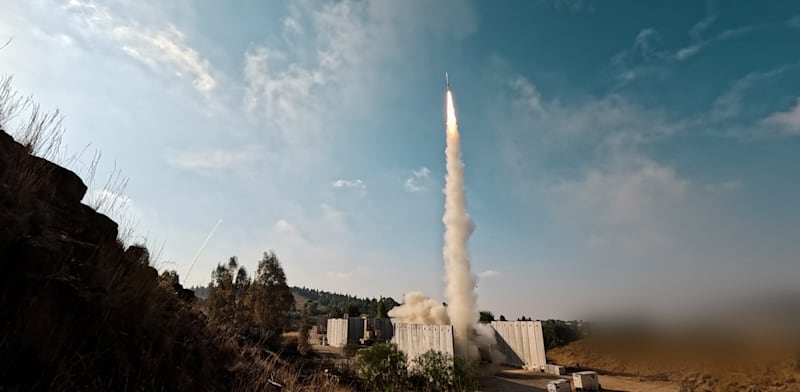
The Osnabrück Plant Has a New Mission
A Volkswagen factory that once assembled cabriolet T-Roc models will spend next year building components for Israel’s Iron Dome missile defense system. That’s not a pivot — it’s a conversion. And it’s one of the most consequential signals yet that Europe’s postwar economic order is being rewired for conflict production.
Rafael Advanced Defense Systems, Aurelius Capital, and the Lower Saxony government have signed a letter of intent to buy the plant from Volkswagen for what the German state will contribute as €200 million of the total purchase. The deal was structured specifically to bypass Qatar Investment Authority opposition — Volkswagen’s third-largest shareholder, which holds 10% of shares and 17% of voting rights and firmly objected to defense production on its lot.
No jobs will be lost, promised Lower Saxony minister-president Olef Lies ahead of local elections roughly a week away. The 2,300 workers at Osnabrück, Volkswagen’s smallest German factory, will transition from car assembly to defense manufacturing when the plant’s current automotive operations end in the second half of 2027.
The interceptors themselves won’t be made there — only supporting components like trucks, generators, and launchers. But that detail matters less than the fact that a German industrial site is now feeding directly into an Israeli weapons system under conditions that rewrite decades of postwar defense-taboo norms.
Why This Isn’t Just a Defense Deal
TheOsnabrück arrangement belongs to a much wider restructuring. Volkswagen’s own business plan, approved this weekend, calls for up to 50,000 layoffs across Germany, the closure of four factories, and a strategic retreat to what management calls core assets. Osnabrück didn’t make the list.
That Volkswagen itself won’t be involved in the new venture — the factory is being sold off entirely — is a detail that tells you everything about where German automotive strategy has landed. The company isn’t diversifying into defense. It’s shedding this operation and walking away. The state and a defense contractor are picking up the pieces.
This is the physical proof of what strategists have been saying for years: Europe’s auto industry, built for peace-time mass production and export competitiveness, is being folded into a wartime supply chain that it never planned for. The question isn’t whether German factories will produce munitions. It’s which ones, at what cost, and under whose command.
The Qatar Factor and Who Actually Decides
The Qatari Investment Authority’s opposition reveals something structural about European defense industrial policy that rarely gets discussed openly. A Middle Eastern sovereign wealth fund can block a defense production decision at a German factory. That wasn’t supposed to be how this worked after 1945 — and it shouldn’t be how it works now.
The workaround was elegant in a way that exposes the fragility underneath: Lower Saxony stepped in, bought the plant, and brought in Aurelius Capital, a Munich-based investment fund, to close the deal without Volkswagen’s boardroom or Qatar’s approval. The federal government, notably, opted out entirely. This is a state-level transaction, not a national security directive issued from Berlin.
That fragmentation matters. Defense industrial policy in Europe is increasingly being made in regional capitals and private investment vehicles rather than through unified federal strategy. It also means accountability is diffuse — when a German factory produces Iron Dome parts, it’s unclear who ultimately answers to voters: the Lower Saxony government, the Israeli Ministry of Defense, or the consortium partners who wrote the checks.
What Gets Made, What Gets Bought
Rafael’s initial offer reportedly included production of trucks, generators, launchers, and other infrastructure components for the Iron Dome system. The magazine WirtschafWoche also noted that components for other weapons systems may eventually be manufactured at Osnabrück. That open-ended language is deliberate — it leaves room for expansion without committing to any single program.
Israel has been pushing this model abroad. Rafael is simultaneously producing Iron Dome interceptors in India, a deal that signals a broader strategy: localize final assembly and component manufacturing in partner countries to reduce supply chain vulnerability and build political dependence through industrial interconnection. Osnabrück is the European counterpart to that approach — and it comes with a different set of political complications.
German defense exports to Israel have already soared, according to Globes’ own reporting. The Osnabrück deal deepens that relationship into the factory floor. It also raises questions that European policymakers have not yet answered publicly: Will these components flow freely during conflicts that don’t involve NATO allies? Who controls production schedules when Berlin and Jerusalem have different strategic priorities?
The Labor Question Nobody Is Ready to Answer
The trade union at Osnabrück hasn’t given unequivocal support to the transition. It has expressed willingness to consider “a sensible solution” — which is diplomatic language for uncertainty. Workers who spent decades assembling consumer vehicles are now being asked to build components for a weapons system designed to intercept rockets fired at civilian population centers in the Middle East.
Volkswagen is pursuing a memorandum of understanding with Aurelius Capital to guarantee worker rights through the transition. But guarantees on paper don’t resolve the deeper question: Can a plant built for just-in-time automotive production actually scale up to defense manufacturing timelines? Defense contracts operate on different schedules, different quality standards, and different security protocols. The transition risk is real and underreported.
Who Wins, Who Loses, What Comes Next
Lower Saxony wins politically — a job-preserving announcement right before an election, a factory kept open, a tangible sign of industrial relevance. Rafael wins operationally — a European manufacturing base for Iron Dome components, reducing reliance on Israeli-only production and insulating the system against supply chain disruptions in the Levant. Aurelius Capital wins as the financial middleman absorbing asset risk at what appears to be a favorable valuation.
Volkswagen wins by exiting cleanly, shedding a non-core asset while claiming credit for saving jobs through a deal it didn’t fund or operate. Qatar loses influence over how its portfolio companies are managed in Germany. The German federal government loses a chance to shape a unified defense industrial strategy — again.
The most important consequence isn’t political theater or shareholder maneuvering. It’s this: Osnabrück is the first public example of a German auto plant permanently converted to defense production under foreign weapons system integration. If the model proves viable — and the political timing suggests it will be presented as such — other facilities will follow. Not necessarily Iron Dome components. Other systems. Other partners.
The transatlantic security order was built on American defense industrial dominance and European political reliance. Osnabrück inverts that relationship slightly: an Israeli defense contractor operating European soil, supplied by German labor, paid for by a German state government, while the German federal center watches from the sidelines. It’s not NATO integration as it was understood for seventy years. It’s something newer, messier, and harder to classify.
What happens next depends on whether this stays an outlier or becomes a template. The next two years — while the Osnabrück conversion plays out — will answer that. So will the next factory announcement.