Washington Pulled the Yen Leash at the G20
Scott Bessent's public demand for BOJ rate hikes marks a sharp shift in US-Japan financial dynamics. The yen carry trade just lost its oldest assumption.
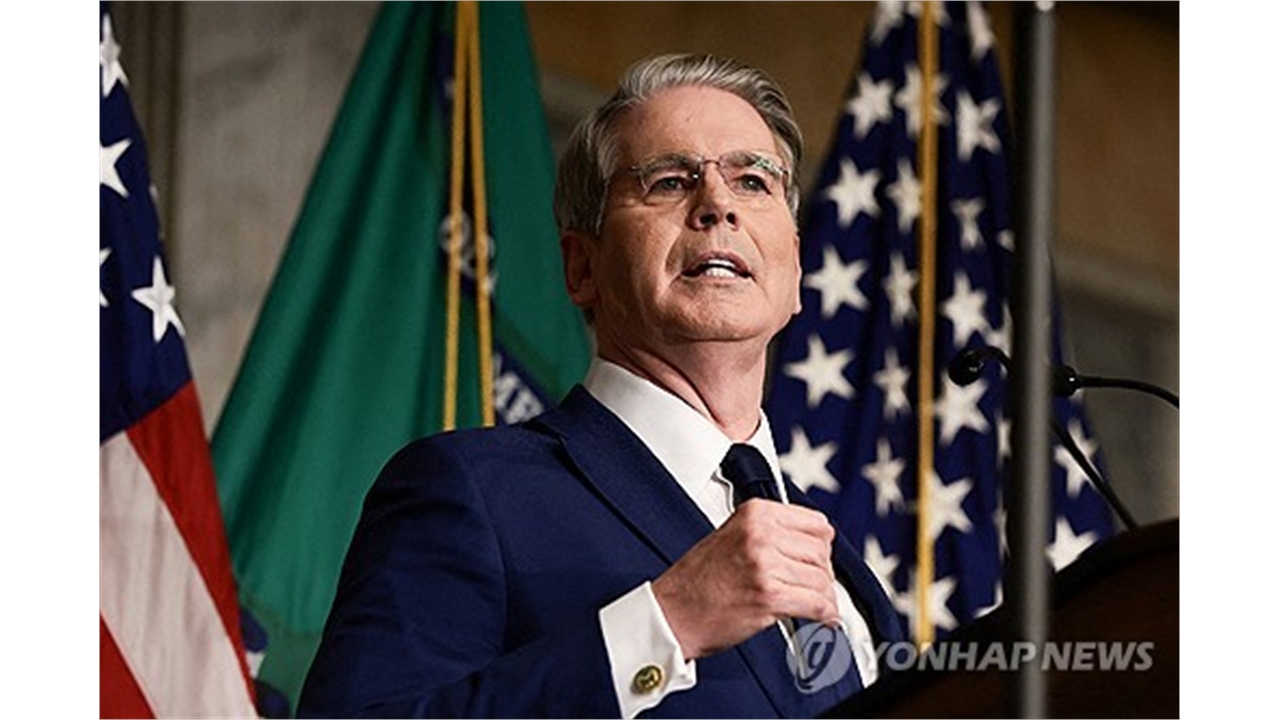
Washington Pulled the Yen Leash at the G20
Scott Bessent didn’t ask. He told.
During a G20 side meeting in Asheville, North Carolina, the US Treasury secretary sat down separately with both Bank of Japan Governor Kazuo Ueda and Finance Minister Satsuki Katayama and delivered a message that would have been unthinkable a decade ago: the yen needs to strengthen, and Tokyo needs to show the market a credible path to get there.
The specifics mattered. Bessent urged “clearly presenting to the market the path toward fiscal sustainability and interest rate hikes,” according to NHK’s reporting. That phrasing — “the next step” — came roughly two months after the US and Japan executed a coordinated foreign-exchange intervention that briefly pushed the yen from 164 per dollar down to 155, only for the currency to drift back above 160 by late September.
What unfolded in Asheville was not a routine diplomatic chat. It was a recalibration of who holds the leash.
The yen carry trade, long the domain of Tokyo’s policy hesitations and Washington’s strategic indifference, now has a new reference point. And it isn’t in Nagatacho.
The Intervention That Didn’t Stick
The July intervention deserves more scrutiny than it received. The yen had touched 164 per dollar — a level not seen in forty years — before the US and Japan jointly entered the market. The immediate effect was visible: the yen retreated toward 155. Markets celebrated what they assumed was a new US-Japan axis against yen depreciation.
By September 28, that celebration looked premature. The yen slipped back to 160.20 in New York trading, a number that told a different story. Intervention can move a chart for a few days. It cannot reprice a structural imbalance.
Erin Brown, the Treasury’s under secretary for international affairs, said as much in an interview with NHK. “At this point, intervention has its limits,” she told the Japanese broadcaster. “Now policy is what matters.”
The subtext was unmistakable. Washington had spent its ammunition. What remained was leverage over Japanese domestic policy — specifically, the BOJ’s reluctance to raise rates and the Japanese government’s appetite for ever-larger fiscal stimulus.
The Fiscal Trap
Japan’s 2027 budget request is 143 trillion yen — the fourth consecutive year of record-high spending. Katayama acknowledged the tension publicly, saying he would pursue “fiscal sustainability” while also committing to “realizing a strong economy.” The two objectives are pulling in opposite directions.
Higher spending without corresponding revenue reforms means more JGB issuance. More issuance means the BOJ faces a choice: keep buying and anchor yields at artificially low levels, or step back and let the market set the price. The yield on the 10-year JGB already touched 2.990 percent earlier in the day — a level not seen since 1996. At 3 percent, Japan’s debt-servicing costs accelerate fast.
Bessent’s demand for a “clear path” toward rate hikes is, in part, an attempt to force Tokyo’s hand before the math forces its hand for it. A disorderly yield spike would be far more expensive than a managed one. The question is whether the BOJ can raise rates without igniting the very fiscal fragility it is trying to address.
The Signal That Shifts Positioning
Why should Asian FX desks in Singapore, Hong Kong, and Sydney be paying attention to Asheville rather than Tokyo?
Because the message from Bessent changes the risk framework for the yen carry trade. For years, the trade operated on a simple assumption: the BOJ would move slowly, the yen would stay weak, and the spread between Japanese and American yields would keep rewarding short-yen positioning. Washington watched but rarely intervened beyond periodic FX operations.
That calculus just broke. The US is no longer a passive observer of yen weakness. It is an active participant with a stated target — and a stated timeline implied by the “next step” language. When the world’s reserve-currency authority tells you to raise rates, the probability distribution around BOJ decisions shifts.
The practical implication for traders is direct: the yen is no longer a reliable funding currency in the same way it was. The carry trade does not collapse overnight, but its risk profile has changed materially. Every BOJ meeting now carries a second-order variable — Washington’s tolerance threshold — that did not exist before.
The Iran Side Deal
There was another item on the Asheville agenda that deserves mention. Bessent and Katayama discussed Iran sanctions, with Brown reporting that Japan agreed to support efforts to isolate Iran from the global financial system. “Any financial contact with Iran,” Brown said, “will be blocked.”
This is not trivial in the context of yen dynamics. Japan remains one of the few major economies with meaningful economic ties to Iran. Pressure on Tokyo to sever those links is pressure on a country that has historically prioritized energy security over sanctions compliance. The fact that Katayama confirmed the discussion and the US secured Japanese cooperation suggests a broader renegotiation of the economic architecture underlying the alliance.
The sanction pressure and the yen pressure are not unrelated. Washington is building a package: align Tokyo on Iran, and Tokyo aligns on monetary policy. It is leverage layered on leverage.
What Happens Next
The BOJ will raise rates. The question is when and how fast — and whether Washington will keep pushing from the outside or let the central bank manage the pace internally.
If the yen holds below 155 for an extended period, Bessent’s public pressure may have achieved its immediate goal: shifting market expectations. But if the currency drifts back toward 160, the next signal will come not from NHK or YTN but from the Treasury itself. The leash is visible now. That changes everything about how the yen is priced.