Waymo Freeway Ban Signals the Hard Limits of Driverless Robotaxi
Waymo's self-imposed nationwide pause on driverless freeway rides—prompted by a California DMV ban after construction-zone incidents—reveals how fragmented US regulation will shape the robotaxi race and hit competitors immediately.
The Freeway Was Never the Easy Part
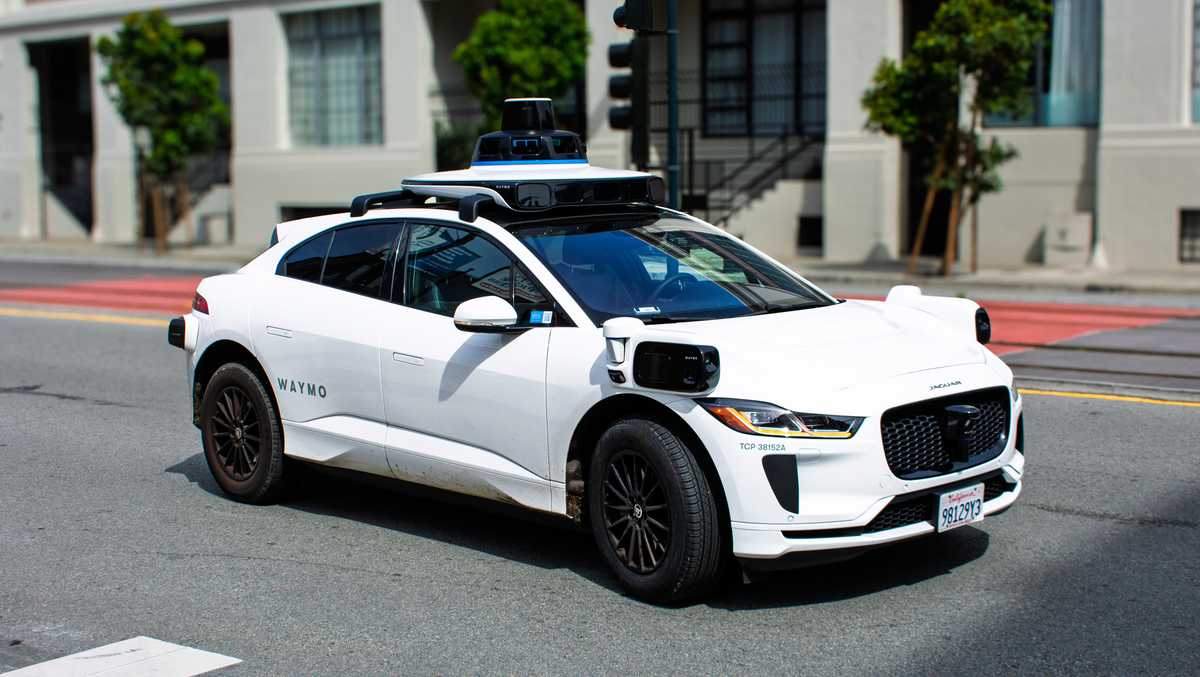
Waymo has quietly pulled its driverless taxis off freeways in every market where it offers that service — San Francisco, Los Angeles, Phoenix, Miami, and Austin. The move came the same day the California Department of Motor Vehicles formally banned the company’s vehicles from state highways.
On the surface this looks like a routine regulatory hiccup. In reality, it is an inflection point for the entire autonomous vehicle industry.
Waymo’s spokesperson confirmed the suspension was implemented last Wednesday and described it as temporary, though no timeline was given. Testing with trained safety specialists behind the wheel continues. But the commercial service — the one that actually generates revenue and gathers real-world miles — is now restricted to surface streets across five major markets.
Two Incidents, One State That Changed the Rules
The trigger was brutal in its simplicity: two incidents in quick succession.
On November 5, three Waymo vehicles without human drivers entered an active construction zone on a California highway. A day later, footage emerged of a Waymo car attempting to maneuver around California Highway Patrol vehicles conducting a traffic stop on a San Francisco freeway. Both were broadcast widely online within days.
Jonathan Groveman, a DMV spokesperson, stated the department determined Waymo’s driverless freeway operations pose an “imminent hazard to public safety due to recurring incursions by its vehicles into active construction zones where construction workers, vehicles and equipment are present.”
He also noted similar incidents had occurred previously on May 18.
Waymo’s response stressed that no injuries or collisions resulted from the recent freeway encounters. That is technically true and practically irrelevant — the DMV does not require a fatality to act. It required a pattern.
Groveman made clear the restrictions remain until Waymo demonstrates effective corrective actions. There is no expiration date attached to that standard. In regulatory language, that is code for an open-ended hold.
What This Means for Waymo Specifically
Freeway riding is not a fringe use case. It is the high-value segment of any robotaxi business model. Surface-street rides are short, low-speed, and geographically constrained. Freeway trips are longer, command higher fares, and demonstrate the core promise of autonomy: safe operation at speed.
By restricting Waymo to city streets, California — the company’s home market and operational anchor — has effectively capped its unit economics in the most important geography.
The ripple is already visible in other markets. Waymo chose to voluntarily suspend freeway rides nationally rather than navigate a patchwork of state-by-state permissions. That is either strategic discipline or recognition that each additional regulator will apply the same standard.
The Ripple Hits Competitors Immediately
This is where the story gets less about Waymo and more about everyone else chasing the same market.
Tesla has been aggressively promoting Full Self-Driving as road-ready. Its vehicles operate without a physical safety driver in many contexts. But Tesla has never claimed freeway competence through its supervision framework — and now a regulated industry leader has just proven why that caution existed. Every headline about Waymo entering a construction zone becomes ammunition against Tesla’s marketing claims.
GM’s Cruise, already battered by a 2023 suspension following a separate incident in San Francisco, will face renewed scrutiny. Cruise has not resumed full commercial operations since its reboot under new ownership. Waymo’s freeway restrictions strengthen the case for even tighter oversight of any automaker seeking to deploy unsupervised vehicles on controlled-access highways.
Amazon’s Zoox, which designed its purpose-built robotaxi for urban environments from the ground up, may be unaffected directly but gains indirect pressure: regulators now have a fresh benchmark for what constitutes unacceptable risk on freeways. Any future Zoox application to expand beyond city limits will be measured against Waymo’s failures first.
The Real Story Is Regulatory Fragmentation
Here is what English-language readers outside the US often miss: autonomous vehicle regulation in America is not national. It is state-by-state, and frequently county-by-county.
California’s DMV acts independently. Arizona — where Waymo operates extensively in Phoenix — has far fewer restrictions. Nevada allows testing with minimal oversight. Texas delegates authority to municipalities.
That fragmentation is both the industry’s opportunity and its trap. It allows innovators to find friendly jurisdictions and scale there before facing stricter markets. But it also means a single state can impose a restriction that forces a company to recalibrate its entire operational strategy — as Waymo did by making a voluntary nationwide pause instead of fighting each state individually.
The practical consequence is that no autonomous vehicle company can claim true national readiness until the federal government establishes baseline standards. Until then, every advance in one state is matched by a halt in another.
Who Wins, Who Loses, and What Happens Next
Waymo loses immediacy. Its expansion timeline in California stretches indefinitely. Revenue per ride drops because surface-street trips are shorter and cheaper.
Regulators win credibility. The DMV avoided the appearance of capture by acting decisively after visible incidents. Other states will cite California’s action to justify similar restrictions.
Consumers who imagined frictionless suburban commutes on Interstate 280 or Loop 101 lose something they barely knew they had. High-speed autonomy remains theoretical.
Competitors gain breathing room — but only briefly. The industry’s trajectory hasn’t changed. Fewer players mean faster consolidation, and every delay makes the first mover who cracks freeway autonomy strategically dominant.
Waymo says the suspension is temporary. The DMV says the restriction lasts until demonstrated corrections are made. Between those two statements lies the entire uncertainty of the next twelve to twenty-four months. The question is not whether Waymo returns to California freeways. The question is what it has to prove before regulators let it try again.