When Tech Oligarchs Become Diplomats at the Trump-Xi Dinner
Jamie Dimon, Sam Altman, and Jensen Huang sharing a table with Donald Trump and Xi Jinping isn't just a celebrity guest list—it's a signal about where Washington believes America's real leverage over China now lives.
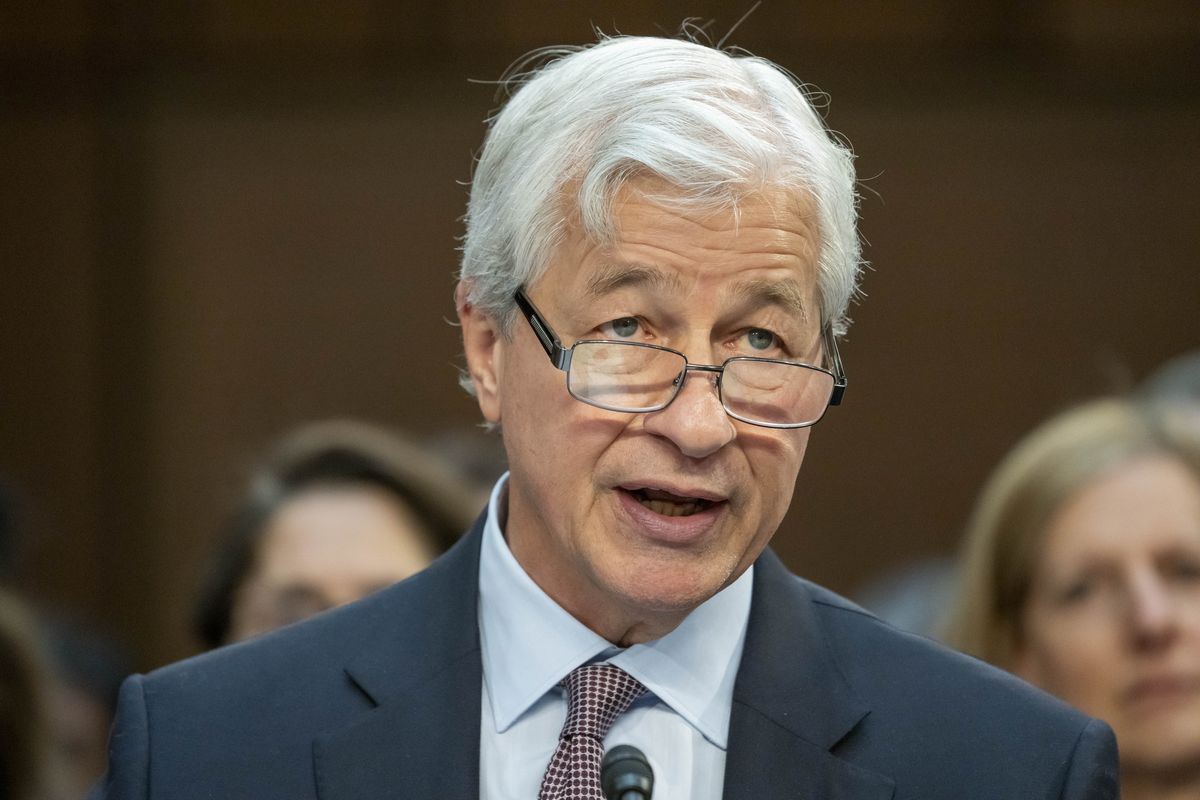
The Guest List Is the Story
Donald Trump is hosting Xi Jinping for a state dinner on September 24 in Washington. The attendees, so far, read like a who’s-who of American economic power that previous administrations would have left at the door.
Jamie Dimon, CEO of JP Morgan Chase. Jane Fraser, CEO of Citigroup. Sam Altman, CEO of OpenAI. Jensen Huang, CEO of Nvidia.
Finance and AI executives sharing a table with two heads of state during a diplomatic event of this magnitude is unusual. Not impossible—corporate leaders have attended state dinners before. But the specific combination here tells you something deliberate about how the current administration views the center of gravity in US-China competition.
A Shift in Where Washington Places Its Leverage
For decades, the standard model of US-China diplomacy involved trade negotiators, national security advisors, and the occasional business liaison. The people at the table were chosen for their government titles, not their market caps. What’s happening now is a quiet but visible inversion: the people being invited are those who control the infrastructure of the most consequential strategic rivalry of the century.
Jensen Huang’s presence is the clearest signal. Nvidia’s AI chips sit at the exact intersection of commerce and containment that defines the Trump-Xi relationship. The United States has built an entire export control regime around preventing advanced semiconductors from reaching China. Huang’s company is both the enforcer and the victim of that policy—enforcing it through compliance, losing revenue because of it. His presence at the dinner means the person most directly impacted by US chip restrictions gets a seat at the table where those restrictions may be negotiated.
That is not a small thing. It means the people writing the rules of the game are also the people playing it.
Sam Altman’s attendance carries a different but related weight. OpenAI’s trajectory has made it a de facto participant in every major conversation about AI governance, from safety standards to proliferation risk. Altman has spent the past two years testifying before Congress, advising the White House, and publicly arguing that American AI leadership depends on maintaining a technological edge over China. His presence at a state dinner with Xi—who has made AI development a national priority—signals that the administration sees AI policy as inseparable from diplomacy.
Dimon and Fraser represent the financial dimension. US-China economic decoupling is not an abstract idea anymore; it is a portfolio decision being made by banks that evaluate exposure across both markets. Their presence suggests the administration wants the financial sector aligned with whatever framework emerges from these talks.
What’s Actually on the Table
The agenda is broad and thorny. Tariff truce extensions. Rare earth mineral supplies. American agricultural purchases. Taiwan. Iran. And, increasingly prominently, AI competition and the semiconductor export regime.
China’s position is straightforward: it wants the United States to ease its technology restrictions. American companies like Nvidia have been vocal about the revenue impact of those restrictions. The question is whether the diplomatic leverage of a state dinner translates into policy flexibility on chips—a domain where the US has invested enormous political capital over multiple administrations.
The rare earths angle cuts the other direction. China dominates the processing of critical minerals used in everything from EVs to military hardware. The United States wants secure supply chains. That creates a genuine quid pro quo opportunity, even if neither side will frame it that way publicly.
The Chinese Side of the Equation
Reports suggest Chinese executives from BYD, CATL, Xiaomi, Bank of China, and COFCO may accompany Xi. If true, this mirrors the American side in structure: industrial and financial leaders participating in a state-level encounter. It is a model that treats economic actors as diplomatic instruments—a practice both countries have long engaged in, even when neither admits it.
BYD and CATL are particularly noteworthy. They are not just companies; they are the backbone of China’s electric vehicle and battery dominance, sectors where the United States has imposed tariffs and is actively trying to build domestic capacity. Their presence signals that the automotive and energy transition sectors are in play alongside semiconductors.
What This Means Next
The immediate takeaway is that the Trump administration views tech and finance CEOs as strategic assets in great-power diplomacy. That is not inherently new—business diplomacy has always been part of US-China relations—but the elevation of AI executives to state dinner status is.
The more specific implication is about leverage. Whoever controls the narrative around AI competition controls the terms of any agreement. Altman and Huang are not neutral observers; they are stakeholders with commercial interests that may diverge from the broader strategic goal of maintaining American technological supremacy. Their presence creates a tension that no previous administration has had to manage so openly: the people who profit from the current restrictions are also the people being asked to help shape their evolution.
If the talks produce any meaningful outcome on semiconductors or AI governance, the involvement of these CEOs will matter. They will be the ones implementing whatever framework emerges, and they will have had a seat at the table when it was designed.
If the talks produce nothing, their presence will still have sent a message: that Washington considers AI and semiconductor leadership the central front in its competition with China, and that the people building that leadership are now considered essential to the diplomatic process.
Either way, the guest list tells you more about American strategy than any press release ever could.