Why the Doris Miller Carrier Renaming Matters Beyond America
The Navy's reported pivot from naming a carrier after Black Pearl Harbor hero Doris Miller to honoring Donald Trump signals a deeper shift in how American institutions treat their own history. Allies watching will read this as more than domestic politics.
The Ship No One Can Name
A vessel under construction at the Newport News shipyard carries no official name. Navy insiders have been referring to it only as CVN-81 for months, a sterile designation that erases the identity the institution spent five years building around it. The carrier was meant to be the USS Doris Miller — the first ever named for an African American, the first named for an enlisted sailor, a deliberate reckoning with a segregated past.
Now, according to CNN, the Navy is working to rename it. President Donald Trump’s name is among those discussed. A separate executive order Trump signed last week on shipbuilding already refers to the carrier by hull number alone. Naming a carrier after a sitting president would be unprecedented in American naval history.
The Pentagon declined to confirm the report. A request for comment to the Navy went unanswered. But the silence itself is telling — and the absence of a name is louder than any announcement.
Who Doris Miller Was Before the Debate
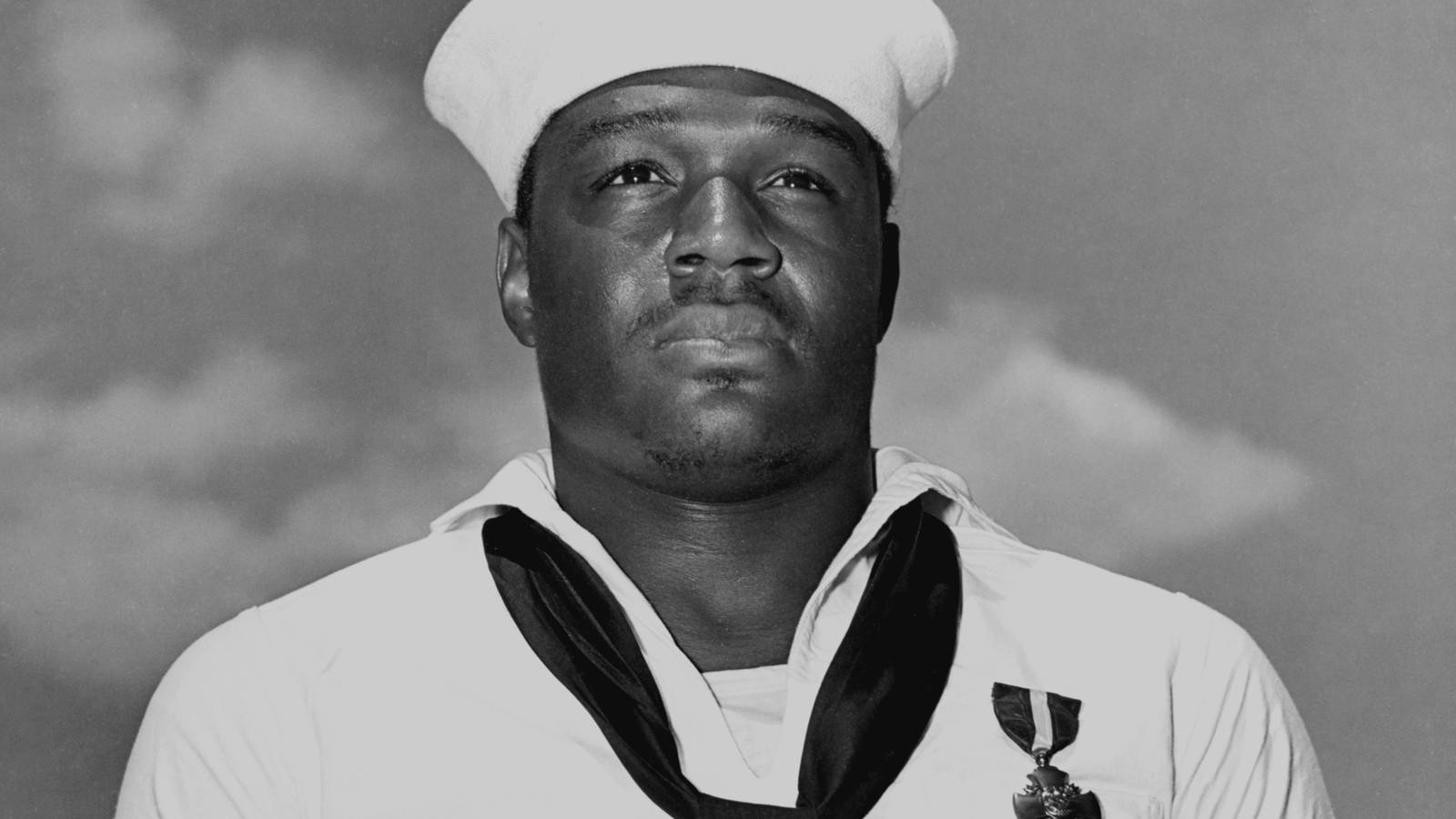
Miller was a mess attendant on the battleship USS West Virginia when Japan attacked Pearl Harbor on December 7, 1941. His role was cooking — one of the few positions open to Black sailors in the segregated Navy. He had never been trained on an antiaircraft gun. When the bombs fell, he carried wounded sailors to safety, then moved to the .50-caliber mount and fired until his ammunition ran out.
Admiral Chester Nimitz awarded him the Navy Cross in 1942 — the first African American to receive the decoration. Miller died in November 1943 when the escort carrier USS Liscome Bay was sunk in the Pacific. Cuba Gooding Jr. played him in the 2001 film Pearl Harbor. Thomas Modly, then-acting Navy secretary, named the carrier after him on Martin Luther King Jr. Day in 2020.
The man represented something concrete: a narrative of American courage cutting across the color line of a Jim Crow military. The carrier bearing his name was meant to make that story visible on the largest platform the Navy possesses.
What the Rename Signals
The discussion to rename CVN-81 has been underway since earlier this year, sources told CNN. The Navy is reportedly looking to honor Miller on a different vessel and is recommending him for the Medal of Honor — the nation’s highest military award. That recommendation, if finalized, would elevate Miller’s legacy even as the carrier project removes his name from its bow.
But the pattern matters more than any single decision. A 2025 commission convened by then-Navy Secretary John Phelan reviewed how ships and other military assets are named. Acting Navy Secretary Hung Cao’s office is now updating that guidance, with sources indicating the proposed changes would explicitly allow ships to be named after presidents. The carrier won’t be delivered until 2034. No timeline for the rename has been announced. The gap between decision and delivery leaves the ship in bureaucratic limbo — unnamed, unnamed, unfinished in meaning if not in steel.
What is being discarded here is not just a name. It is a symbol the Navy spent years constructing to address a long-standing complaint: that the institution’s visible honors have overwhelmingly reflected white, officer-class narratives. Carriers, the pride of the fleet, have traditionally been named after presidents, secretaries of defense, and warriors — almost never enlisted sailors, almost never Black Americans.
The Miller naming was an attempt to correct that record. The potential undoing of it reads as a retreat.
How the World Will Read This
America’s allies watch these decisions closely, even when they believe they should not matter. The military is not just a force — it is an ambassador. Ships travel. Names travel with them. A carrier named for a Black war hero who fought under segregation sends a message about American democracy that no press release can replicate. A carrier renamed to honor a living president — an act with no precedent — sends a different one.
For nations that depend on the US security umbrella, the signal is about consistency. Democracy promises institutional durability — rules and symbols that outlast individual leaders. When a Navy reverses course on a ship that has not yet entered service, the question allies will ask is whether American institutions are steady or transactional.
Adversaries will ask a sharper question. China and Russia have spent years cultivating narratives about American decline, about a country consumed by internal division. They do not need to fabricate evidence. The renaming debate provides it on a silver platter. A military that cannot agree on who deserves honor among its own people is an image worth exploiting in information campaigns across Southeast Asia, the Middle East, and Africa.
The soft power loss is real but diffuse. It does not show up in polling. It shows up in the way a navy attaches to a foreign port, in the glance of a young sailor from a partner nation looking at the hull, in the quiet calculation of whether American values are practiced or performed.
Who Wins, Who Loses
The immediate winner is political. Naming a carrier after a sitting president consolidates a personal legacy inside the most prestigious category of naval honor. It is a move without historical constraint, which is precisely what makes it powerful for whoever benefits.
The loser is institutional credibility. The Navy entered this process acknowledging that its naming conventions had been too narrow. It selected a name that corrected that failure. Now it appears to be reversing course, possibly because political pressure outweighed institutional conviction. That is a calculation allies and adversaries will both notice.
Doris Miller loses the most tangible thing: the chance to see his name on the world’s most formidable warship. The recommendation for the Medal of Honor is meaningful, but it arrives after the fact. It cannot restore the visibility the carrier would have provided. An enlisted sailor honored posthumously with the nation’s highest award is still, in a very literal sense, invisible to the public eye in a way a man whose name rides on a 100,000-ton vessel never is.
What Comes Next
The carrier is not expected to be delivered until 2034. That timeline gives the Navy room to resolve this quietly or to make a public decision that lands with enormous symbolic weight. The recommendation for Miller’s Medal of Honor review is moving in parallel. Whatever name CVN-81 ultimately receives — or does not receive — the question of whether Miller will be elevated to the Medal of Honor will force another institutional decision about how the Navy treats its own history.
The broader naming guidance review under Cao’s office will determine whether future carriers can bear presidential names. If that change passes, the precedent set by CVN-81 becomes permanent, not isolated. If the Miller rename is reversed again, or if the Medal of Honor recommendation succeeds, the Navy will have rewritten the episode one more time.
For now, CVN-81 sits in a yard without a name, a reminder that symbols are the first casualty when institutions prioritize politics over narrative.
The world is watching to see what the Navy decides to honor — and what it is willing to let disappear.