Why the Novartis-Alteogen deal is bigger than the headline number
Alteogen's up-to-$3.2-billion subcutaneous technology pact with Novartis may look like just another licensing deal, but it signals that Korean biotech platforms are now the default choice for global pharma chasing patient-friendly formulations.
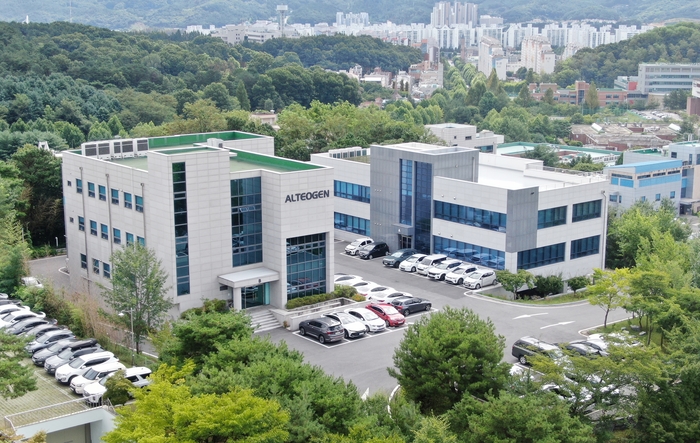
The headline number obscures what actually matters
Alteogen announced on September 2 that it has inked a subcutaneous formulation licensing deal with Novartis worth up to $3.223 billion — roughly 4.4 trillion won at current rates. That figure is large enough to make any biotech shareholder’s eyes widen. But the real story isn’t the contract ceiling; it’s what the deal reveals about where the global pharma industry is heading, and where South Korea now sits in that trajectory.
For the past decade, the biotech world’s most valuable real estate hasn’t been a molecule or a clinical candidate — it’s been the unglamorous problem of how to get a drug into a patient’s body without hooking them to an IV pump for hours. Subcutaneous injection is the answer. Patients tolerate it better. Clinics save time. Payers love the reduced infrastructure cost. And the shelf-life and stability advantages are real. The question has always been: who can reliably convert an intravenous biologic into a subcutaneous one without the protein collapsing, clumping, or simply refusing to absorb?
That is exactly what Alteogen’s ALT-B4 technology solves.
How ALT-B4 actually works
ALT-B4 is a recombinant human hyaluronidase built on Alteogen’s Hybridozyme platform. Hyaluronic acid is the structural glue holding together the extracellular matrix just beneath the skin. When you inject a biologic subcutaneously, that matrix acts like a barrier — slow to cross, slow to absorb. ALT-B4 temporarily breaks down hyaluronic acid at the injection site, opening a temporary highway that lets the co-administered drug diffuse rapidly and enter the systemic circulation.
The practical effect is dramatic: a biologic that previously required a 60-to-90-minute intravenous infusion can often be delivered as a subcutaneous injection in under ten minutes. That sounds incremental until you remember that most cancer treatments, autoimmune therapies, and rare-disease drugs are administered intravenously — and that the global nursing workforce is already stretched thin.
What makes Alteogen’s approach distinct isn’t the science of hyaluronidase itself — that pathway has been known for decades. It’s the platform engineering: the ability to generate multiple hyaluronidase variants (ALT-B4 being the latest) with optimized enzyme kinetics, stability profiles, and immunogenicity characteristics tailored for co-formulation with different modalities. This isn’t a one-drug solution; it’s a technology stack.
Why Novartis signing is the signal
Novartis isn’t a pharmaceutical company that lightly commits to a new delivery platform. The Swiss giant has extensive in-house formulation expertise and a history of developing its own delivery technologies. When it outsources a subcutaneous conversion capability to an external platform provider, that’s not a budget decision — it’s a bet on superior technology.
What’s particularly notable about the Novartis deal is the structure. According to the contract terms disclosed by Alteogen, Novartis has secured exclusive rights to use ALT-B4 across multiple product options, with milestone payments triggered at development and commercialization gates. This is a platform-level license, not a single-molecule agreement. It means Novartis is effectively saying: we want ALT-B4 on our entire pipeline, not just one asset.
That interpretation is reinforced by the fact that this is Alteogen’s fourth technology transfer deal this year and its tenth overall for the Hybridozyme platform. The company isn’t lucky — it’s systematic.
The Korean biotech export narrative, confirmed
South Korea has long been known as a contract development and manufacturing organization (CDMO) hub. Samsung Biologics and Celltrion’s Lonza-like facilities have built serious scale. But CDMO is different from technology export. Manufacturing is transactional. Platform licensing is relational — it requires trust, shared risk, and a partner believing your IP will outperform their own in-house efforts.
Alteogen’s client list reads like a roll call of the global pharma industry’s top tier: Merck Sharp & Dohme (MSD), GlaxoSmithKline, AstraZeneca, Daiichi Sankyo, Sandoz, and now Novartis. These aren’t generic manufacturers or budget-conscious buyers. They are companies with deep internal R&D who have independently evaluated Alteogen’s platform and concluded it is the best available option for their needs.
The most important proof point, though, isn’t any of these licensing deals. It’s Keytruda.
MSD’s Keytruda (pembrolizumab) is the best-selling drug in the world. By applying ALT-B4 technology, Alteogen helped convert it into a subcutaneous formulation — Keytruda Qexcel — that has now reached the market. Alteogen recently confirmed it will receive its first sales milestone payment of $25 million linked to actual product sales. This is the critical transition: from technology licensing revenue to commercial royalty revenue. The Hybridozyme business model is no longer speculative.
What this means for the industry
The subcutaneous conversion market is expanding rapidly because the economics are clear on both sides of the prescription pad. For payers, a 10-minute injection beats a two-hour infusion every time. For manufacturers, extending the patent life of a blockbuster through formulation innovation is one of the few reliable strategies available as biosimilars erode molecule-level exclusivity. For patients, the difference between an infusion chair and a clinic visit is measurable in quality of life.
Korean biotech companies are now positioned as essential infrastructure providers for this transition. That’s a meaningful status change. It moves them from the periphery of the global pharma value chain — where they were historically valued as cost-efficient manufacturers — to a center-stage role where their intellectual property is considered indispensable.
The Novartis deal, at $3.223 billion in potential payments, is the largest single confirmation of this thesis to date. But the larger trend is what deserves attention: Alteogen’s platform has moved from novelty to necessity in the span of roughly five years. That’s not happenstance. It reflects genuine technological differentiation in a space where alternatives are limited and the clinical bar is high.
The bottom line
A $3.2-billion headline number will dominate the financial pages. But the more interesting read is what the deal represents: a global pharmaceutical giant choosing a Korean biotech platform to unlock subcutaneous formulations across its pipeline. That choice, repeated across ten deals and multiple clients, is no longer an anomaly. It’s a new equilibrium in how the world’s biggest drug companies approach drug delivery innovation.