Why Panic's Tariff Refund Moves Beyond Goodwill
Panic is refunding Playdate customers the 19 percent tariff it passed along during Trump's illegal import taxes. The story reveals who absorbs trade-war costs — and who fights back.
The Refund Nobody Saw Coming
Panic announced this week that it has begun refunding Playdate customers the 19 percent tariff surcharge it imposed earlier this year. The company also confirmed it is now receiving its own refund of the taxes Panic absorbed as an importer — money the Trump administration collected before the Supreme Court declared the tariffs illegal in February.
What makes this story worth watching goes beyond corporate accountability. It shows how trade policy lands on people who never signed up for a lesson in international law. And it reveals a stark difference in how companies of different sizes respond when governments suddenly reshape the cost of doing business.
The refund process itself was not trivial. Panic had to match each customer’s original purchase against Customs and Border Protection records, verify the exact tariff rate applied at the time of import, and calculate the proportional surcharge embedded in every transaction. For a company that ships a limited number of units to a small but dedicated customer base, the administrative burden was disproportionate to the revenue at stake. That the company undertook it anyway is the signal here.
How the Tariff Hit Playdate
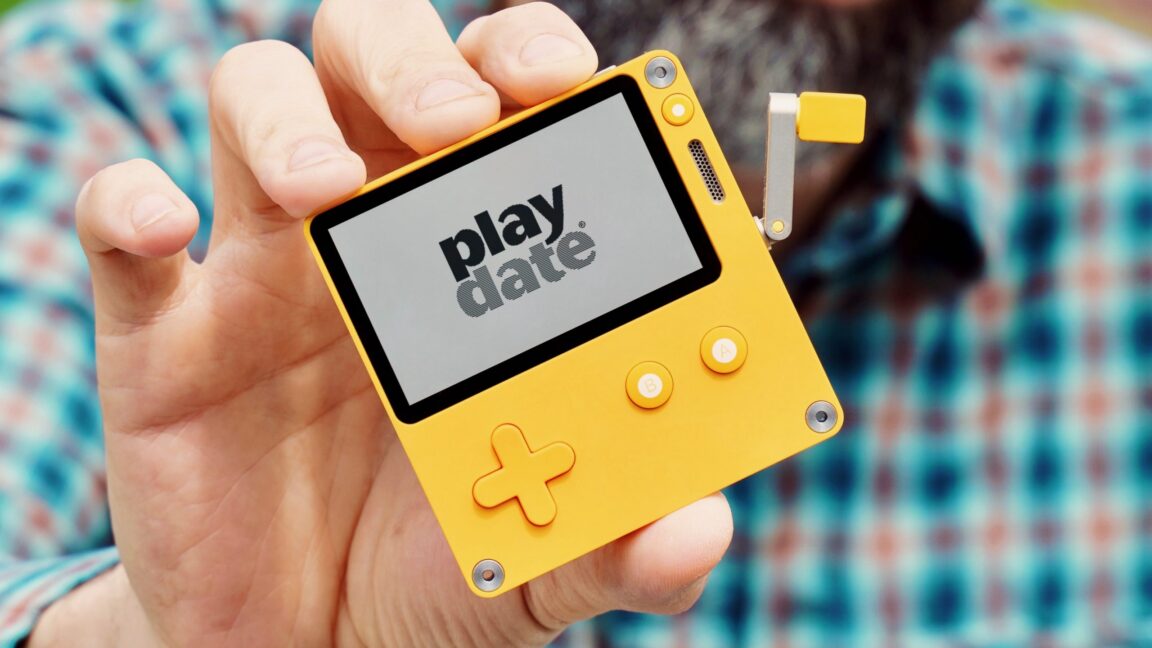
The Playdate is a deliberately odd console — a yellow handheld with a side-mounted crank, released by Panic, an indie game publisher better known for tools like Node and Figma. It is not a volume seller. Margins on hardware like this are thin by design: you sell enough units to keep the lights on, and you hope the software ecosystem justifies the investment.
When the Trump administration imposed its 19 percent import tax on Playdate hardware — manufactured overseas — Panic had no choice but to pass the cost along. The company added it as an explicit line item at checkout, something most consumers would have noticed and resented. Panic was honest about it in real time. Most companies are not.
The decision to disclose the surcharge so plainly was unusual in an industry where price increases are typically masked by bundling, phased rollouts, or vague language about “supply chain pressures.” Panic’s transparency meant that when the legal landscape shifted, the refund was straightforward to calculate and justify. Customers could see the exact amount they were owed. There was no ambiguity about what had been collected or why.
But the transparency also came with risk. By naming the tariff explicitly, Panic invited scrutiny of its pricing structure and invited comparisons to competitors who handled the same pressure differently. It was a gamble that its customers valued honesty over convenience — and so far, the bet has paid off.
What Nintendo Did Instead
Nintendo took a different path last year. When facing similar tariff pressure, the company raised prices on legacy hardware and some Switch 2 accessories but cited vague “market conditions” and tariff “uncertainty” — language that buried who actually bore the cost. A customer paying more for a console likely did not connect the price bump to a specific tax policy in Washington.
Nintendo’s approach is the industry standard. Large companies with deep legal and lobbying resources can absorb tariff costs partially through scale, renegotiate supplier contracts, or shift production — however imperfectly. They can also afford to let price increases blend into the background noise of routine markdowns and promotions. The average buyer does not open a receipt line by line.
Panic had none of those advantages. With a smaller operation and a product that exists more as a statement of principle than a profit engine, the company could not absorb a 19 percent hit without serious financial strain. Passing it through was the only realistic option. But it chose to pass it through honestly — and to reverse course just as openly when the legal basis for the tax collapsed.
This contrast matters because it illustrates a structural feature of trade policy: the burden falls hardest on companies that lack the machinery to disguise it. Large corporations can spread the cost across millions of transactions and obscure it in financial statements. Smaller firms either take the hit themselves or expose it directly to their customers. Panic fell into the latter category by design.
Why the Refund Matters More Than It Sounds
The Supreme Court ruling ordered the administration to refund companies that paid the illegal tariffs. Panic followed that directive. But then Panic did something most companies would skip: it returned the money to the actual customers who had been hit with the surcharge at checkout.
Cabel Sasser, Panic’s co-founder, told Game Developer that filing the paperwork to claw back the taxes and processing customer refunds required significant backend work. Still, he called returning the money a no-brainer. “It’s just not our money to keep,” Sasser said. “That’s an easy way to know you made the right decision.”
That phrasing matters. Panic treated the tariff refund not as a legal obligation satisfied by returning money to itself, but as a moral one that extended to the buyer. The company had collected a tax it was never entitled to — and now it is giving it back.
The second-order effect of this decision is difficult to quantify but real. Customers who received refunds were not merely getting money back; they were receiving confirmation that their perception of the pricing was correct. They had noticed the surcharge. They had resented it. And now a company had acknowledged that resentment was justified. In an era where consumer trust in institutions is fragile, that acknowledgment carries weight beyond the dollar amount involved.
There is also a reputational dimension. Panic’s community is built on a foundation of shared enthusiasm for creative tools and games. Treating customers fairly during a moment of government overreach reinforces that community identity. The refund is both a financial transaction and a cultural signal.
Who Wins and Who Loses
Playdate customers win. They get 19 percent of their hardware cost returned, no questions asked. It is a small but symbolic restoration.
The Trump administration loses credibility. The Supreme Court already ruled the tariffs illegal. Panic’s refund cycle makes that ruling tangible — it is not abstract jurisprudence, it is money moving back into people’s accounts because a court said the government acted unlawfully. Each refund is a small public record of that illegality.
Nintendo-style companies lose the chance to look honest. By burying tariff-driven price hikes behind generic language, they avoid short-term backlash but sacrifice trust. Panic chose the harder path and came out cleaner.
There is a third party in this equation that deserves attention: the U.S. Treasury. Illegal tariffs represent money extracted from American buyers and held by the government without legal justification. Refunding that money — first to companies, then to consumers — corrects a flow of funds that should never have existed. The administrative cost of processing those refunds is dwarfed by the principle involved.
What Happens Next
This case may become a template. Other companies that passed illegal tariff costs onto customers — especially smaller ones without legal teams to navigate the refund process — could follow Panic’s lead or face the same scrutiny. The legal mechanism exists. The question is whether the incentive to do the right thing is strong enough.
Smaller firms face a particular dilemma here. The same administrative complexity that Panic navigated is a barrier for companies with fewer resources. A startup or a small importer may not have the infrastructure to match CBP records to individual transactions. Without clear guidance from the government or legal representation, the path to refunding customers is unclear. Panic cleared that path through sheer effort — and in doing so, set a standard that others will be measured against.
On a broader level, the story exposes a structural problem with tariff policy: the costs rarely land where politicians say they will. Import taxes on Chinese goods do not make China pay. They make American buyers and companies pay. The Playdate refund makes that visible in a way that op-eds and press releases cannot.
The refund also raises questions about timing and precedent. The Supreme Court struck down the tariffs in February. Panic began processing refunds this week. The gap between ruling and action suggests that even willing companies need time to untangle the logistics. If future tariff disputes arise — and they likely will — the delay between legal resolution and consumer relief will remain a friction point. Governments should consider establishing streamlined mechanisms for tariff refunds rather than leaving the burden entirely on individual companies.
Panic’s move is niche in subject matter but instructive in scope. Trade wars are fought with legislation and court rulings, but they are felt at checkout pages — and sometimes, at least, they are reversed there, too. The Playdate’s crank may be the most distinctive feature of the hardware, but the company’s willingness to turn back the tariff it collected is the move that matters most.