Why Sony Split State of Play Into Two Shows — And What It Means
Sony's decision to run State of Play followed immediately by State of Play Japan signals a deeper shift in how PlayStation approaches Asian markets. The dual-format strategy isn't just scheduling — it's a statement about where game development revenue and cultural influence are flowing.
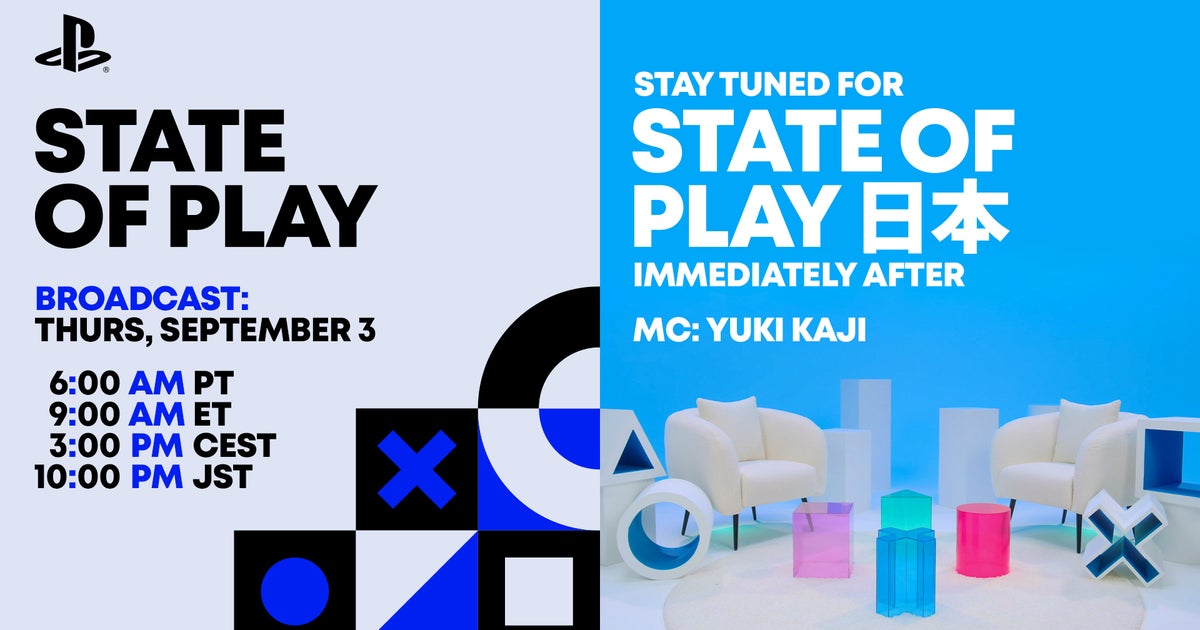
The Split Format Is the Story
Sony announced its next State of Play for Thursday, 3 September — and immediately attached a second showcase to it. State of Play Japan will follow the main event, hosted by voice actor Yuki Kaji, focused exclusively on games from Japan and the broader Asian region. Both streams land on YouTube and Twitch at once. The format matters more than the date.
This is not a novelty act. It is a structural change to how PlayStation communicates with its audience, and it reveals where the company sees its future revenue and cultural relevance.
Why Asia Now
The PlayStation brand has always been strong in Asia, particularly Japan and South Korea. But the dynamic has shifted. Western AAA studios now compete directly with Japanese and Korean developers for the same premium player dollars — not through ports or co-publishing deals, but through original IP. Final Fantasy, Monster Hunter, Genshin Impact, Tower of Fantasy, Street Fighter 6, Tekken 8. These are not niche products. They are global box office hits.
Sony’s decision to give these markets a dedicated showcase window signals that the company no longer treats Asian-released games as secondary to its Western first-party slate. The main State of Play will still carry Marvel’s Wolverine, God of War Laufey, Until Dawn 2, and other Western-leaning titles heading into the fall. But the second show — running back-to-back — ensures that Asian-developed games get the same promotional oxygen that a Wolverine or a Ghost of Yotei expansion receives in the primary broadcast.
This is a market reality check. Asia generates roughly 55 percent of global gaming revenue, according to Newzoo projections for 2025. PlayStation cannot afford to treat that region as a post-market afterthought in its marketing cadence.
The Wolverine Question
Marvel’s Wolverine launches 15 September. Sony clearly does not need another trailer to move pre-orders at this point — the game has been visible for months. What the main State of Play can do is sustain momentum without oversaturating the press cycle. Think of it as a mid-cycle checkpoint rather than a launchpad.
That leaves room for titles that genuinely need exposure. Ghost of Yotei’s expansion could use a gameplay deep dive. Intergalactic: The Heretic Prophet remains one of Sony’s most mysterious projects — a reveal or even a brief clip would generate disproportionate social buzz. Until Dawn 2 sits in an awkward limbo where another State of Play appearance could either confirm a date or deepen frustration. Each outcome is strategically significant.
Streaming Infrastructure Under Pressure
Running two shows consecutively — potentially back-to-back for an hour or more — tests PlayStation’s streaming infrastructure. Both events air simultaneously on YouTube and Twitch. For a system that has historically staggered its major announcements to control bandwidth and media coverage, this is a deliberate choice. Sony is betting that concurrent viewership will not collapse under the weight of dual content.
The bet likely pays off. PlayStation’s State of Play broadcasts routinely draw hundreds of thousands of concurrent viewers, and adding a second showcase does not split the audience so much as extend the engagement window. More importantly, it signals confidence in the platform’s ability to handle sustained live traffic without degradation — a capability that matters as Sony prepares for the PS5 Pro generation’s full software rollout.
Who Wins, Who Loses
Japanese and Korean developers win. They gain a guaranteed promotional slot on Sony’s most visible live broadcast format without competing for airtime against Western third-party publishers or Sony’s own blockbuster releases. Indies benefit too — the secondary show provides a stage that did not exist at this scale before.
Western AAA publishers may feel the squeeze. Not because Sony is abandoning them, but because the total promotional minutes available per quarter are finite. Every minute allocated to State of Play Japan is a minute that does not go toward a European or North American title. That is a quiet reallocation of marketing priority.
Competitors notice. Microsoft and Nintendo both run regional showcase strategies, but neither has matched PlayStation’s commitment to formalizing a dedicated Asian broadcast within the same evening. This could pressure Xbox to consider a similar split format — or accept that Sony owns this narrative first.
The Bigger Picture
Sony’s dual-show approach reflects an industry-wide pivot toward localized content ecosystems. Game development budgets have ballooned. Western studios increasingly outsource or partner with Asian teams. Players consume media across borders with greater ease. The old model — announce at E3, ship in November, hope for global takeup — no longer applies.
The next State of Play on 3 September will be the latest proof point. The main broadcast will deliver the expected Western-leaning lineup. The Japanese showcase that follows will make the strategic argument explicit: Asia is not a market Sony serves second. It is a market that shapes what Sony builds.
What happens next depends on whether Sony can sustain this format without diluting either broadcast. If State of Play Japan consistently delivers compelling content, it may become a permanent fixture — not a seasonal experiment. That would change how the company plans its entire annual communication calendar.
For now, the strategy is clear. Sony is splitting its showcase to tell two stories at once: one about the games the West expects, and one about the games the world is increasingly playing.