Why SpaceIs Becoming NVIDIA's Biggest New Data Center
SpaceX and NVIDIA are building the first orbital AI supercomputers, starting with a Vera Rubin NVL72 system launching in 2027. The play isn't just about cheaper compute — it's about processing data in orbit before it ever hits the ground.
The Data Center Has a New Roof
For the better part of a decade, every dollar poured into AI compute has landed on the ground. Data centers sprawled across Texas, Ireland, and Taiwan, guzzling gigawatts of electricity and cooling water to keep GPU clusters from melting down. The constraint was always terrestrial: power, land, cooling, latency to the internet backbone.
SpaceX and NVIDIA are now trying to delete that constraint entirely.
The two companies are co-developing a space-optimized Vera Rubin NVL72 rack system — the same architecture that powers some of the world’s largest AI training clusters — and planning to launch the first unit aboard a Starmind AI satellite in the fourth quarter of 2027. NVIDIA confirmed the partnership on November 24, noting that SpaceXAI will adopt the Vera CPU for next-generation agentic AI applications. The initial move expands Grok’s capabilities on Earth. The real bet is what comes after.
This is not a telescope. It is not a sensor payload. It is a full-rack AI computer operating in orbit, and the implications cut far deeper than any single satellite program.
Why Orbit Changes Everything
The mathematics of orbital compute are seductive. A satellite in low Earth orbit sits roughly 550 kilometers above the surface. Light takes about 2 milliseconds to traverse that distance — and back. For applications where raw speed of inference matters less than the volume of data you need to process before transmitting it down, that round trip becomes a luxury you can no longer afford.
Right now, every image captured by a Starlink relay satellite, every telemetry stream from a Starship test, every radar return processed by a SpaceX-owned constellation travels all the way back to a ground station before any meaningful computation happens. That model works when you have spare bandwidth. It breaks when you don’t.
Processing data on-orbit means you send answers down, not raw material. You send a detection result, not a petabyte of imagery. You send a summary, not the dataset. The bandwidth savings are not incremental — they are existential for any constellation that hopes to scale beyond a few hundred satellites.
This is the hidden argument behind the partnership, and it is the one most commentators are missing.
The Vera CPU Was Built for This Moment
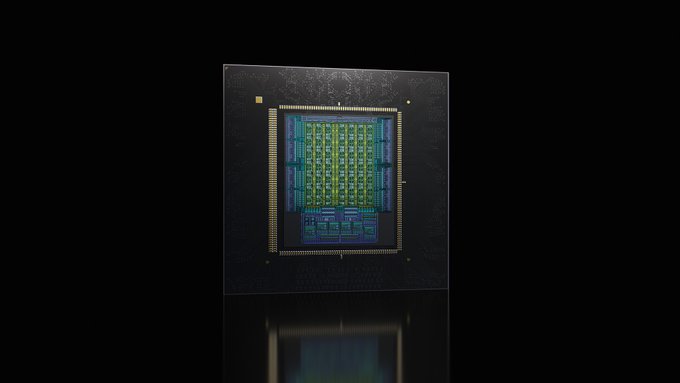
NVIDIA’s Vera CPU is not a generic processor shoehorned into a space rating. It carries 88 custom-designed Olympus cores, space multi-threading technology, and LPDDR5X memory delivering up to 1.2 terabytes per second of bandwidth. NVIDIA claims up to 1.8 times faster completion on orchestration-heavy workloads compared to x86 CPUs.
That specification tells you exactly what this machine is for.
The heaviest lifting in modern AI does not happen during inference — it happens in the plumbing around inference. Agentic AI systems call tools, execute code, validate outputs, manage memory, and coordinate distributed tasks. Those are CPU-bound operations. They are also operations that do not benefit from parallelization in the way GPU workloads do. Getting them wrong creates bottlenecks that no amount of GPU scaling can fix.
Vera was designed to unblock exactly that bottleneck. Putting it in orbit is an unusual but logical extension: if you are going to build a computer that can hold its own in a crowded data center, you might as well test whether it can hold its own above the atmosphere.
Who Wins, Who Loses
The winners are obvious. SpaceX gains a new revenue stream that has nothing to do with launching rockets and everything to do with owning the infrastructure that processes the data those rockets collect. NVIDIA gets a showcase for its full stack — compute, networking via NVLink, Spectrum-X Ethernet, BlueField DPU — in an environment where every component must survive radiation, thermal cycling, and launch vibration. A successful orbital deployment becomes the most expensive demo ever run.
The losers are harder to name because they do not yet exist as competitors. But the conventional players in space data — the specialized payloads built by Lockheed Martin, Northrop Grumman, and ESA-affiliated firms — are suddenly working against an architecture that is more programmable, more powerful, and far less expensive per teraflop than anything they have offered.
Traditional government space programs face a different kind of loss. NASA has spent decades building science through peer-reviewed proposals, contractor bids, and multi-year timelines. An AI satellite that reprocesses its own data in orbit and updates its processing pipeline via software does not fit that model. It does not need a proposal cycle. It needs a launch window and a power budget.
The Real Timeline
The first Vera Rubin NVL72 system is scheduled for Q4 2027. That is eighteen months away, which in hardware terms is aggressive and in space terms is nearly unprecedented. If the timeline holds, SpaceX will have validated a new class of orbital infrastructure before the next generation of GPUs ships.
NVIDIA’s Blackwell architecture is already in volume production. The Vera Rubin platform represents the next step — a system-level integration that bundles compute, networking, and software into a single deployable unit. Landing that unit in orbit and having it function as intended would establish a proof point that no amount of ground-based benchmarking could match.
Expansion is planned to begin in 2028, with no public cap on scale. SpaceX has discussed reaching multi-gigawatt compute capacity across its infrastructure. If even a fraction of that capacity moves orbital, the economics of cloud AI shift in ways that are difficult to model today.
What This Means for Everyone Else
The global AI race is currently fought over who can build the most data centers and secure the most electricity. That race is about to acquire a new dimension. Nations and companies that treat orbit as purely a communications or observation domain will find themselves behind organizations that treat it as compute real estate.
South Korea’s AI Times is covering this story with unusual intensity for a domestic-tech angle, and there is reason for that. Samsung, Hyundai, and the Korean government have been positioning the country as a major player in both semiconductor manufacturing and satellite infrastructure. A Vera-class system operating from orbit changes the value chain in ways that favor integrated players — those who can design the chip, build the satellite, and operate the constellation. It does not favor anyone who only does one of those things.
The United States already has SpaceX, NVIDIA, and a defense apparatus that understands orbital advantage. Europe has Airbus and Thales but no equivalent launch-plus-chip combo. China has Chang’e and domestic GPU development but no proven orbital compute platform. The gap that opens between these positions over the next three years will define the next phase of the AI infrastructure race.
The Quiet Question
No one has publicly explained what happens when a Vera Rubin system in orbit needs maintenance, needs a thermal component replaced, or needs its software patched at the hardware level. These are known problems for ground data centers with resident engineers. They are unsolved problems for anything launched on a Falcon 9.
That gap does not make the project unrealistic — it makes it the kind of risk that separate pioneers from copycats. Anyone can announce an orbital data center. Few can ship one.
The 2027 launch date is the line in the sand. Everything before it was speculation. Everything after it will be either a new paradigm or an expensive reminder of why space hardware is supposed to be slow and deliberate. There is no middle ground.