Why We Have No Rules for Mice With Human Brains
A new Nature study grows human brain tissue inside mice stripped of their own cortex. The science is extraordinary — the ethical framework governing it barely exists.
The mice didn’t lose their cortex by accident.
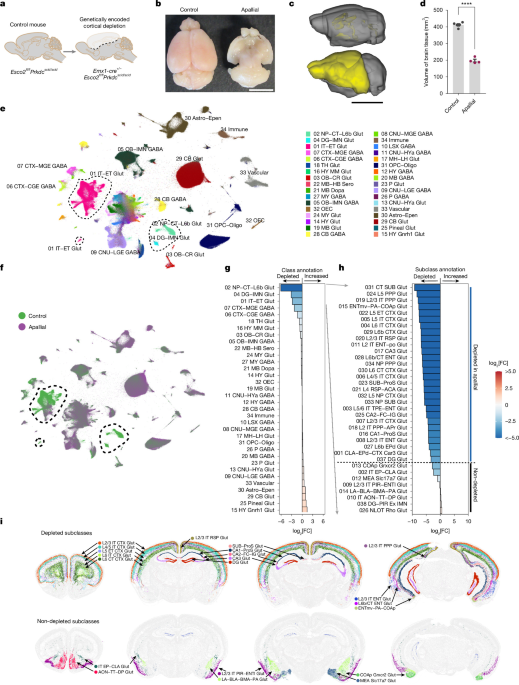
Researchers at the lab behind a landmark Nature study designed apallial mice — animals whose dorsal and medial pallium, the developmental source of the neocortex and hippocampus, was genetically deleted before birth. The goal was practical: create empty cortical space in a mouse brain so that transplanted human organoids could grow without competing with host neurons for room or connections. Rodent neurons mature faster than human ones, and in previous studies where organoids were grafted into intact rat brains, the rapidly developing host environment constrained human graft proliferation. The apallial mouse was meant to solve that constraint.
It worked, and perhaps more than anyone expected.
The human cortical tissue didn’t just survive. It expanded roughly 4.7-fold between two and three months after transplantation, eventually constituting nearly 92 percent of combined cortical tissue volume in the engrafted mice. The grafts contained an estimated 32,000 neurons per cubic millimeter, displayed layered organization, showed spontaneous electrical activity, and sent axonal projections into the host spinal cord. Whole-brain single-nucleus RNA sequencing confirmed the presence of deep and superficial layer glutamatergic neurons, oligodendrocyte progenitors, and astrocytes — the cellular diversity of a developing human cortex, now living inside a rodent body.
This is xenocortication. And it reveals a governance gap that Western bioethics has not prepared for.
The United States is not ready for this.
There is no federal law in the United States governing the creation of human-animal chimeras with integrated neural tissue. The NIH currently enforces a informal moratorium on certain types of chimera research through its funding guidelines, but those restrictions are narrow and subject to change. The FDA has no jurisdiction over basic research of this kind. State-level regulations are sparse and inconsistent. Meanwhile, the science is moving fast.
Japan, by contrast, established a four-year moratorium in 2018 on the gestation of human-animal chimeric embryos beyond 14 days and has since required licensing for chimera research involving human neural tissue. China has issued its own guidelines, though enforcement remains uneven. The United States has neither a comprehensive policy nor a public debate commensurate with what these studies are now achieving.
The Nature paper itself does not address this regulatory absence. Its ethics discussion, as is standard in scientific publishing, focuses on animal welfare and institutional oversight of the procedures performed. It does not engage with the question of what happens when human-derived neural tissue becomes the dominant cortical structure in a mammalian brain — or what standards should apply when that tissue exhibits organized electrical activity, receives host inputs from the thalamus and palaeocortex, and sends output into the spinal cord.
The behavioral data is the part nobody is talking about enough.
The researchers used unsupervised machine learning applied to motion sequencing — MoSeq — to analyze the behavior of control mice, apallial mice, and xenocortical (XCX) mice. The results were striking. XCX mice occupied an intermediate position between controls and apallial mice, distinct from both. This is not trivial. It means the presence of human cortical tissue in the mouse brain produced measurable, quantifiable changes in behavior that were neither purely rodent nor purely absent.
Targeted behavioral tasks showed minimal gross impairments in XCX mice, but subtle deficits emerged — partial impairments in fine motor coordination and working memory tasks that require neocortical and hippocampal function. Under hypoxic stress, XCX mice showed both a cellular response and motor deficits, suggesting the grafts were functional enough to be compromised by physiological insult. The human neurons were not just sitting there. They were processing information.
Western bioethics frameworks were built for a world where human and animal cells coexist in peripheral tissues — bone marrow transplants, pancreatic islet grafts, cardiac patches. They were not built for a world where human neurons replace the very structures that mediate cognition, perception, and behavioral complexity in a living animal. The existing moral categories simply do not map onto this reality.
Who wins, who loses, and what comes next.
The immediate winners are neuroscientists studying human brain development and disease. Xenocortication provides an in vivo platform for modeling neurodevelopmental disorders that involve large-scale distributed circuit dysregulation — conditions like autism spectrum disorders, schizophrenia, and epilepsy that cannot be adequately studied in dish models. The XCX platform also enables therapeutic testing on human neurons in a living, connected system, which is a capability that did not exist before this work.
The losers are accountability. Without clear regulatory boundaries, there is no mechanism to prevent incremental escalation. A graft that currently produces subtle behavioral changes could, with technological refinement, produce more complex neural architectures. The scientific literature already describes organoids capable of network-level activity and sensory-responsive firing. The trajectory is clear.
What happens next depends on whether governance catches up to the science. The United States needs a formal policy framework — not a moratorium, but a set of binding standards that define thresholds for acceptable research, require behavioral monitoring of chimeric animals with human neural grafts, and establish oversight committees with the authority to review proposals that approach ambiguous zones. The European Union is similarly unprepared. International coordination is essential, because regulatory arbitrage is already a risk.
The Nature study is a genuine scientific achievement. It solves a real problem in neurobiology. But the ethical architecture around this work is still the scaffolding you see behind a building under construction — temporary, incomplete, and not meant to hold weight. The building is already tall enough that we should stop pretending the floor beneath it is solid.