Xi Jinping Seizes Free Trade Leadership As US Retreats
At the APEC CEO Summit in Shenzhen, Xi Jinping directly challenged American protectionism while promising deeper market openings. The move reshapes the technology and trade alliance map across Asia-Pacific.
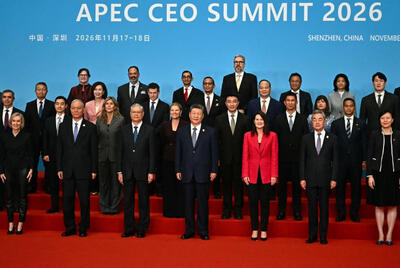
Xi Jinping Is Filling the Vacuum Left by American Retreat
Shenzhen — On November 18, Chinese President Xi Jinping stood before a hall of global CEOs and delivered a speech that read like a deliberate inversion of America’s trade posture. Where Washington has increasingly turned toward tariffs, export controls, and strategic decoupling, Xi announced accelerated tariff cuts, expanded market access, and reforms to trade regulations.
The contrast was not accidental. This was the first APEC CEO Summit hosted in China since 2014, and it preceded this year’s full APEC Leaders’ Meeting. Xi understood the moment: with American political energy draining toward internal battles over trade policy, Beijing had a narrow window to redefine who speaks for open markets in the Asia-Pacific.
The Core Proposition: Open Doors, Lower Tariffs
Xi framed his case around three commitments. First, reduce tariffs. Second, broaden market access for foreign enterprises. Third, reform the rules and regulatory frameworks governing cross-border commerce within the region.
He told the audience that China would continue to unlock its massive domestic consumer market, creating demand for a wider range of goods and services from abroad. Foreign companies, he said, would be able to invest and operate under “more stable and predictable” conditions.
The language is familiar but the signal is sharper than usual because of the backdrop. For years, Western businesses operating in China complained about regulatory unpredictability and opaque enforcement. Xi offered a public pledge aimed directly at those anxieties — and at the companies deciding whether to deepen their China exposure or pull back.
Innovation as the Sales Pitch
Xi doubled down on a second thread: artificial intelligence, large language models, and advanced manufacturing. He described China as a vast innovation laboratory where new technologies could be tested and then scaled rapidly into real industries.
That framing is not merely rhetorical. It targets two audiences simultaneously. First, global tech firms looking for partners, datasets, and deployment scale — China has billions of data points and a consumer base eager to adopt AI tools. Second, governments in the Global South weighing whether to align procurement and infrastructure projects with Chinese or Western technology standards.
By positioning China as the place where innovation translates fastest into industrial output, Xi is making a practical case rather than an ideological one. The pitch is: partner with us now, and you gain access to the largest fast-moving market for next-generation technology in the world.
The Bay Area Gambit
One detail that deserves more attention than it received: Xi’s call to establish an international organization for cooperation among major bay-area economies.
Shenzhen sits inside the Guangdong-Hong Kong-Macao Greater Bay Area, a cluster of cities already home to roughly 86 million people and a GDP ranking comparable to many European countries. Xi argued that bays around the world — from San Francisco to Sydney to Singapore — should strengthen exchanges along similar lines.
On the surface, this sounds like soft diplomacy. In practice, it is a structured attempt to build a transnational network of high-tech industrial hubs outside Washington’s orbit. The Greater Bay Area already dominates electric vehicle production, battery supply chains, and consumer electronics assembly in East Asia. Extending that model internationally gives China a scaffolding for alternative trade corridors.
Putin Reinforces the Anti-Sanctions Message
Russian President Vladimir Putin, joining by video link, reinforced Xi’s central point from a different angle. He acknowledged that sanctions, tariffs, and export restrictions slow growth — but insisted they do not block it entirely. Russia continues to reorient its economy toward Asian markets, particularly through expanding logistics connectivity within the APEC region.
Putin’s remarks matter because they signal that China no longer stands alone in challenging American economic statecraft. Russia and China are building parallel justifications for reduced reliance on dollar-dominated financial systems and Western trade architecture. Both powers argue that the tools used against them are becoming normalized globally — so other countries should prepare for the same treatment and arrange alternatives accordingly.
Who Wins and Who Loses
The winners are clear. Companies with existing China exposure will welcome the tariff-reduction signal. Chinese industrial sectors tied to the Greater Bay Area stand to benefit from any new cooperative framework. Governments in Southeast Asia, Latin America, and Africa that have been negotiating with both Washington and Beijing can point to Xi’s concessions as leverage in their own trade discussions.
The losers are harder to name precisely but easier to identify directionally. US exporters who have benefited from special trade arrangements could face stiffer competition if China accelerates imports under lower tariffs. American technology firms dependent on Chinese market share must weigh whether Xi’s openness promises reflect durable policy or transactional diplomacy designed to secure short-term investment inflows.
Most critically, allies in the Asia-Pacific — Japan, South Korea, Australia, the Philippines — now face a choice. They can continue aligning with Washington’s increasingly fractured trade stance or engage with China’s revised outreach. Neither path is free of risk; each determines which technology standards and supply-chain architectures dominate the region over the next decade.
What Happens Next
The CEO Summit was a rehearsal. The main event — the APEC Leaders’ Meeting later this month — will test whether Xi’s rhetoric converts into actionable agreements. Watch for three developments:
First, whether specific tariff reduction schedules are published rather than general promises made.
Second, whether the proposed international bay-area cooperation organization attracts member states beyond China’s immediate neighbors.
Third, how quickly foreign firms translate Xi’s confidence-building language into renewed capital expenditure commitments in Guangdong, Hong Kong, and Macao.
America’s retreat from multilateral trade leadership did not happen overnight, but it accelerated sharply in recent years. Xi Jinping recognized that retreat and moved to occupy the space it left behind. Whether Beijing can sustain the momentum without triggering new frictions — including tensions with trade partners worried about Chinese subsidies and state-directed industry — remains the unanswered question.
The speech in Shenzhen established China’s position. The next six weeks will determine whether that position holds.