Xi Jinping Health Rumors Are Back — And Beijing Can't Quiet Them
Taiwan netizens are once again speculating about Xi Jinping's health after footage of his Kyrgyzstan visit surfaced — and the gaps in Chinese state media coverage only feed the speculation.
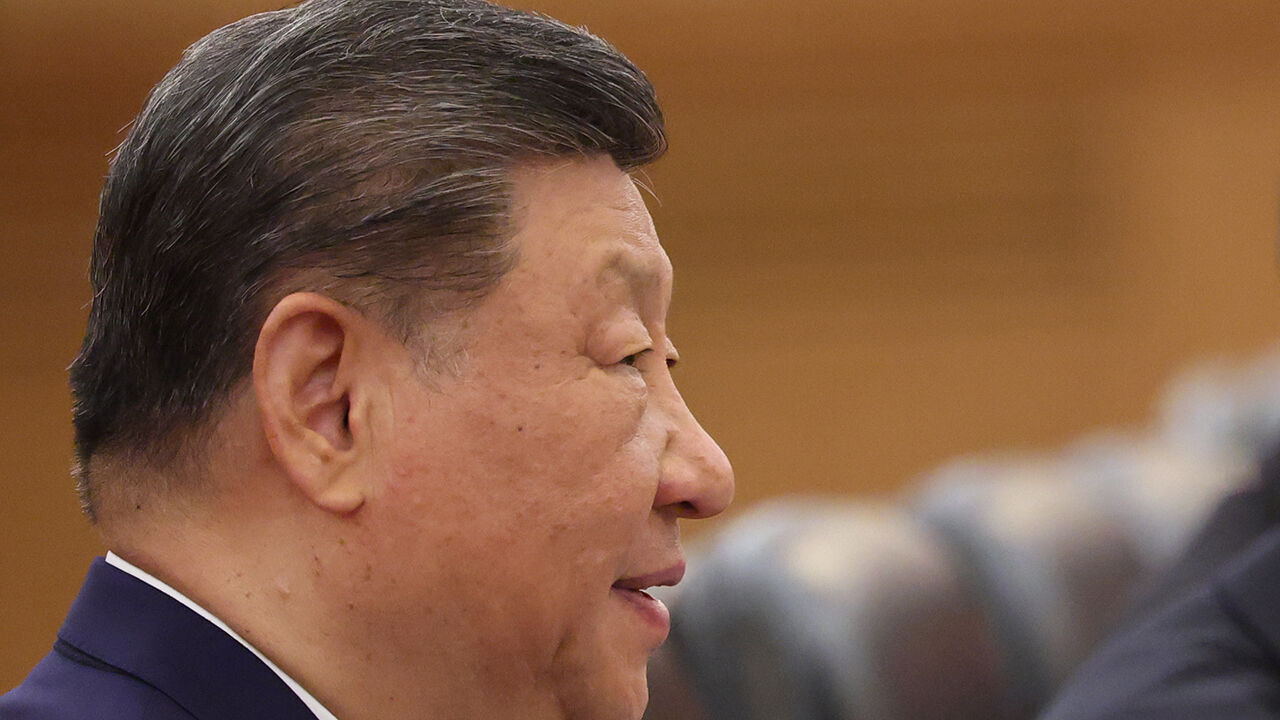
The Rumor Mill Turns Again
A video clip from late April showing Chinese President Xi Jinping disembarking from his plane in Bishkek, Kyrgyzstan, has reignited a familiar conversation: Is the 73-year-old leader healthy enough to serve a fourth term?
Taiwan’s FTV and SET TV reported that online communities across the strait began dissecting the footage almost immediately. Some netizens noted that Xi’s gait appeared slower and his movements more rigid than usual. Others pointed to the image of him gripping his wife Peng Liyuan’s hand as he descended the aircraft stairs — a gesture some interpreted not as romantic support but as physical reliance.
What made the speculation spread faster was what Chinese state media chose to show — and what it deliberately left out.
Central Television (CCTV) broadcast the moment Xi waved from the top of the stairs and walked the red carpet, but edited out the stair descent entirely. In an era where every frame of a Chinese leader is analyzed for hidden signals, that editorial choice spoke volumes to anyone watching.
A Pattern That Predates Social Media
This isn’t the first time health rumors have swirled around Xi. Similar speculation emerged in 2019, 2020, and again in 2025 — each cycle following the same script: a public appearance raises questions, state media responds with silence or careful framing, and the internet fills the void with its own narrative.
The underlying logic is simple: in a system where leadership health is treated as a state secret, the absence of information becomes itself a kind of information. Every pause, every stumble, every instance of physical support from staff or family is decoded through the lens of political survival.
The Chinese government’s traditional response — to neither confirm nor deny, and to never publish independent medical records — has historically contained speculation. But it also guarantees that when rumors resurface, they carry fresh credibility precisely because the silence was maintained so rigorously.
What the Rumors Reveal About Power
The fact that these rumors circulate most vigorously from Taiwan — rather than from Beijing’s dissident circles or Western intelligence communities — is itself significant. It suggests that the most sophisticated readers of Chinese political theater are those watching from the closest distance, where every gesture carries the weight of dynastic interpretation.
For Western audiences accustomed to thinking of China as a monolith where dissent is impossible, the reality is more nuanced. Taiwan’s internet communities operate with a freedom that mainland Chinese netizens lack, yet they share a cultural framework for reading Chinese leadership that transcends the political divide. The result is a feedback loop: rumors originate in Taiwan, reach the mainland through encrypted channels, and then get reimported into Taiwan via state media’s inability to address them directly.
Beijing knows this. That’s why the information control strategy has shifted from simple censorship to what scholars call “information dominance” — flooding the zone with so much alternative content that the original rumor loses its focal point. It’s a strategy designed not to convince people they’re wrong, but to make the question itself seem beneath attention.
The Putin Conversation That Says Everything
Perhaps the most revealing moment came not from the Kyrgyzstan visit but from last September’s V-Day parade in Beijing — an event that itself was a performance of strength and continuity.
During the parade, which celebrated the 80th anniversary of the victory over fascism, Xi Jinping was shown in private conversation with Russian President Vladimir Putin. The exchange was accidentally broadcast and quickly went viral. Xi remarked that people in earlier decades rarely lived past 70, but now “70 is like a child.” Putin responded with a joke about genetic technology making organ transplantation routine and living forever possible. Xi then referenced predictions that humans could reach 150 years old within this century.
Readers across Asia interpreted this differently. Some saw it as a candid acknowledgment of aging leadership. Others took it as a boastful signal that Xi expected to remain in power well into his eighth decade. A few saw it as something more unsettling: a man publicly discussing life extension technology while his own health became the subject of international speculation.
The fact that the conversation was broadcast at all — and that Xi seemed unconcerned about its contents — raises questions about whether the remarks were meant to be overheard. In Chinese politics, the line between spontaneity and calculation is often thinner than it appears.
Why This Matters Beyond the Strain
Western media tends to treat Chinese leadership health rumors as either gossip or propaganda — rarely both at once. But the real significance lies in what these rumors reveal about the contradictions of authoritarian information control.
In a democracy, leadership health is a matter of public record. In China, it is a matter of state security. The problem for Beijing is that treating health as secret information doesn’t make it less newsworthy — it makes it infinitely more newsworthy. Every gap in coverage becomes a hypothesis. Every edited frame becomes evidence.
For Taiwan, the rumors carry an additional dimension. Cross-strait relations are already defined by asymmetry: Taiwan observes China with a combination of curiosity and caution, while China views Taiwan through the lens of eventual reunification. Health rumors about the Chinese leader represent one of the few areas where Taiwan has informational advantage — not because Taiwan knows more, but because it can discuss openly what Beijing must suppress.
The Fourth Term and the Questions It Raises
Xi Jinping is widely expected to assume a fourth term as general secretary at the next party congress. Whether that happens depends on a calculus that has nothing to do with public opinion and everything to do with elite consensus — and the health rumors, however baseless, introduce a variable that even the most controlled system cannot fully eliminate.
If Xi were to step aside for health reasons, the succession process would be opaque and potentially volatile. If he remains despite concerns, the legitimacy of his continued rule depends on projecting an image of vigor that the available footage increasingly struggles to support.
Neither outcome is comfortable for Beijing. And neither is comfortable for the rest of the world, which has come to depend on Xi’s personal authority as the central pillar of Chinese foreign policy — a policy that has grown more assertive, more unpredictable, and more difficult to negotiate with over the past decade.
The Taiwan rumors are not going to change any of this. But they are a symptom of something real: a system that has centralized power so completely around one individual that any sign of vulnerability — real or imagined — becomes a geopolitical event.
In that sense, the real story isn’t whether Xi is healthy. It’s that the question itself, whispered across the strait and amplified by edited footage and strategic silence, has become too important to ignore.