Why Xi Welcomed Trump at Shenzhen Airport
Xi Jinping's personal airport greeting for Donald Trump in Shenzhen isn't just ceremony — it's a signal about where Beijing thinks its relationship with Washington stands. Ahead of what could be a historic US-China-Russia trilateral talk, the staging matters almost as much as the substance.
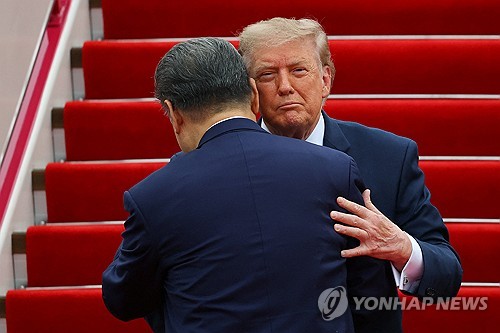
The Gesture Before the Talks
Xi Jinping stood at the bottom of the Air Force One stairs before Donald Trump had even touched tarmac. That detail is the point. In a Chinese diplomatic context, the head of state personally greeting a visiting foreign leader at the airport is a deliberate exception to routine protocol. It happened again in Shenzhen on November 18, after Trump arrived from the Philippines for the APEC summit.
The optics were rehearsed precisely: a black car pulling up, Xi waiting, the two men shaking hands and embracing lightly, shoulders patted, smiles held. Red carpet. Soldiers standing straight. A military band playing “The Star-Spangled Banner.” Trump returning a salute. Jet engines overhead in formation. Every element calibrated to broadcast warmth.
But warmth here is strategy.
Why the Greeting Matters
This is only the second time in recent months that the two leaders have shown each other maximum ceremonial respect. In September, at the Washington summit, Trump himself had personally welcomed Xi at the airport upon his arrival in the United States. Now the roles reversed — and the reciprocity is itself a message. Beijing is signaling that it views the current trajectory of the relationship as one where both sides are choosing to perform openness rather than conceal friction.
That matters because beneath the red carpet, the agenda is anything but ceremonial.
Trump and Xi are scheduled to meet bilaterally on November 19, the same day as the main APEC proceedings. The stated topics are the ones that have defined their previous encounters: trade tensions and advanced-technology export controls. These are not peripheral issues. They sit at the center of the economic and security competition between the two countries, and they are the areas where the most concrete agreements — or the most dangerous deadlocks — tend to emerge.
Then comes the more extraordinary element. Also on November 19, there is expected to be a trilateral meeting involving the United States, China, and Russia. If confirmed, this would mark the first such gathering of the three powers at the leader level. The subject matter — the war in Ukraine and nuclear arms control — places the meeting squarely in the domain where US-China and US-Russia relations have been drifting apart rather than converging.
What Beijing Is Signaling
The airport welcome should be read against this backdrop. China has every incentive to present itself as a stabilizing force and a venue for major-power diplomacy. Hosting APEC gives Beijing the platform. A successful trilateral conversation — even a tense one — would reinforce the narrative that China remains indispensable to global security architecture.
Xi’s personal presence at the airport is part of that performance. It tells Washington that China is treating this visit with the gravity the occasion demands. It tells Moscow that Beijing is positioning itself as a bridge, not a bystander. And it tells domestic audiences in all three countries that something significant is happening, regardless of what emerges from the actual negotiating rooms.
The staging is also a quiet reminder of the asymmetry in these relationships. Russia enters any trilateral framework largely through the lens of Ukraine and sanctions. China enters through the lens of trade and technology. The United States enters through both. Who gets to define the terms of the conversation is itself a contest, and the airport greeting is the opening move.
Shenzhen itself carries weight beyond symbolism. This city generated nearly $450 billion in GDP last year alone — more than most APEC member economies — and serves as China’s flagship hub for Huawei, Tencent, DJI, and dozens of semiconductor firms under American restrictions. By hosting the visit here, Beijing ensured the setting underscored the very industry where Sino-American tension is most acute. The choice was not accidental.
Second-Order Effects
The greeting sends signals well beyond the immediate bilateral frame. Within China’s political system, projecting strength alongside hospitality reinforces Xi’s standing domestically at a moment when economic headwinds persist and youth unemployment remains elevated. Performing equal footing with an American president — however superficially — feeds the nationalist narrative that China has reclaimed its rightful position at the table.
For Beijing’s regional rivals and partners, the images carry another message. Japan and South Korea, already watching the Russia dimension of this encounter with concern, will interpret the warm reception as evidence that China is confident enough in its strategic calculus to openly engage with its adversaries while simultaneously deepening ties with Moscow. The gesture suggests China does not see contradiction between welcoming Trump and sustaining its partnership with Vladimir Putin.
On the commercial side, supply chain managers across Asia will read the atmosphere as either a green light for renewed negotiation or a warning shot about continued volatility. Export-control restrictions on advanced chips, lithography equipment, and AI infrastructure have already forced multinationals to build redundant supply chains or choose jurisdictions. Any signal that Washington and Beijing might carve out exceptions — even temporary ones — moves markets before policy is formally announced.
Russia receives a layered lesson from the choreography. The image of Xi personally greeting Trump at a Chinese venue, then pivoting to include Putin in trilateral discussions, confirms what Moscow likely suspected: Beijing sees value in managing the American relationship without abandoning its partnership with Russia. But it also reveals the underlying hierarchy. China is the one setting the venue. China is the one inviting both parties. Russia may walk away with tactical access to American channels, but China walks away with the credit for making it possible.
The Substance Behind the Spectacle
Reports indicate the bilateral session will address tariff schedules that remain largely intact from the first Trump term, along with expanded restrictions on high-end chip sales to mainland China. Both sides have publicly signaled interest in de-escalation ahead of the summit, yet neither has offered specifics. Beijing has floated the possibility of purchasing additional American agricultural goods and energy in exchange for relaxations on semiconductor licensing. Washington’s negotiating team is understood to be exploring whether incremental easing on certain categories of consumer electronics chip design software might unlock concessions on surveillance technology exports.
Any deal faces structural obstacles. The bipartisan consensus in Congress restricting Chinese technology penetration makes rollback politically costly for Democrats and Republicans alike. On the Chinese side, the security apparatus views technological self-sufficiency as non-negotiable after years of exposure to export-control shocks. Neither leadership can easily reverse course without appearing weak.
The trilateral meeting adds further complexity. Even if all three leaders sit at the same table, alignment on Ukraine remains distant. China has provided diplomatic cover for Russia internationally but stopped short of material military support that would trigger secondary American sanctions. Putin has pressed for deeper cooperation throughout the conflict. The gap between those positions is unlikely to close in a single session, though the mere fact of the meeting occurring suggests all three capitals recognize the danger of letting the format lapse entirely.
What Comes Next
Several questions remain open. It is unclear whether the trilateral meeting will produce a joint statement or merely a shared acknowledgment of disagreement. The scope of any agreement on export controls depends heavily on how each capital defines its own red lines. And the personal rapport visible at the airport does not guarantee flexibility on substance — Trump has a long record of performing warmth publicly while pursuing hard positions privately, and Xi has done the same across decades of engagement with American leaders.
What is clear is that Shenzhen is not a neutral setting. This is China’s city, chosen deliberately as the APEC host location, and the choreography of the visit reflects that choice. The question for Washington is whether it treats the spectacle as an indication of progress or simply as the atmosphere in which progress must be fought for.
The two leaders will speak behind closed doors on Tuesday. The cameras will stop rolling then. That is when the gesture at the airport either proves to have been the prelude to something substantial — or nothing at all. Either outcome reshapes how the rest of the year unfolds. A breakthrough would reset expectations across global markets and embolden multilateral institutions struggling with relevance. A stagnation or unraveling would accelerate the fragmentation into competing economic blocs that analysts have been predicting for years.
The airport greeting was never just a greeting. It was an announcement.