XRP Just Cleared Its Biggest Regulatory Hurdle Toward the NASDAQ
SEC approval for Ripple-backed Evernorth's merger with a SPAC opens a new pathway for crypto assets on US exchanges. The play isn't just a listing—it's a template.
The SPAC That Actually Matters
The SEC didn’t just rubber-stamp another crypto vanity project. It approved a filing that could redefine how digital assets enter American public markets.
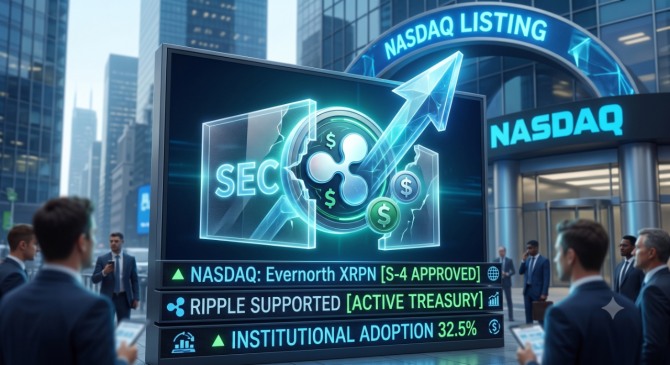
Evernorth Holdings, a company whose entire thesis is active XRP treasury management, received an effectiveness declaration on its S-4 registration statement Tuesday. The merger with SPAC Armada Acquisition Corp II clears the final regulatory obstacle. On September 30, shareholders vote. If they approve—and there’s little reason to doubt they will—the combined entity will begin trading on the NASDAQ under the ticker XRPN.
That ticker matters more than it sounds. It signals the first publicly listed company whose core strategy centers on XRP as an active operating asset, not a dormant holding.
Active Treasury Is the Innovation
Most crypto SPACs in recent years were built on a simple premise: raise money, buy Bitcoin or Ethereum, wait. Evernorth’s prospectus takes a different tack. The company plans what it calls an Active Treasury model—deploying XRP holdings across three tracks simultaneously.
First, on-chain tokenization of real-world assets on the XRP Ledger (XRPL). Second, direct investment in XRPL infrastructure. Third, liquidity provision for Ripple’s newly launched dollar-pegged stablecoin, RLUSD.
This isn’t speculation dressed up as strategy. It’s a deliberate bet that XRP can function as both a treasury reserve and an operational fuel layer for a broader financial ecosystem. The difference between passive and active matters enormously when regulators, exchanges, and institutional investors are deciding whether to treat a crypto-linked equity like any other public company or like an unregistered security.
Ashish Birla, Evernorth’s CEO, framed it precisely: the company was designed to accelerate XRP’s role in the on-chain institutional shift. The SEC’s declaration is, in his words, a milestone toward completing the merger and realizing that vision.
The Investor Lineup Is a Regulatory Endorsement
What makes this deal worth watching beyond the ticker is who’s backing it. The investor roster reads like a who’s who of regulated crypto finance: Ripple itself, SBI Group, Pantera Capital, Kraken, GSR, and Arlington Capital. These aren’t venture speculators parking money in a meme token. These are organizations that have spent years navigating SEC enforcement actions, building compliance frameworks, and lobbying for clearer rules.
Their participation signals confidence that the SEC’s approval carries weight beyond this single deal. A company with this caliber of institutional backing, undergoing full SEC registration review, creates a de facto precedent: an XRP-centric public company exists within the US regulatory perimeter.
The market has already moved. Armada’s shares closed at $10.55 on the news, and XRP saw a corresponding bounce. But the price action is the easy part.
Why This Matters Outside Korea
The source of this story is a Korean financial outlet, and the Evernorth connection to Korean capital is real—SBI Group’s presence in the funding circle ties the deal to Tokyo’s largest securities house, which has deep operations across Asia. But this isn’t a Korean story. It’s an American regulatory one with Asian capital attached.
For years, the dominant narrative around XRP in the US has been litigation. Ripple’s eight-year battle with the SEC dominated headlines and defined the asset’s relationship to American markets. That case settled in 2025 with a ruling that clarified the line between institutional and retail sales. Evernorth’s SEC approval is the structural consequence of that clarity—a concrete pathway opening where there was previously only a gray zone.
For the broader crypto industry, the precedent is sharper than most commentators are acknowledging. If the SEC has approved a company whose primary asset is XRP, the argument that all crypto exposure must live in unregistered products or offshore vehicles loses further ground. A NASDAQ-listed active treasury company is a regulated American corporation. Its financial statements will be audited. Its disclosures will be public. Its ticker will sit alongside traditional equities in broker platforms that previously couldn’t offer crypto-linked products to retail accounts.
Who Wins, Who Loses
Ripple wins most obviously. An active, publicly traded treasury vehicle for XRP creates demand pressure, visibility, and a recurring narrative hook that no press release can match. The RLUSD angle is equally significant—every liquidity pool Evernorth builds strengthens the stablecoin’s depth on XRPL, reinforcing Ripple’s broader product stack.
XRP holders win second. Institutional adoption through a listed equity is slower but stickier than exchange-driven speculation. Pension funds, endowments, and wealth managers who cannot touch a direct crypto position may still allocate to XRPN.
The SEC wins too, in a quiet way. Approving a fully registered merger with detailed disclosures gives the commission a case study in supervised crypto market entry. It reinforces the narrative that the current regulatory posture prioritizes process over prohibition.
Competing blockchains lose visibility. Every dollar flowing into XRPL infrastructure through Evernorth’s treasury is a dollar not exploring alternative ledgers. The tokenization track is a network-effect play—more infrastructure attracts more developers, which attracts more issuance, which makes the ledger more valuable.
Traditional SPAC sponsors lose relevance. Evernorth’s model demonstrates that a SPAC can be a legitimate vehicle for regulatory-approved crypto exposure without relying on the hollow marketing plays that tainted the 2021–2023 SPAC wave.
What Happens Next
The shareholder vote on September 30 is ceremonial. The real test begins after trading starts. Can XRPN sustain institutional interest beyond the novelty of being the first XRP-centric NASDAQ listing? Will the Active Treasury model produce measurable returns that justify its existence beyond marketing language? And crucially, will other crypto companies file similar registrations, turning Evernorth from a curiosity into a category?
The answer to that last question determines whether this is a milestone or a model.
One thing is already clear: the path from crypto asset to listed equity just got shorter. Evernorth didn’t wait for legislation. It walked through the existing SEC registration process and came out the other side with a ticker.
That changes the calculus for everyone else waiting in the wings.