The Quiet Bridge: How North Korea's New Yalu Crossing Undermines
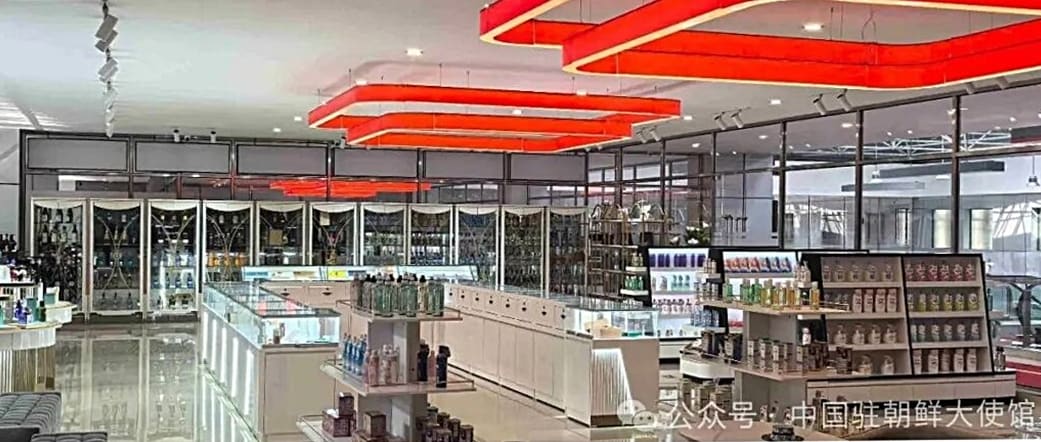
China's ambassador personally walked through North Korea's customs facility days after the Yalu River Bridge opened — a deliberate signal that Beijing is quietly expanding trade corridors that circumvent UN sanctions. Inside the duty-free shop: bottles of liquor and soft drinks, staged for show. The real cargo is already moving.
The Ambassador Who Walked Through North Korea
Wang Yajun, China’s ambassador to North Korea, did something unusual on the morning of November 16. He presented his passport. He walked through the newly opened Yalu River Bridge crossing point. He posed for photographs inside a North Korean duty-free shop stocked with bottles of liquor and soft drinks. He gave a quote about economic cooperation to officials from both sides.
It sounds routine. It is not.
The bridge connecting Dandong in China’s Liaoning province and Sinuiju in North Korea’s North Pyongan province had been completed roughly twelve years ago. Tonight, it finally opened. Two days later, China’s top diplomat was touring the facility, publicly demonstrating that Beijing intends to use it.
The photographs shared on WeChat by the Chinese embassy show the North Korean side of the border crossing. There is a sign in Korean characters reading “입국” — entry. There are cargo trucks parked in a lot. There is a duty-free shop displaying bottles, not food, because perishable goods would not survive the initial phase of operations. The staging is careful. The message is deliberate.
What This Bridge Actually Means
The Yalu River has always been a border. It has never been a barrier so strictly controlled that two countries built a second bridge to bypass it. The original Yalu River Bridge, the old railway bridge adjacent to the new one, has carried limited cross-border traffic for decades. The new bridge was constructed to move far more goods, and far more people, between two states that the United Nations has spent years trying to isolate from each other economically.
UN Security Council resolutions have restricted North Korea’s ability to trade with the outside world. They have targeted coal, minerals, textiles, and labor exports. They have forbidden the import of luxury goods and dual-use materials. They have attempted to choke off the revenue streams that fund Pyongyang’s weapons programs.
China is North Korea’s economic lifeline. Estimates vary, but most analysts place between eighty and ninety percent of North Korea’s total trade passing through Chinese ports or overland routes. The Dandong-Sinuiju crossing is the largest of these land routes. It has operated under severe constraints. The new bridge changes that.
The Photos Are the Point
Why did Ambassador Wang tour the facility in person? Why share photographs on WeChat, China’s dominant social media platform, with millions of followers? Why have officials from Dandong customs, Liaoning’s foreign affairs office, North Korea’s Pyongan province administration, and Sinuiju immigration all appear in the same frame?
This is not documentation. This is performance.
The Chinese embassy wanted the world to see that the bridge is open. It wanted Pyongyang to see that Beijing supports the opening. It wanted Dandong’s business community to see that the government is backing cross-border trade expansion. And it wanted the United States and its allies to understand that China does not intend to let sanctions enforcement slow down this particular corridor.
The duty-free shop display is telling. Liquor and bottled beverages, not fresh food. These are high-margin, low-perishability goods that can sit on shelves indefinitely while trade patterns adjust. They are also exactly the kind of products that North Korea struggles to produce domestically and that Chinese consumers might purchase as souvenirs or gifts. The shop is set up for the long term.
Who Wins, Who Loses
China wins by gaining a formal, modernized crossing point that increases the volume and speed of legal and semi-legal trade. Dandong, a city that has depended on cross-border commerce with North Korea for decades, will see new business opportunities. Chinese companies that have waited twelve years for this bridge to open can now operate with greater efficiency.
North Korea wins by receiving what it can call a diplomatic victory — proof that its relationship with Beijing remains functional despite international pressure. The regime can point to the ambassador’s visit and the photos as evidence that sanctions have not isolated it completely. The duty-free shop, the cargo yard, the passenger terminal — all of it signals normalcy that Pyongyang desperately wants to project.
The United States and its allies lose because the bridge creates a new channel that is harder to monitor than the informal routes that currently dominate North Korea’s trade. Sanctions enforcement relies on intercepting suspicious shipments at known crossing points. A new, modern facility with expanded capacity gives smugglers and opportunistic traders more room to operate. The question is not whether goods will flow through this bridge. The question is what will flow through it, and who will benefit.
North Korea’s neighbors lose because increased Chinese trade through Sinuiju could accelerate the very economic activities that the UN sanctions were designed to restrict. Coal, minerals, textiles — the list of sanctioned North Korean exports is long. A faster, larger crossing point makes it easier to move these goods, whether legally or otherwise.
The Twelve-Year Gap Matters
Construction began over a decade ago. The bridge sat unfinished while sanctions tightened, while North Korea tested missiles and nuclear devices, while China recalculated its own strategic interests. The fact that it opened at all suggests a shift in Beijing’s calculus.
China has always supported North Korea’s survival. It has also supported the sanctions regime — at least publicly — while quietly finding ways to maintain economic ties. The bridge opening represents a compromise between those two positions: China can demonstrate compliance with international norms by allowing an opening ceremony, while simultaneously ensuring that the physical infrastructure for expanded trade exists and is operational.
The ambassador’s comments about implementing agreements between Xi Jinping and Kim Jong-un are significant. They suggest that the bridge was not an accident of engineering but a deliberate political project, agreed to at the highest levels of both governments. The twelve years of construction were not wasted time. They were preparation.
What Happens Next
Trade volumes through Dandong-Sinuiju will increase. The question is by how much, and what kinds of goods will move across. Customs officials on both sides will face pressure to expedite processing. Smugglers will look for gaps in inspection. Chinese companies will compete for contracts to supply the duty-free shop and the surrounding commercial zones.
The United States will likely express concern through diplomatic channels. Allies in Japan and South Korea will watch closely. Intelligence agencies will monitor shipping manifests and cargo inspections. But none of this will close the bridge. It is open. The ambassador walked through it. The photographs are published.
What makes this development quietly significant is not the bridge itself. Bridges exist. What matters is the signal it sends: China is willing to invest in infrastructure that expands North Korea’s economic access, even as it publicly supports sanctions. Beijing is creating facts on the ground that no amount of diplomatic pressure can easily reverse.
The duty-free shop sells liquor and soft drinks today. Tomorrow, it may sell things that sanctions were supposed to block. The cargo yard holds trucks now. Soon, it will hold more. The ambassador’s photograph is already circulating. The bridge is real.
This is how sanctions erode — not through dramatic violations, but through new crossings that open quietly and then slowly, steadily, change the flow of goods and money between two nations that the international community has tried to keep apart.