Why Zelda's 40th Is Nintendo's Playbook for the Switch 2 Era
Two back-to-back Nintendo Directs aren't a scheduling quirk—they're a signal. With the Ocarina of Time remake, a live-action film, and expectations for a special Switch 2 edition, Zelda is being positioned as the franchise that anchors Nintendo's next era.
Two Dirs, One Message
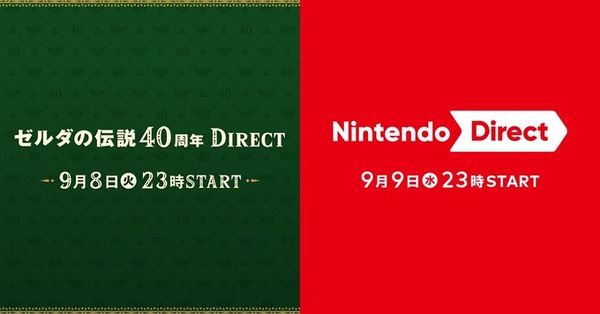
Nintendo announced that September will open with something unusual: two consecutive Nintendo Direct broadcasts. The first lands on September 8 at 23:00 Japan time, dedicated entirely to Zelda’s 40th anniversary. It runs roughly 30 minutes. The second follows the next night at the same hour—September 9—and covers the wider Switch 2 software lineup heading into winter.
This isn’t a scheduling accident. It’s a framing device. By bookending the anniversary event with a broader hardware-and-software push, Nintendo is making a quiet argument: Zelda isn’t nostalgia. It’s the cornerstone of the Switch 2 generation.
The Architecture of Two Broadcasts
Nintendo has never built a Direct around a single anniversary before. The 3DS era saw Pokémon Days, but those were shorter, lower-profile events nested inside regular programming. A standalone 30-minute Direct devoted to one franchise—especially one spanning four decades—is structurally distinct. It tells viewers this isn’t a mid-cycle check-in; it’s a statement of intent.
The second Direct the following night does the heavy lifting for the commercial ecosystem. That’s where winter releases land, where new Switch 2 titles get their windows confirmed, and where hardware promotions are typically seeded. Sandwiching the anniversary between these two events means Zelda’s cultural moment doesn’t exist in isolation—it immediately feeds into the purchasing funnel. Viewers who stay through the anniversary broadcast are still in the room when the software slate drops.
What the Source Doesn’t Say Out Loud
The Japanese coverage from techno-edge.net is measured, but the subtext is legible. Nintendo already confirmed that the Ocarina of Time remake is targeting a 2026 release—a title that was announced at the June Direct. The live-action film is locked for April 2027, with casting and first-look images released but the trailer still under wraps. And yet the article raises a question most English-language outlets won’t touch directly: why isn’t there a Zelda-edition Switch 2?
That omission matters. Switch 2 launched with bundled packages—Mario Kart World, Splatoon Raiders—but no first-party console variant tied to a flagship franchise. Four decades of Zelda, the single most globally recognized IP in Nintendo’s library, and there’s no themed hardware to match. The supply constraints of the launch window are a legitimate excuse, but by September, that window has closed. The silence around a possible Zelda console is a decision, not an accident.
Supply, Scarcity, and the Collector’s Vacuum
The absence of a Zelda console variant has second-order effects beyond fan disappointment. Nintendo has historically used themed hardware as a demand-generation tool. The Animal Crossing Edition Switch in 2020 sold out within weeks and created a secondary market premium that lasted months. The Mario Kart 8 Deluxe bundle similarly drove hardware attach rates during a critical software window. A Zelda-edition Switch 2 would have served that same function now—anchoring holiday demand to a franchise with built-in cross-generational appeal.
Without it, the September Directs become purely informational events. Fans leave without a pre-order link, a price, or a product shot. That’s a deliberate departure from Nintendo’s recent playbook, where Directs routinely convert attention into immediate commerce. The gap between announcement and purchase—the kind that themed hardware normally fills—simply doesn’t exist here.
Who Wins and Who Loses
The winners are clear. Zelda fans get a dedicated broadcast in an era where Nintendo tends to bury its biggest IP inside general Dirs. The 2026 Ocarina remake gets a second public moment without having to compete with indie announcements or minor DLC updates. And the broader Switch 2 ecosystem gets a sustained spotlight through the consecutive format.
The collector is the loser. A Zelda-themed Switch 2 bundle or Pro Controller would have turned both Dirs into instant commerce events. Instead, the coverage is purely informational. The franchise is being celebrated, but not monetized through hardware.
Why This Matters Beyond the Fanbase
English-language gaming media often treats Nintendo Directs as regional press events with global relevance. The reality is more strategic. Japanese coverage of this announcement focused on specifics—run times, broadcast platforms, the Ocarina timeline—while largely sidestepping the broader corporate picture. That’s a blind spot. Zelda is now the rare Nintendo franchise that operates as a multi-media pillar: games, film, merchandise, theme park integration, and increasingly, hardware identity.
The 40th anniversary fall lineup mirrors how Nintendo handled the Super Mario franchise in the late 2010s and early 2020s—building momentum across games, film, and hardware to sustain momentum between generational cycles. Mario had Odyssey, Super Mario Sunshine HD, then the Switch’s launch bundling. Zelda is getting its own rhythm now: Ocarina in 2026, the film in 2027, and whatever the September Dirs reveal in between.
The Live-Action Film as Strategic Bridge
One element deserves more attention than it’s receiving: the live-action film’s teaser hasn’t dropped. If Nintendo reveals even a 30-second preview at either September Direct, it transforms the anniversary from a gaming event into a cultural one. A trailer drop at a major gaming broadcast has precedent—the Super Mario Bros. Movie teaser at E3 2022 generated millions of impressions beyond Nintendo’s core audience. The film’s April 2027 release date gives Nintendo roughly two years of promotional runway, and each Direct becomes a checkpoint to sustain visibility.
A Zelda film presence at the September Dirs would also signal to Hollywood and theatrical distributors that Nintendo is treating this franchise as a cinematic franchise, not a one-off event. That positioning matters for the sequel conversation, for merchandising deals, and for how themes parks like Super Nintendo World integrate the IP long-term.
What to Watch Next
The October and November Dirs will determine whether Zelda’s 40th momentum carries into the holiday season or fades into a single pair of broadcasts. If Nintendo announces a Zelda-edition console in that window, the strategy is clear. If not, the franchise’s role in the Switch 2 era may be narrower than its history suggests—present, celebrated, but not driving hardware differentiation the way it once did with the original N64 and Wii.
One detail worth tracking: the live-action film’s teaser. The article notes the trailer hasn’t dropped. A teaser at either September Direct would bridge the games-to-film gap and give the anniversary event a second cultural moment beyond the gaming press. That’s the kind of move that turns a franchise anniversary into a mainstream news cycle.
The Dirs start September 8. What happens next depends on whether Nintendo treats 40 years as a milestone to acknowledge—or a foundation to build on.