Famitsu’s Zelda Remake Score Signals Nintendo’s Holiday Bet
Nintendo's Switch 2 gets its first major review score from Famitsu, and the Ocarina of Time remake lands at 37 out of 40. What the critics' notes reveal about the company's holiday strategy.
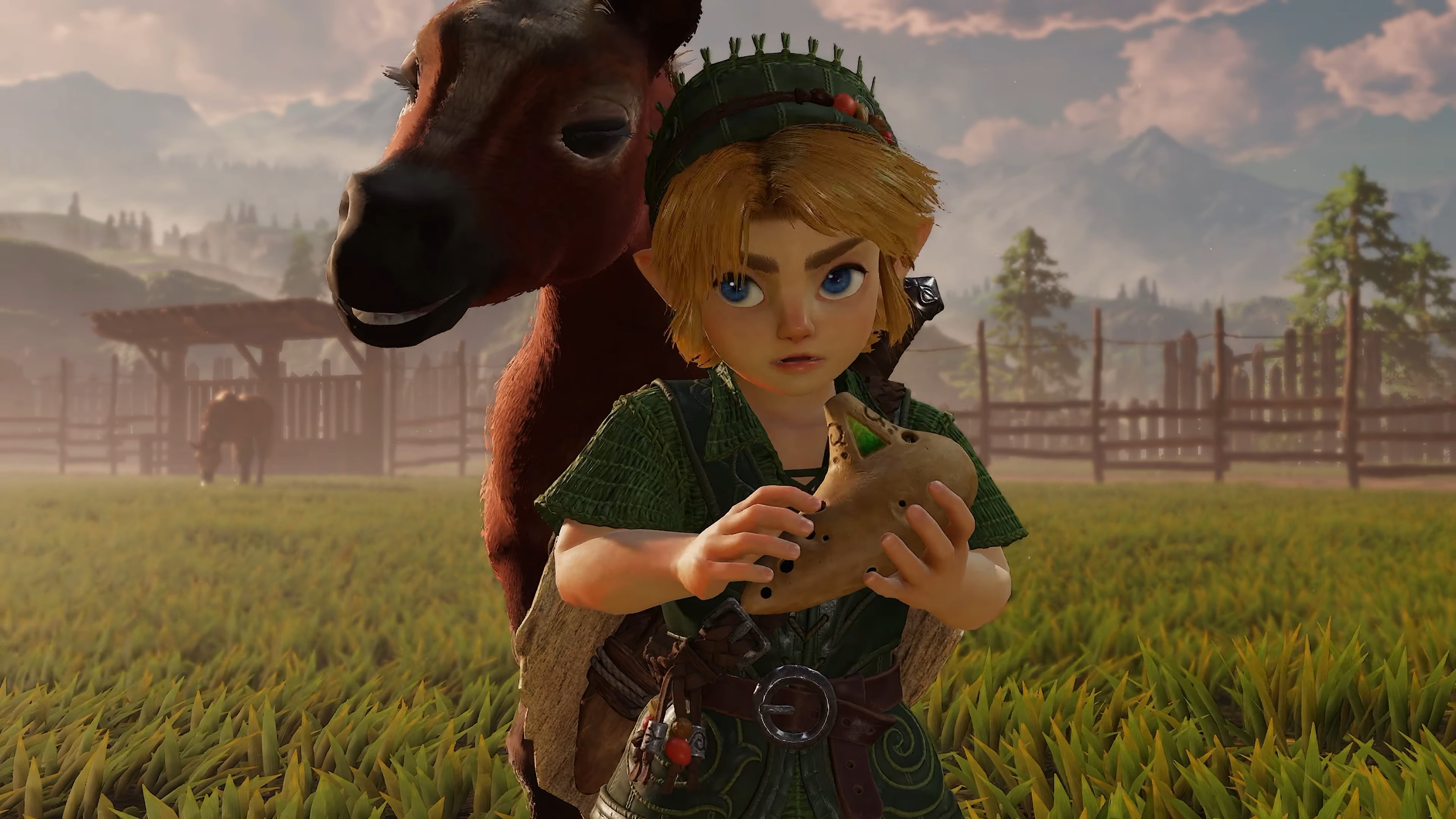
The Score Is Not the Story
A 37 out of 40 from Famitsu is a strong result — and it would be the headline if anything else were in the news. But that number arriving alongside a remake of a 1998 game, for a console barely two weeks old, is what actually matters here.
The Legend of Zelda: Ocarina of Time Switch 2 remake has arrived as Nintendo’s second-party title to earn a multi-critic score from Japan’s most influential gaming outlet since the console launched. That timing is deliberate. Ocarina drops on November 5, right in the thick of the holiday window when every point of purchase momentum counts. And Famitsu clearing its first impression from the page with this weight behind a legacy IP tells you everything you need to know about where Nintendo sees itself sitting in the market right now.
Famitsu’s scoring format assigns each of its four reviewers a maximum grade of 10 points, yielding a composite score out of 40. The four scores for this remake came in at 10, 9, 9, and 9 — an unusually tight cluster suggesting broad consensus rather than polarized opinion. When a remake secures such alignment among seasoned critics who have reviewed thousands of titles over decades, it carries meaning beyond the numerical total. It signals that even reviewers skeptical of the remake format found something defensible and well-executed within these walls.
Who Won This Round
Nintendo won. Let’s say that plainly.
The Switch 2 entered the world already carrying the shadow of mixed early reviews on hardware ambition, pricing, and whether backwards compatibility could smooth the transition. One powerful, emotionally legible Nintendo property landing high marks from a trusted Japanese critic panel helps rewrite that narrative fast. Famitsu gave the remake scores of 10, 9, 9, and 9 — a near-perfect spread, even if the gap from a perfect 40 is visible.
That gap itself is worth noting. The original N64 Ocarina of Time was Famitsu’s very first perfect 40 in its publication history. It was also reviewing a game that, quite literally, redefined 3D adventure design at a moment when the medium had almost no vocabulary for it. Context matters. A 37 today is not a 34 in 1998; it is a solid B-plus from four veterans who clearly enjoyed themselves but found something conventional rather than revelatory. Their objections — simpler than many modern titles, occasional moments of player confusion — read less like firewalls and more like honest distance from a work whose boldness belongs to another era.
But boldness isn’t what this release was hired to deliver. The goal here was emotional resonance, technical showcase, and a reason for people to take their Switch 2 out of the box and feel they made the right call. By that measure, the game succeeded. Video Games Chronicle, which published its own full review, described the visual overhaul and cinematic storytelling as giving the experience “the scale and spectacle of a modern blockbuster.” The hands-on preview echoed back nearly identical language: quality-of-life improvements, massive graphical changes, surprising new content, music arrangements designed to land in nostalgic memory.
Nintendo is betting that nostalgia, properly remastered, still moves units. And this score is evidence that the bet has legs.
There is also a strategic dimension worth flagging. Earlier this year, Nintendo acquired Next Level Games, the Toronto-based studio known for its work on Luigi’s Mansion and Mario + Rabbids spin-offs. Industry analysts have speculated about how that acquisition would be utilized, and the Ocarina of Time remake provides the clearest answer yet: next-generation hardware showcases built through close collaboration with acquired talent. Whether Next Level or internal teams led significant portions of this project, the pattern is recognizable — Nintendo is building an infrastructure capable of producing polished, high-budget remakes at scale.
The Remake Economy Just Got Reinforced
There is a broader industry implication lurking beneath this particular review.
For years, video-game remakes carried a reputation problem. They were perceived as safe, cash-grabby products aimed squarely at extracting value from aging intellectual properties while contributing relatively little new. Many critics and players have said so aloud, often fairly. But Nintendo appears to be quietly building an argument against that dismissal: that a remake done right — substantial enough to feel like a real product rather than a museum display — can attract genuine critical attention and generate authentic consumer enthusiasm without cannibalizing original sales in any meaningful way.
Ocarina of Time’s remake is coming only on Switch 2. This matters because it signals intent: Nintendo treats its catalog as a strategic asset, not just a financial one. If other publishers begin taking their own backlogs seriously with similar investment levels, the whole ecosystem shifts. We are likely to see more first-party remakes with actual budget and polish attached across the industry, not because nostalgia alone sells, but because Nintendo has shown that a well-executed one can anchor an entire hardware generation’s launch window.
The second-order effects may arrive before most observers expect them. Sony’s first-party remake pipeline has been notably slower to materialize despite possessing an equally deep catalog of classic IP. Microsoft, having absorbed Bethesda and Activision-Blizzard titles, faces different constraints around third-party licensing. Both companies will watch Nintendo’s results closely and likely adjust their own strategies accordingly. The next twelve months should clarify whether this is a Nintendo-specific play or an industry-wide inflection point.
Publishers outside the Japanese market — particularly those with sprawling legacy catalogs like EA, Capcom, and Sega — are already evaluating their own remake strategies through a new lens. A 37 from Famitsu sends a clear message: the bar has risen, and consumers will judge remake quality by the same standards applied to original releases.
Who Lost
Nobody lost directly from this review — but the implicit losers are the publishers who assumed “classic IP = guaranteed goodwill” without delivering the production values that justify the premium price tag. The bar is now higher. Famitsu noticed missing elements. Readers will notice them too. A half-hearted update will not survive judgment next time around, and neither will a publisher trying to pass off a port as a remake.
The third-party publishers waiting in the wings hoping Nintendo’s success opens doors for their own nostalgic re-releases should note the distinction: Ocarina works here because it is fundamentally Nintendo software, built by or closely supervised by Nintendo staff, targeting exactly the audience that bought the machine. That alignment is hard to replicate outside a first-party context.
Embracer Group and its various subsidiaries, which built a significant portion of their recent revenue on budget remasters of dormant IP, represent the opposite end of the spectrum. Their model depends on speed-to-market and cost containment rather than critical acclaim. As consumer expectations shift toward the standard Famitsu’s review reinforces, that model becomes increasingly fragile.
What Happens Next
November 5 is the release date. If pre-order momentum holds — and a near-perfect Famitsu score tends to help — then we will get our first clear data point on whether Switch 2 can sustain launch-period momentum beyond early adopters.
Beyond the hardware conversation, this review establishes a new benchmark for how legacy titles are evaluated in the modern marketplace.ファミ通 critics did not treat Ocarina of Time as sacred text to be worshipped uncritically; they treated it as a commercial product competing for attention in a crowded field. That professional distance, applied respectfully rather than punitively, lends the score more credibility than blind reverence ever could.
Expect other publishers to react within months, not years. The message from this review is simple: legacy IPs deserve full budgets again, but only if the final product earns it. The industry just got its benchmark.
Nintendo knows its most iconic IP can open doors. Whether anyone else can follow remains an open question — one the rest of 2026 will answer in fair amount.