Zelda Retold Shows Why Nintendo Tones Down Its Scariest Monsters
Development interviews reveal Nintendo intentionally scaled back ReDead horror in the Ocarina remake—yet they remain unnerving. What this tells us about how legacy franchises are being reimagined.
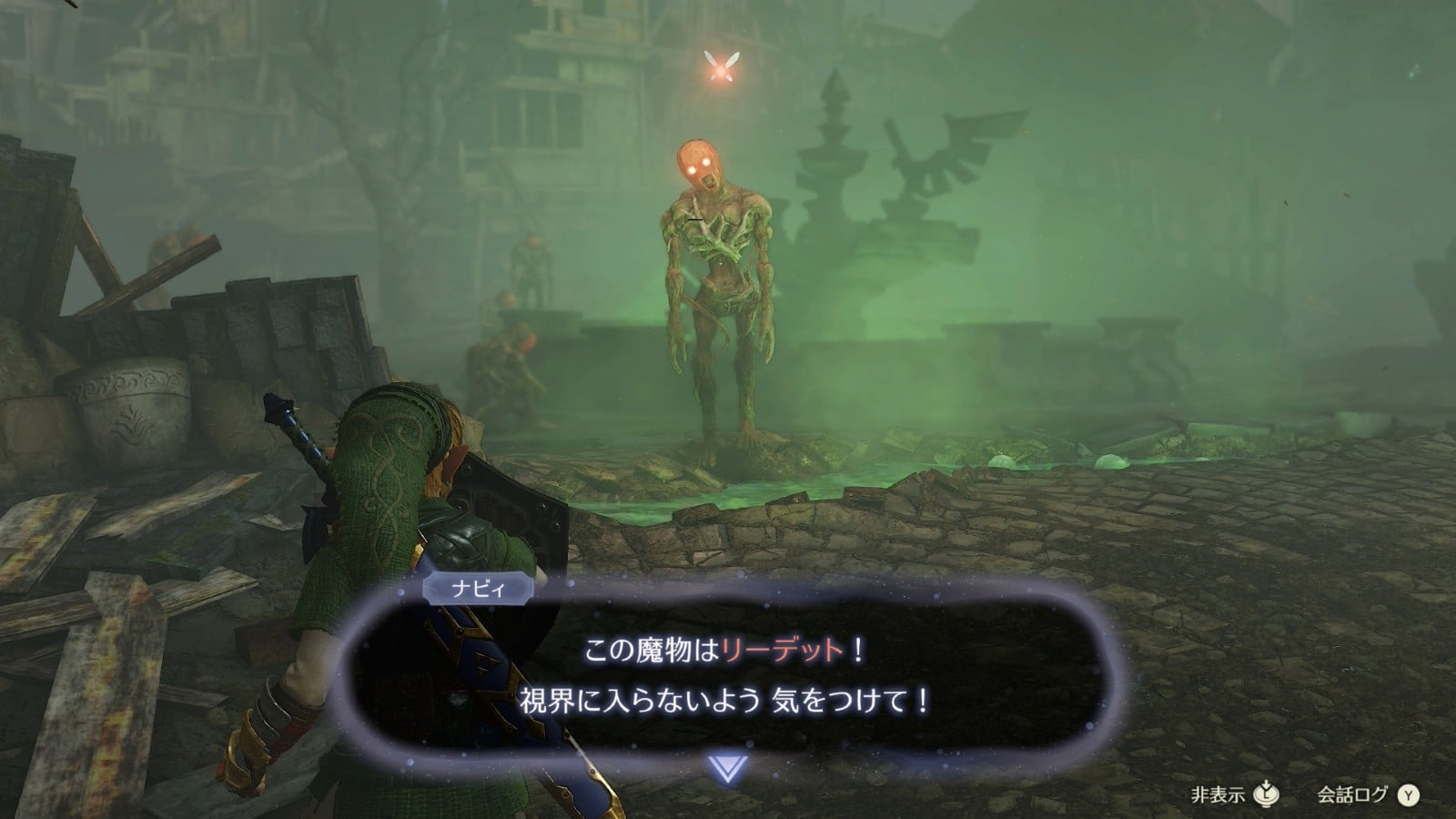
The Monster That Became Too Real
When Nintendo remade Ocarina of Time for the Switch 2, something unexpected happened along the way: the enemies got so frightening that developers themselves decided to pull back.
In interview comments cited by Automaton, producer Hidemaro Fujibayashi revealed that ReDead enemies—those slow, zombie-like creatures lurking in graveyards across Hyrule—were refined to a point where the team stepped back and reconsidered. The graphics overhaul made every detail visible: the texture of each mask, the unsettling animation, the sound design all hitting harder than the original N64 version ever could. Staff were deeply invested in crafting a genuinely effective horror sequence. Then someone took a breath and said: maybe we’ve gone too far.
That single moment of self-restraint says more about Nintendo’s current philosophy than any press release ever could.
What makes this revelation notable isn’t simply that a monster was dialed back—it’s that the disclosure itself exists. Nintendo rarely discusses development decisions of this nature publicly. The fact that Fujibayashi and his team at Good Feel, the studio contracted to handle aspects of the remake, chose to talk about pulling back on horror suggests an unusual level of transparency from a company that typically guards its creative process closely. This wasn’t leaked footage or fan speculation; it was an intentional statement, offered almost as an afterthought during promotional coverage. And yet its implications ripple outward.
What ReDeads Were Before the Remake
For those who haven’t played since 1998, ReDeads are essentially animated corpses wearing hollow masks. They shamble slowly toward Link but fire no projectiles—their attack comes as a paralyzing stare that freezes the player in place before they leap in for a draining bite. Sun’s Song or a hookshot can interrupt them, giving you a window to escape or counterattack. They appeared throughout the original game’s world and, seven years later, also in the transformed lower town of Hyrule Castle.
What made them memorable wasn’t just difficulty. It was atmosphere. The silence before the scream. The way your controller suddenly went dead while some grotesque figure loomed over you. That tension defined a generation of gaming fear.
Now, with higher fidelity rendering, that same creature has become something else entirely. Social media reactions to the remake confirm it: players find ReDeads scarier now, not less. Their movement speed has increased. The facial details on their masks have been rendered with disturbing clarity. They chase Link with noticeably greater purpose.
And yet Fujibayashi confirms that even these enhanced versions represent a deliberate reduction from an earlier prototype.
The original ReDead design in Ocarina of Time was already formidable within the technical constraints of the Nintendo 64. Their cry—a guttural, distorted wail—was engineered specifically to trigger discomfort, and it worked precisely because the limited polygon count forced players’ brains to fill in the gaps. Imagination does heavy lifting in horror, and the N64-era ReDead understood that implicitly. Every jagged edge of their sprite suggested something worse than what was actually visible.
With modern rendering capabilities, that imagination gap has narrowed significantly. Textures capture the cracking of dried skin. Animation curves convey genuine malice in the way these creatures pivot toward Link. Sound engineers had room to layer additional audio elements—wet footsteps, low breathing, the subtle shift of empty eye sockets tracking movement. What was once abstract nightmare fuel became concrete terror.
This technological precision created a new problem: the monsters stopped feeling like obstacles and started feeling like threats. Not gameplay threats, but existential ones. Players reported genuinely uncomfortable experiences—not the thrilling scare of a jump moment, but the lingering dread of being hunted by something that seemed to understand its prey. That distinction matters when you’re working within a franchise built around adventure rather than anguish.
The Pattern Behind the Decision
This isn’t an isolated incident. Across the industry, major remakes face the same tension between technological capability and creative judgment.
Consider how recent reimaginings of classic franchises have handled similar choices. When Resident Evil 4 was remade, the developers debated whether Leon’s takedown animations should be more brutal. When Silent Hill 2 arrived on modern platforms, visual upgrades brought new controversy over explicit imagery. Each time, a question emerged: does improved fidelity serve the experience, or does it overwhelm what made the original work?
Nintendo appears to have answered this question differently than most studios. Rather than asking “what can we add?” the team asked “what would break the original’s balance?” The result suggests a studio confident enough in its own vision to say no—to its own technology.
There’s another layer here worth examining. The timing matters. This reveal came alongside promotional material for the Switch 2 launch window, positioned as a behind-the-scenes curiosity rather than a central selling point. Nintendo didn’t need to advertise that they’d considered going darker. The decision itself became proof of discipline.
The broader pattern extends beyond individual monsters. Nintendo’s approach to remaking classics reveals a consistent philosophy: preserve the emotional architecture while updating the visual language. This means resisting the temptation to maximize every element. A remake that amplifies everything—every scare, every challenge, every visual flourish—risks becoming something different entirely, something that honors the source materially but betrays it tonally.
Who Benefits From Restraint
The people who benefit most from Fujibayashi’s call to dial back the horror aren’t hardline fans seeking authenticity—they’re new players encountering this series for the first time. A fully realized ReDead horror sequence might alienate younger audiences or casual players drawn in by the family-friendly surface of Zelda branding.
Nintendo has long walked a careful line. The company markets its franchises as accessible entertainment while embedding surprisingly intense experiences within them. The original Ocarina of Time contained dark themes wrapped in colorful presentation. The remaster maintains that balance by pushing fear just far enough without crossing into territory that could feel exploitative or gratuitous.
But here’s the catch: even the toned-down version terrifies people posting screenshots online. If the unrefined cut-data version existed—if anyone managed to capture footage of what Fujibayashi described as the ‘full force’ ReDead sequence—it would likely spark discussion well beyond gaming circles. That conversation never happened because Nintendo chose not to let it happen.
The second-order effect of this restraint is worth tracking. By admitting they reconsidered their approach, Nintendo opens a conversation about intentionality in game restoration. Other studios facing similar decisions may now have a framework: technology shouldn’t dictate creative direction, and the best remake isn’t necessarily the one that uses every tool available. This philosophy, if adopted more broadly, could shift how the industry approaches its growing catalog of classic IPs waiting for modernization.
There’s also a commercial calculation beneath the artistic choice. A remake that leans too heavily into horror risks narrowing its audience. The Ocarina of Time remake serves not just nostalgic millennials but a new generation discovering Zelda through ports, streams, and recommendations. Keeping ReDeads appropriately menacing rather than traumatizing ensures the experience remains accessible without becoming forgettable.
What This Signals Going Forward
The ReDead story arrives at a moment when legacy IP treatment dominates industry conversations. Studios everywhere are reconsidering how much change a classic deserves during revitalization. Some go all-in on modernization. Others tread lightly.
Nintendo’s approach lands somewhere in between. It acknowledges technological possibility without surrendering to it. It respects fan memory while recognizing that today’s players see differently than those twenty-eight years ago.
Whether this philosophy extends beyond Zelda remains unknown. But the signal is clear: improvement doesn’t require escalation. Sometimes the boldest creative choice is stepping away from what your tools allow you to build.
The ReDead reconsideration will likely join the ranks of development stories that emerge retroactively—details discovered after launch that reframe how players experience the final product. Knowing that Nintendo actively resisted creating something even scarier changes nothing about the fear that ReDeads now inspire, but it transforms the entire exercise from technical achievement into moral one. The question shifts from “could we make this scarier?” to “should we?”
And the answer, quietly delivered through a journalist interview rather than a marketing campaign, proves that the most memorable moments in gaming remakes might not be the ones that push boundaries forward, but the ones that choose where to draw the line.
The Legend of Zelda: Ocarina of Time HD is available now for Nintendo Switch 2.