Zelenskyy's Plane Nearly Struck as Russian Drone Stalks NATO Airspace
A Russian Shahed drone spent nearly an hour threading through Moldovan and Romanian airspace while Volodymyr Zelenskyy was in the region, nearly hitting his plane on takeoff. The incident exposes a dangerous gap in allied air defense and signals how far Russia is willing to push.
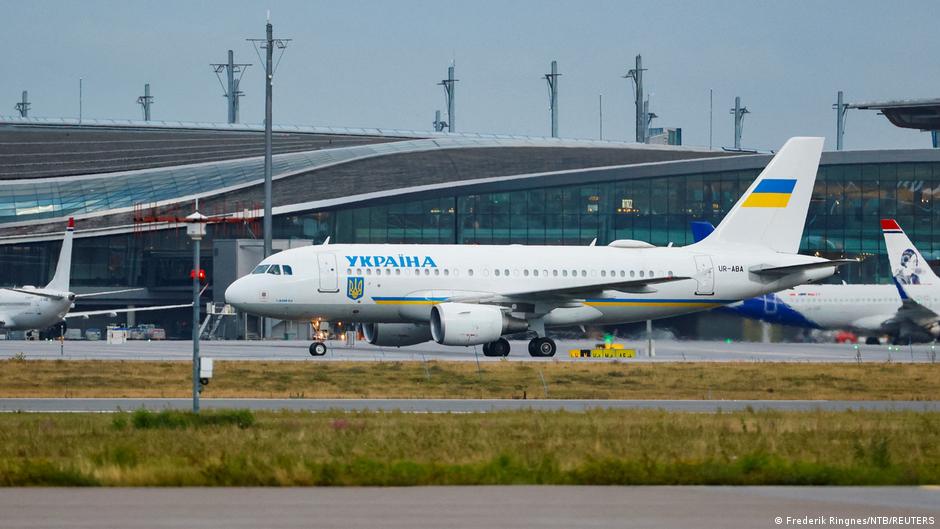
The drone was flying while the president was breathing
Norwegian Prime Minister Jonas Gahr Store offered a line that should haunt every NATO capital: His country had been hosting a living head of state whose plane almost went down, and no one shot the drone out of the sky.
Store told NRK on Wednesday that a Ukrainian drone strike nearly hit Volodymyr Zelenskyy’s aircraft as it took off from Moldova. The plane was bound for Oslo, where Zelenskyy was to attend the funeral of King Harald V. Store said Zelenskyy then left Norway for Canada to meet with leaders in Ottawa.
No details were given about the exact nature of the near-miss. The timeline is what matters: a Russian Shahed drone — a type designed for long-range strikes against population centers — was threading through Moldovan and Romanian airspace on Tuesday, and Zelenskyy was there at the same time.
What the drone did that morning
The Institute for the Study of War tracked the flight. According to ISW, the Shahed entered Moldovan airspace from Ukraine, crossed into Romania for roughly an hour, then returned to Moldova before crashing on Moldovan territory.
Moldova’s government confirmed that its airspace was closed temporarily over a drone alert and that Zelenskyy’s flight was delayed. A spokesperson said a Russian drone came down on Moldovan soil. Ukraine and Zelenskyy himself have not commented on the incident. A Moldovan official later described Store’s characterization as exaggerated.
The word “exaggerated” carries weight here. It is not a denial. It is a calibration — an attempt to pull the temperature down without contradicting the basic fact that a Russian weapon was in the air above a NATO country while a sitting Ukrainian president was on the ground below it.
The geography is the story
Romania has been a NATO member since 2004. It hosts U.S. missile defense systems at Deveselu. It shares a border with Moldova, which is not in the alliance but is deeply integrated with the European Union.
A Shahed flying over Romanian territory for an hour is not a malfunction. It is not an accident. It means the drone’s operator knew the route, and it means the drone’s systems kept working through an entire corridor of allied airspace. That is either boldness or recklessness — and both are useful to Moscow right now.
The drone entered from Ukrainian territory, which suggests either a Ukrainian-origin Shahed was hijacked or, more likely, Russia launched it from a staging area inside Ukraine and directed it eastward through Moldovan and Romanian airspace. Either scenario points to the same conclusion: Russia is mapping how far it can push into the NATO perimeter without triggering Article 5.
Who wins and who loses
Russia wins in three ways from an incident like this.
First, it tests the alliance’s reaction threshold. Does Romania call NATO’s council? Does Norway express alarm louder than Moldova does? The uneven responses — Store’s strong language, Chișinău’s careful downplaying — are exactly the kind of friction Moscow wants to cultivate.
Second, it exposes a coverage gap. Romania and Moldova do share airspace, but coordinated air defense integration between a NATO member and a non-member neighbor is not seamless. That is a structural weakness, not a one-time failure.
Third, it personalizes the war. Zelenskyy has survived numerous drone and missile attacks inside Ukraine. Being nearly killed on a diplomatic flight — over neutral or allied territory — changes the psychological calculus for every leader who considers traveling to the region. It makes the risk tangible in a way casualty reports never do.
Ukraine loses because the incident reinforces a narrative Russia has been pushing for months: that the war is spilling beyond its borders and that Western support is not enough to contain the fallout. Norway, Romania, and Moldova all feel the pressure of having to reassure their publics without escalating themselves.
What happens next
Store’s comments signal that Norway is treating this as a serious breach, not a routine border incident. That is significant because Norway is not the usual chorus on Ukraine — it is a steady, practical supplier of military aid, and its leadership tends to speak plainly when something crosses a line.
Romania will face immediate questions about its air defense posture. The country has been expanding its defenses for years, but a Shahed flying undetected or unchallenged for an hour still raises uncomfortable questions about coverage gaps, especially in the corridor between the Black Sea and the Romanian-Moldovan border.
Moldova is in the most precarious position. It is not in NATO. It is not in the EU. It borders a war zone and has faced its own Russian-backed destabilization campaigns. The government’s choice to describe Store’s account as exaggerated is not necessarily dishonest — it may reflect a desire to avoid being dragged into a broader confrontation. But it also means Chișinău is absorbing the risk while having the least capacity to mitigate it.
The ISW noted the drone crashed in Moldovan territory. That is another data point Russia can use to claim operational reach, and it is one NATO cannot easily dismiss as defensive. This was not a Ukrainian strike on a Russian military target. It was a Russian weapon flying through allied space.
The real implication
The near-miss on Zelenskyy’s plane is not the story. The story is what it represents: Russia is conducting reconnaissance in depth against NATO’s eastern flank using the cheapest platform available. A Shahed costs tens of thousands of dollars. The diplomatic and defensive response it provokes costs far more.
If this happens once, it is an incident. If it happens again — and there is no reason to believe it will not — it becomes a pattern. And patterns force decisions. NATO will eventually have to decide whether a drone crossing its airspace without interference is an act of war, a probe, or simply the new normal. The allies have until that moment arrives to pick an answer. Right now, they are still pretending the question does not exist.