Zelenskyy's Red Line Challenges the US-Russia Peace Track
Zelenskyy drew a hard line in an ABC interview: a ceasefire freeze is possible, but conceding 25 percent of Ukrainian territory is not. The statement is a direct challenge to the US-brokered negotiation track and could strain Washington-Kyiv relations ahead of Abu Dhabi talks.
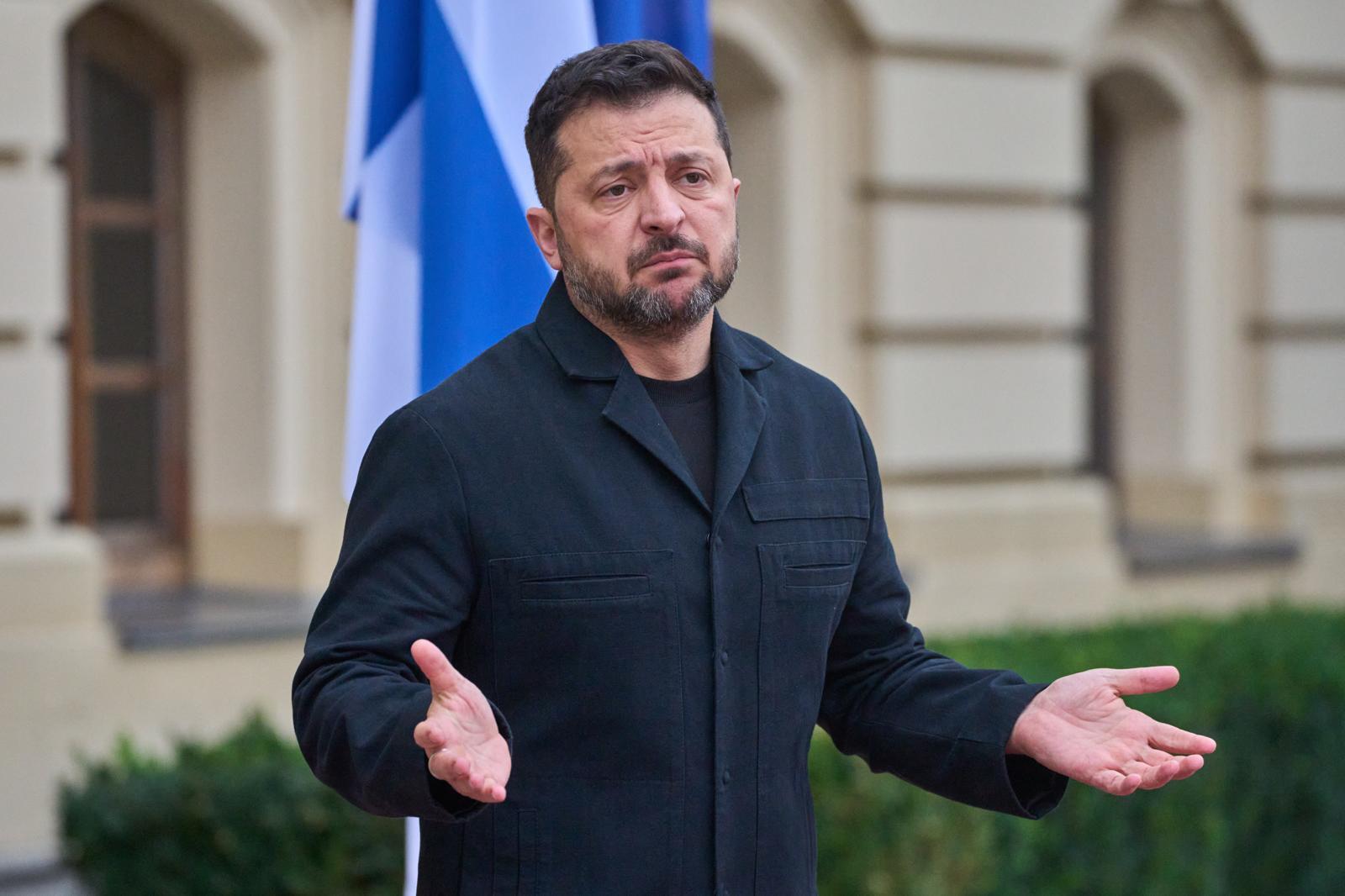
Zelenskyy’s Two Lines
Volodymyr Zelenskyy has drawn two lines in the sand, and they intersect at the exact moment the United States is trying to broker a way around them.
In an ABC News interview on October 23, the Ukrainian president said Kyiv is preparing for a front-line freeze — a ceasefire along current positions — but will never accept the cession of territory. Ukraine currently holds roughly three-quarters of its internationally recognized land. The remaining quarter, including Crimea and large swaths of the Donbas, has been under Russian control since 2014 and the full-scale invasion that followed in 2022.
He repeated the same stance on domestic Ukrainian airwaves the day before. It was not a pivot. It was a hardening.
The timing matters more than the words. Washington has been pushing Kyiv toward concession for months, and President Donald Trump has publicly signaled frustration that the peace process is stalling because of what he calls Ukrainian intransigence. The next round of trilateral talks between Russia, Ukraine, and the United States is scheduled for early November in Abu Dhabi, focused on the security arrangements that would follow any agreement. Zelenskyy’s interview was a message aimed squarely at that process.
The Numbers Behind the Threat
The interview also laid bare how exposed Ukraine has become. Zelenskyy said the United States delivered just 24 Patriot interceptor missiles over the previous three months. Kyiv needs roughly 350 per month to defend its skies. That is less than one missile for every ten required.
The deficit is not theoretical. On the night of October 22 alone, Russia fired 30 ballistic missiles at Kyiv. The capital’s air defenses were overstretched, and the gap between what Washington sends and what Kyiv needs is widening at the worst possible moment.
This is the concrete pressure behind the rhetoric. The United States is simultaneously asking Ukraine to freeze the conflict and withholding the means to survive while the fighting continues. The contradiction is stark.
Who Wins, Who Loses
The stakes of this posture are layered.
For Zelenskyy, the gamble is domestic survival. Any Ukrainian leader who accepts territorial concession after 800,000 dead and millions displaced faces an immediate political reckoning. The red line is a shield against that reckoning. It also keeps European capitals — particularly Berlin, Paris, and Warsaw — aligned, because they have been quietly sympathetic to Kyiv’s sovereign concerns even as they worry about the war’s economic toll.
For Trump, the calculation is different. He has framed the war as a deal he can close, and each day of fighting undermines that narrative. The pressure on Kyiv is meant to force a breakthrough before the winter deepens and before European publics grow more restless about their own defense spending. But the pressure is also creating a credibility problem. If the United States pushes a deal that looks like capitulation, it weakens the alliance framework for every future conflict.
For Putin, the interview is both a setback and an opportunity. A front-line freeze along current positions would codify Russia’s gains — the very outcome Moscow has sought since 2022. But a deal built on Ukrainian coercion, even a partial one, carries its own risks. An illegitimate agreement sows the seeds of its own collapse, and Russia’s leadership knows that.
For Europe, the danger is structural. If Washington abandons Kyiv’s territorial integrity to secure a quick deal, the European security architecture loses its moral center. Poland, the Baltic states, and the Nordic countries have already recalibrated their defense budgets. A US-Russia arrangement made without genuine Ukrainian consent would accelerate that drift toward strategic autonomy — and deepen the fissure between Washington and its oldest allies.
The Abu Dhabi Problem
The talks scheduled for early November in Abu Dhabi are supposed to focus on security guarantees that would follow any peace agreement. That phrasing assumes an agreement exists. Zelenskyy’s interview suggests it does not — or at least not on terms either side will accept.
The format itself is notable. The United States is positioning itself as the primary mediator, with the UAE as host. Russia’s Kremlin spokesperson, Dmitry Peskov, confirmed the talks would address post-agreement security decisions. That sequencing is deliberate: it implies Moscow and Washington have already agreed on the political terms, and the discussion is now about enforcement. Kyiv is being asked to ratify a framework it had no hand in designing.
If Zelenskyy enters Abu Dhabi with his red line intact — and there is no indication he will soften it — the talks risk producing nothing more than a public disagreement between the United States and Ukraine. That outcome would be worse than no talks at all, because it would expose the cracks in the transatlantic alliance for everyone to see.
What Happens Next
Three scenarios are plausible.
The first is that the United States moderates its pressure. European capitals would welcome this, and it would preserve the alliance. But it requires Trump to accept a longer war, which conflicts with his core political incentive.
The second is that Zelenskyy holds his line and the talks stall. This preserves Ukrainian sovereignty in name and keeps the alliance intact, but it leaves the war unresolved and the killing to continue. It also risks angering Washington, which could respond by further reducing aid — a move that would make the military situation on the ground far more dangerous than the diplomatic one.
The third is that the United States and Russia reach a bilateral understanding and present it to Kyiv as a fait accompli. This is the scenario most likely to fracture the alliance. It would leave European partners without a say and force Ukraine into an impossible choice: accept an imposed settlement or fight alone. Neither option strengthens Western cohesion.
Zelenskyy’s ABC interview was not just a statement of principle. It was a signal that Kyiv is aware of that third scenario and is preparing to resist it publicly. Whether resistance will hold depends on whether Europe is willing to fill the gap left by American pressure — and whether Trump is willing to accept that some wars cannot be closed with a headline.
The next few weeks in Abu Dhabi will answer that question.