Zelenskyy Clashes With Trump Envoys in Oslo
Trump's personal envoys reprimanded Zelenskyy over anti-Trump remarks, revealing how Washington's shifting politics are reshaping Kyiv's diplomatic survival strategy.
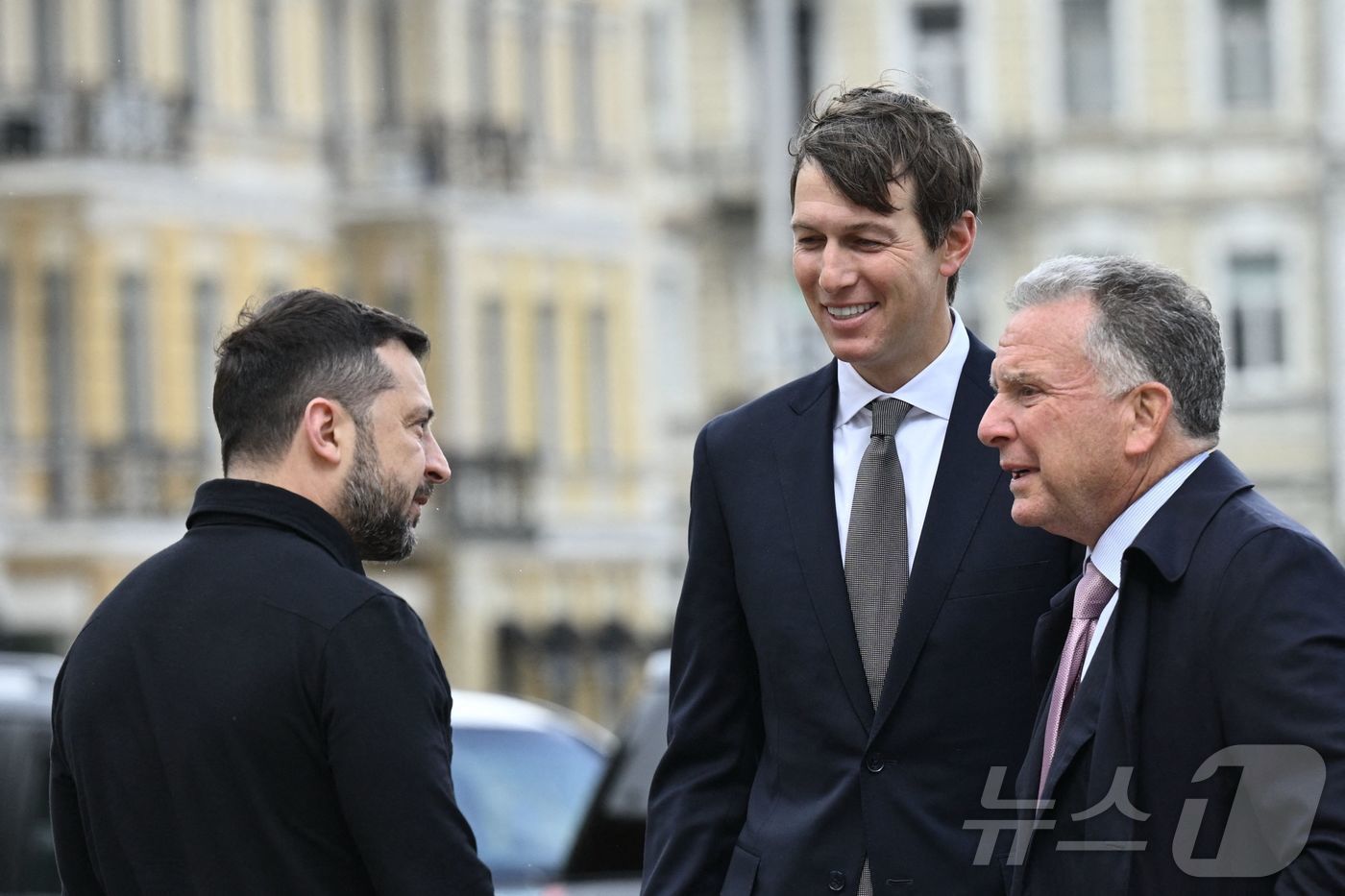
A Meeting That Wasn’t About Ukraine
The Oslo meeting on September 20 was supposed to be about peace. Instead, it became a lesson in how power works when one superpower’s foreign policy is inseparable from its domestic politics.
Steve Witkoff, serving as Donald Trump’s personal envoy, and Jared Kushner, Trump’s son-in-law and increasingly influential advisor, sat across from Volodymyr Zelenskyy — or, in Kushner’s case, appeared via video link — and told the Ukrainian president that his public criticism of Trump had crossed a line.
The meeting, reported by the New York Times as a private discussion, revealed a friction that Western coverage has largely flattened into tidy pro- or anti-Trump narratives. What actually happened in Oslo matters because it shows how Ukraine’s most powerful ally is renegotiating the terms of its support — not through Congress, not through NATO channels, but through personal intermediaries who answer directly to one man.
The Reprimand
According to sources familiar with the conversation, Witkoff and Kushner pressed Zelenskyy on remarks he had made publicly criticizing the Trump administration. The envoys made clear that Trump was angry — and that Zelenskyy’s willingness to push back publicly was unacceptable.
Zelenskyy pushed back in return. At one point, he denied making certain statements outright, according to those present. The exchange was neither scripted nor staged; it was a genuine clash between a leader fighting for his country’s survival and envoys enforcing the political discipline of the administration funding that fight.
What makes this striking is the setting. Oslo, a capital known for its peacemaking aspirations, hosted a confrontation that had little to do with Russian missiles and everything to do with American politics. The meeting was convened to discuss Ukraine’s future. It ended with Zelenskyy being told — in no uncertain terms — that his public voice was a liability.
Those familiar with the exchange described an atmosphere that shifted rapidly from cautious dialogue to something sharper. Witkoff, a real estate developer and longtime Trump associate who had recently been tapped as a personal envoy, pressed Zelenskyy on a series of comments the Ukrainian president had made in recent weeks, including suggestions that the Trump administration was not doing enough to press Moscow toward meaningful negotiations. Kushner, appearing remotely from a secure location in Washington, reportedly conveyed the president’s frustration more directly, with sources saying his tone grew noticeably colder as the discussion progressed.
Zelenskyy’s denials were partial. He admitted to expressing policy disagreements, consistent with a president’s right to articulate his nation’s position, but rejected the characterization that his remarks constituted a personal attack on Trump. The envoys, according to participants, were unmoved by this distinction. In their framing, intent mattered less than impact — and the impact, from Trump’s perspective, was eroding the political foundation of continued American support.
The Aftermath: Damage Control
Post-meeting, Zelenskyy pivoted hard toward conciliation. Speaking to journalists, he avoided any mention of the dispute and emphasized that the talks had been “very constructive.” He thanked the US for resuming intelligence support on Russian attacks and said he had received “positive signals” from Secretary of State Marco Rubio during a phone call en route to Oslo.
The contrast between what happened behind closed doors and what Zelenskyy projected afterward is itself a story. A leader whose country is under invasion cannot afford to let a diplomatic spat become public. Every word he chooses is weighed against the cost of American weapons, American intelligence, American political will.
But the subtext is unmistakable: Zelenskyy was put in his place. Not through sanctions or aid cuts, but through a private conversation in a third-country capital.
European diplomats who followed the meeting’s aftermath noted a notable silence from Kyiv’s usual communications apparatus. The Ukrainian Foreign Ministry issued a standard press release referencing the productive nature of bilateral consultations. Social media accounts aligned with the presidential office amplified footage of Zelenskyy shaking hands with Norwegian officials, carefully sidestepping any reference to the Americans he had met hours earlier. The absence of detail was as eloquent as any statement.
Within Kyiv’s policy circles, the reaction was more candid. Several senior officials, speaking on condition of anonymity, described the encounter as a stark reminder that Ukraine’s strategic autonomy exists only within the bounds of American tolerance. One official characterized the meeting as “a lesson in realpolitik delivered by people who don’t even hold public office.”
How Trump’s Foreign Policy Actually Works
The New York Times framed the incident as part of a broader pattern — Trump’s habit of publicly berating foreign leaders and then demanding deference when they resist. Other nations’ leaders, the paper noted, are wary of triggering additional tariffs or withdrawn support by engaging in public spats.
This dynamic is not new in Trump’s first term. But it takes on a different gravity when the country being disciplined is actively at war and dependent on American military aid. The leverage is structural, not rhetorical.
Witkoff and Kushner occupy an ambiguous space in the US diplomatic hierarchy. Neither holds a Senate-confirmed position. Neither is bound by the usual protocols of the State Department. They are, in effect, personal representatives of the president — which means their authority derives entirely from Trump’s continued favor. That makes them unpredictable, but also dangerously effective.
When these envoys tell Zelenskyy that his words have caused “real anger” at the top, they are transmitting more than feedback. They are enforcing a relationship model where loyalty — or at least the appearance of it — is a condition of support.
The implications extend well beyond Ukraine. Allied capitals across Europe and Asia have been watching closely, drawing their own conclusions about the reliability of American commitments when they are mediated through unelected intermediaries operating outside normal diplomatic channels. Defense ministers in Berlin, Paris, and Tokyo have reportedly begun drafting contingency plans that assume a lower baseline of American reliability than their predecessors did.
Analysts at the Brookings Institution and the Council on Foreign Relations have noted that the Witkoff-Kushner model represents a significant departure from the institutionalized approach to alliance management that defined postwar American statecraft. Rather than working through established channels — the State Department’s European Bureau, NATO’s political councils, structured summits with predictable agendas — Trump’s reliance on personal envoys creates a system where policy can shift abruptly based on private conversations with no paper trail and no institutional memory.
What Ukraine Can’t Say Out Loud
Zelenskyy’s post-meeting optics — gratitude, restraint, emphasis on constructive dialogue — mask a country standing on a fault line. The war with Russia has not paused for American electoral calculus. But the calculus is reshaping the terrain on which Kyiv fights.
The question now is whether the reprimand was a one-time exercise or a new normal. If Witkoff and Kushner are signaling that future engagement will come with behavioral conditions, then Ukrainian diplomacy will need to navigate a channel that runs directly from the Oval Office, bypassing every institution that historically insulated foreign policy from presidential whim.
For European allies watching from the sidelines, the Oslo incident should be unsettling. If the United States’ primary ally in Europe can be publicly rebuked by unelected envoys over the tone of his criticism, then the security architecture that Washington has maintained for decades is undergoing a quiet but fundamental revision.
The missiles heading toward Kyiv haven’t changed their trajectory. But the hand guiding America’s response to them has.
What emerges from Oslo is a picture of a war that is being fought on two fronts simultaneously — one against Russian forces on the ground, another against the shifting tectonic plates of American politics. Zelenskyy’s challenge is no longer merely military or diplomatic in the traditional sense. It is also performative: he must project strength and resolve publicly while exercising an almost impossible degree of caution privately, knowing that any misstep could be interpreted as disloyalty and met not with Congressionally debated aid restrictions but with a private phone call from a presidential envoy.
The second-order effects are already visible. European defense spending commitments are accelerating, not because continent-wide threat assessments suddenly changed, but because Kyiv’s treatment in Oslo served as a case study in what happens when the American security guarantee becomes conditional on compliance rather than shared interest. NATO’s eastern flank is reconfiguring itself around the assumption that Washington’s commitments may be more volatile than previously believed.
And perhaps most quietly, a generation of Ukrainian officials who once trained for careers in Western-style diplomacy — fluent in the language of multilateral institutions, accustomed to working through established international frameworks — are now being forced to adapt to a system where the most important conversations happen in hotel suites and secure video calls, mediated by men who owe their influence to personal proximity rather than public mandate.
The Oslo meeting produced no joint statement, no announced breakthroughs, no clear roadmap for peace. Its significance lies precisely in what it revealed: that the war’s outcome will be shaped not only by battlefield dynamics and Russian economic endurance, but by the inner workings of an American administration that treats even its closest allies as subjects in a personal political project.