Zelenskyy Signals Willingness to Meet Trump Over Peace Deal as War Intensifies
Zelenskyy describes the US peace proposal as reasonable and wants a September meeting with Trump. Putin's aide calls negotiations constructive. The convergence raises questions about what Kyiv is willing to concede after 4½ years of war.
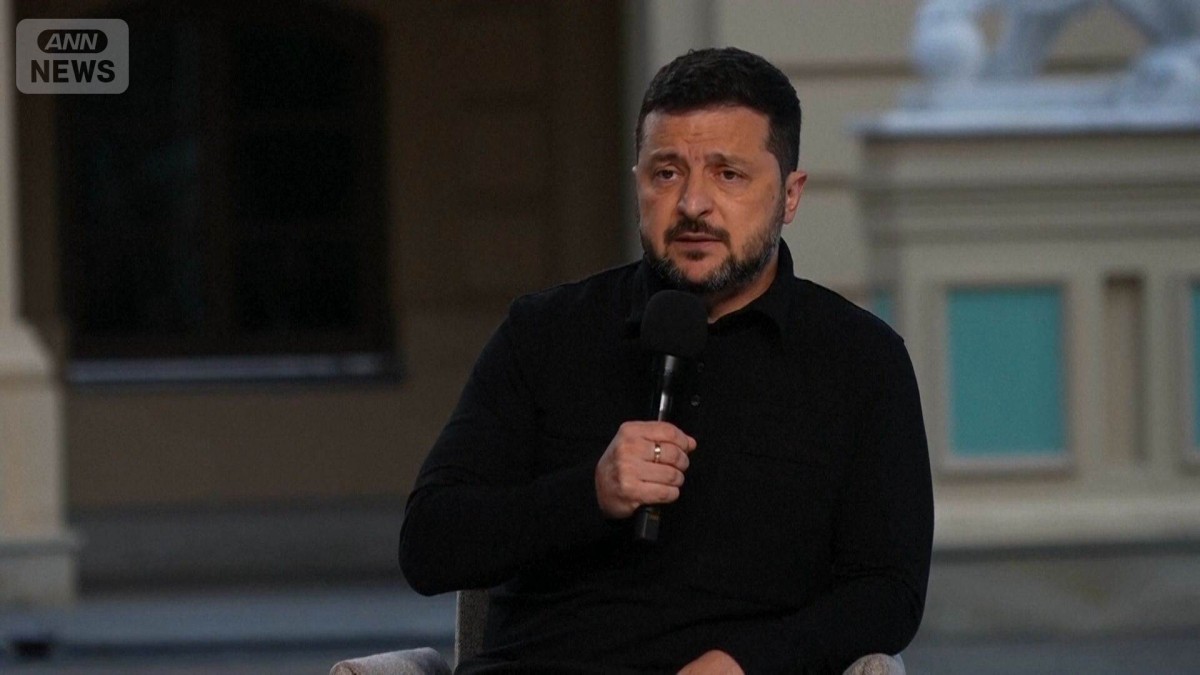
A Quiet Shift in Kyiv’s Position
Volodymyr Zelenskyy has done something surprising for a Ukrainian president who has spent four and a half years insisting that no territory can be traded for peace. He called the latest American peace proposal a reasonable one. He said he wants to meet Donald Trump this month. It is not a surrender. But it is a clear signal that Kyiv’s diplomatic posture is adjusting — and fast.
The words landed on the same day that Japan’s major broadcast networks placed the story on their international headlines. That alone tells you how much attention Asia is paying. For Tokyo, the implications reach well beyond the Black Sea.
What makes this shift notable is not just the content of Zelenskyy’s statement but its timing. Kyiv has faced mounting pressure on multiple fronts: battlefield attrition along the eastern line, sustained Russian strikes on energy infrastructure through the autumn, and growing uncertainty about the continuity of Western military aid. The American proposal, first circulated through backchannels in late August and formally presented by Special Envoy Steve Witkoff in early September, appears to be a framework that Kyiv can either accept or risk being left further behind.
What the Peace Terms Actually Mean
We do not yet have the full text of the US proposal. What we do know is that Zelenskyy called it 妥当なもの — a proper or adequate framework. In diplomatic language, that is notable softening. For months, Kyiv’s position was binary: restore the 1991 borders or nothing. The shift to calling a plan reasonable suggests Kyiv is now evaluating trade-offs rather than rejecting them outright.
The proposal reportedly includes provisions for a provisional demilitarized zone along current contact lines, phased sanctions relief for Russia tied to verification milestones, and a security guarantee package for Ukraine that would involve bilateral treaties rather than NATO Article 5 membership — at least in the initial phase. Those details have not been confirmed by either Washington or Kyiv, but they align with what sources in both capitals have privately discussed with journalists over the past three weeks.
Russia’s side is moving in parallel. An aide to Vladimir Putin described recent talks as constructive. That is itself a coded shift. Moscow has spent years portraying any Western-brokered negotiation as illegitimate interference. A senior Russian official using the word constructive implies that the Kremlin is taking the American proposal seriously enough to discuss it.
Both sides talking about a US framework at once is not a coincidence. It means Washington is finally serving as a channel both capitals will accept — however reluctantly. The previous mediation efforts involving Turkey, China, and various European mediators failed because neither side trusted the intermediary. Trump’s personal relationship with both leaders, however transactional, gives him an access that professional diplomats never achieved.
Why the Timing Matters Now
September 2026 is more than four and a half years into the war. Both sides have intensified their attacks. The Japanese timeline coverage flagged escalating strikes from Kyiv and Moscow in early September. That intensity creates pressure for an exit ramp before the winter fighting season locks in positional gains on the ground.
The Russian offensive in the Donetsk region has pushed Ukrainian forces back approximately eight kilometers since June. Ukrainian drone strikes have disrupted Russian logistics along the M4 highway, but the cost of that disruption is rising. Russia has shifted much of its military production to a wartime footing, outputting artillery shells and air defense interceptors at rates Ukraine and its partners cannot match.
Trump’s domestic position also matters. Polling in the United States has shown his approval rates near historic lows. A diplomatic win in Europe would be a powerful counterweight. It is not naive to assume that political calculus in Washington influences how aggressively the administration is pushing this proposal — or how much leverage it is willing to extend to Kyiv.
There is also a narrower window. The US Congress is approaching a fiscal year-end vote on supplemental aid that could be stripped entirely if Trump brokers a deal without Congressional input. Kyiv understands that every week of delay makes the post-war security architecture more dependent on American goodwill rather than legal commitment.
What Japan Is Really Watching
The reason so many Japanese outlets are covering this simultaneously is that Tokyo has a direct stake in the outcome. Japan watches European security architecture the way it watches maritime security — because it understands how regional imbalances cascade.
A frozen conflict without a durable framework benefits no one in Asia. Russia demonstrated in 2022 that a nuclear-armed power can redraw borders by force and absorb casualties most Western governments consider unacceptable. The question for Tokyo is not whether this particular deal is perfect — it is whether it establishes a pattern where aggression goes unpunished and deterrence collapses.
Japan’s own security debates about nuclear sharing, missile defense, and alliances with the US and South Korea will be shaped by how Europe resolves this war. That is why the Japanese press is giving this story front-page treatment at the same time it is covering domestic weather alerts and a swimming medalist’s court case.
Beyond the strategic calculation, there is a material dimension. Japan remains one of the few G7 nations that has not fully aligned its export controls on dual-use technology with the European Union’s newer restrictions on Russian circumvention. If the Ukraine war produces a settlement that weakens the enforcement architecture of sanctions regimes globally, Tokyo faces a harder decision about how strictly to police its own supply chains — particularly given the concentration of semiconductor manufacturing inputs that pass through Pacific routes vulnerable to the same kind of coercion tested in the Black Sea.
Second-Order Effects: Europe, NATO, and the Global South
The immediate geopolitical fallout from any Trump-Zelenskyy agreement will ripple far beyond the negotiating table. European capitals that have backed Ukraine through the entire conflict face a credibility question: if the United States brokered a settlement without embedding it in a NATO-backed enforcement mechanism, what does that mean for the European pillar of Atlantic security?
France and Germany have already begun discussing a European Security Initiative that would pool military production, harmonize defense procurement, and potentially create a rapid-reaction force independent of US command. Those plans were always aspirational. A US-brokered deal without robust European backing would accelerate the push toward strategic autonomy — for better or worse.
The Global South is watching with a different calculus. Countries that have remained officially neutral through the war are reading the outcome as a signal about the reliability of great-power guarantees. If a deal emerges that appears to reward Russian aggression without meaningful consequences, the incentive structure for revisionist powers in other regions strengthens. China’s calculations about Taiwan are shaped not by what Europe does but by whether the United States still projects the willingness and capacity to enforce norms beyond its borders.
Ukraine’s own diaspora communities in Europe and North America are beginning to organize. Thousands of Ukrainian refugees in Poland, Germany, and the Czech Republic face an uncertain future regardless of how the negotiations unfold. Any settlement that freezes conflict without a clear pathway for displaced persons to return home will carry a human cost that outlasts the diplomatic headlines.
Who Wins and Who Loses
If a deal emerges from a Trump-Zelenskyy meeting this month, the immediate winners are civilians on both sides who have endured years of shelling, displacement, and energy infrastructure attacks. The losers will be whoever is forced to concede ground they swore they would never abandon.
For Kyiv, the risk is that a rushed agreement locks in territorial losses while leaving Russia free to rearm. For Moscow, the risk is that concessions extract nothing because the West walks away from enforcement. For Europe, the risk is that the US brokered a deal but will not back it with the military commitments that make it stick.
There is also a domestic political dimension for Zelenskyy. The Ukrainian president has built his wartime leadership on a narrative of uncompromising defense. Even a partial acceptance of the American framework will be framed by opponents as capitulation. The 2024 presidential election cycle in Ukraine, already delayed, may be brought forward or reshaped by whatever terms emerge from September talks.
What Happens Next
A meeting between Trump and Zelenskyy this month would be the first high-level encounter between the two since the current geopolitical realignment began. It would not produce a final deal on its own. But it would set the terms of the next round of talks — and signal to Brussels, London, and Tokyo whether the United States is still the anchor of European security or something else entirely.
The Japanese media’s decision to elevate this story suggests it sees real momentum. Whether that momentum produces a durable framework or merely pauses the fighting is the question Europe, Asia, and the rest of the world will be watching closely.
What emerges from any September agreement will likely be imperfect. No settlement after four and a half years of war will satisfy all parties. But the alternative — a conflict that drags through another winter, with no diplomatic off-ramp and escalating stakes — carries risks that neither Kyiv, Moscow, nor the wider international community can easily absorb. The question now is not whether a deal is possible. It is whether the terms on the table reflect the world as it exists or the world as its architects wish it to be.