A Failed Iran Deal and the Oil Risk No One Is Discussing
The US energy chief signals a nuclear deal with Iran may not happen — and wants allies to bear more of the security burden in the Strait of Hormuz. That shift carries risks for global oil flows and for countries like South Korea that depend on them.
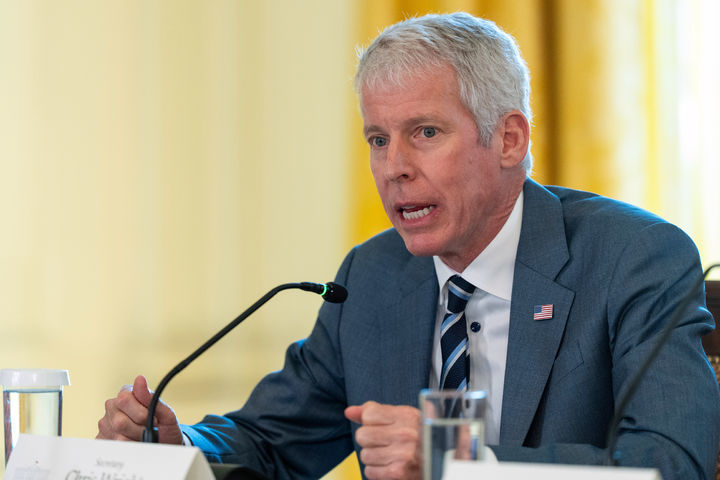
The Deal Is Off — And Washington Wants You to Pay for the Fallout
Chris Wright, the US Energy Secretary, told American television networks on September 6 that a nuclear agreement with Iran may simply not materialize. His answer was blunt enough to reshape how markets and allies should prepare: if diplomacy fails, the United States will fall back on air strikes aimed at destroying Iran’s nuclear production and delivery capabilities.
That is not a pivot toward negotiation. It is a signal that the Trump administration has already moved past the assumption that a deal is on track — and is now pricing in the consequences of one collapsing.
Wright suggested the US may need to wait for a change in Iran’s leadership before meaningful talks can resume. In the meantime, the military option is being prepared as the default posture. US forces have conducted a series of strikes already, according to Wright, weakening Iran’s capacity to produce and deliver nuclear weapons. But he stopped short of calling those operations complete.
Hormuz Is Already the Battlefield
The real tension lives in the Strait of Hormuz — the chokepoint through which roughly 21 million barrels of oil pass every day, about a fifth of global consumption. Wright claimed that even with Iranian provocation, more than 9 million barrels per day are currently moving through the strait and alternative pipeline routes, escorted by the US Navy. He called that arrangement the new normal.
But calling it normal does not make it secure. Iran has demonstrated repeatedly that it can disrupt shipping with mine warfare, fast-attack boats, and drone swarms — especially when it feels cornered. Wright himself acknowledged that Iran’s nuclear program and its naval and air forces are operating at their limits, and that the regime is acting out of desperation. That is a dangerous combination.
A US naval blockade, which Wright described as a tool that could force regime change or policy shifts in Tehran, is an escalation that turns the strait into a contested waterway rather than a managed one. Markets do not price in stability under blockade conditions. They price in risk premiums — and the Strait of Hormuz is where those premiums are written.
Allies Are Being Asked to Cover the Bill
Wright’s message to partners was clear: the United States cannot single-handedly guarantee the security of global trade routes. He said multiple countries have already communicated willingness to contribute military assets to Hormuz security, though he declined to name them or describe the form that cooperation would take.
That vagueness is notable. When Washington asks allies for resources without specifying commitments, it is often because the requests are still being made — or because the administration does not want to expose a gap between what it is asking and what it is receiving.
The White House also told VOA that South Korea, as one of the largest importers of Middle Eastern oil, is expected to deploy resources in the region. Seoul has not publicly responded.
For Seoul, the calculus is uncomfortable. South Korea imports the vast majority of its oil from the Middle East. A disruption in Hormuz would send shockwaves through its refineries and economy. But committing naval assets to a US-led operation in the strait could entangle it in a broader conflict with Iran — one it did not choose and may not be able to influence.
Who Wins, Who Loses
The immediate winner in Wright’s framing is the United States military-industrial posture. By positioning itself as the guarantor of sea lanes while sharing the burden with allies, Washington reinforces its strategic leverage in the Gulf. But the cost of that leverage is the risk of miscalculation — an intercepted vessel, a downed drone, a mistaken strike — that could escalate faster than any diplomatic channel can contain.
Iran loses first. Whether through continued strikes or a blockade, its nuclear program is being targeted and its regime is being pressured toward a corner it may not survive diplomatically. But Iran also holds cards. Disrupting Hormuz is one of them, and the desperation Wright described makes that card more, not less, likely to be played.
Allies lose second. They are being asked to fund and staff a security architecture that benefits them but answers to Washington’s timeline. South Korea, Japan, and India — the primary consumers of Middle Eastern oil — face the same question: how much sovereignty over their own energy security are they willing to trade for a US guarantee that may not hold under fire.
What Happens Next
The most probable near-term scenario is not war and not peace. It is a sustained state of managed crisis: US airstrikes continue against Iranian nuclear and military targets, Hormuz remains open but fragile, and allies increase their naval and diplomatic contributions under American direction. Oil prices will reflect the uncertainty without breaking — for now.
The more dangerous scenario is one Wright’s comments help create: Iran, feeling existentially threatened, closes or severely disrupts Hormuz in a bid to force a diplomatic reset. That would send crude prices soaring and force every importing nation to confront the fragility of its supply lines.
What English-language wire services may not yet be capturing is how seriously Asian allies are watching this. South Korea’s dependency on Middle Eastern oil is not abstract — it is structural. Every barrel that moves through Hormuz touches Korean refineries. When Washington says a deal may fail and asks Seoul to help pay for the security of the route those barrels travel, it is effectively asking Seoul to insure a house it does not own against a fire it did not start.
The question for markets and policymakers alike is whether the US is preparing for a worst-case Hormuz scenario — or merely describing one it hopes to avoid. Wright’s words suggest the former. The lack of named partners suggests the strategy is still being built.
That gap is where the risk lives.